The post What’s the “30/30/30 Rule” for Weight Loss? first appeared on Nerd Fitness.
]]>Recently, I noticed the 30/30/30 method blowing up on TikTok and Instagram.
Here’s the video of Gary Brecka explaining the “30/30/30 rule to lose fat” in case you haven’t seen it:
Let’s quickly recap what this “rule” entails, in case you missed the video.
The 30-30-30 Rule: Kickstart your day with 30 grams of protein within 30 minutes of waking up, followed by 30 minutes of steady-state cardio.
Simple, right? The claim is that this combo will make body fat vanish like magic.
Let’s dig a little deeper into the nuances here – where does this rule hold up, and where does it fall short of the mark?
I asked Jim, one of our Master Coaches, to share his thoughts:
Here’s what Jim had to say:
While it’s a snappy strategy, it’s crucial to remember that not all “rules” are created equal, especially in the world of fitness.Most advice is not one-size-fits-all mandates. What works wonders for one person might not have the same effect for another.
He then broke down each section a bit:
#1) Do I Need 30 grams of Protein for Breakfast?
Starting your day with a protein-packed breakfast is fantastic. It helps to maintain muscle and keeps you feeling satisfied.
But does it have to be exactly 30 grams?
Absolutely not!
That number is not some magic incantation that unlocks fat loss. You may be eating more or less protein.
What matters most is that you’re getting enough throughout the entire day to support your goals. You can calculate the range of protein you’ll likely need each day, then divide it by the meals and snacks you have.
This will give you a better target to start.
#2) Do I Need to eat within 30 minutes of waking up?
Some of us are early birds, while others prefer a leisurely morning routine.
And some of us are wrestling kids and crazy schedules as soon as we get up!
The 30-minute window after waking up is not a rigid law. As with most things related to nutrition, there are many ways to eat to support your goals. Your progress will be determined by the total number of calories and protein you eat across a day and week, not within any specific hourly window.
Some people may benefit from having protein early on in their day if it helps them feel more satiated and less likely to overeat other foods. But it is by no means some “magic” window to unlock fat loss.
Bottom line, if you want to eat within 30 minutes of waking up, go for it! But if you don’t, there’s no need to force this. 95% of your progress will be determined by what you eat across an entire day, not in any one specific time frame.
#3) Do I need 30 minutes of cardio in the morning?
Cardio is a fantastic way to get moving and burn some calories.
But whether you prefer it in the morning, afternoon, or evening is entirely up to you. Do what works best for your schedule and is most sustainable.
There is not some secret fat loss power-up that you’re missing out on by going for a walk at lunch instead of in the morning.
Plus, it doesn’t always need to be “steady-state.” You could mix in some interval training on occasion if that’s more your style.
The bottom line?
Fitness is not about fitting into a prescribed mold; it’s about finding what works best for you and your lifestyle.
While catchy strategies and specific numbers are easy to remember – they often stress us out about tiny details that ultimately don’t make a big difference.
Are we eating enough protein and moving around?
Then you’re doing good. Keep at it!
—
-Steve
PS: Do you wish you had a Coach like Jim in your corner to answer questions and ensure you’re not wasting time and energy fretting about the tiny details that don’t matter?
Check out our coaching program! You can schedule a chat with our team right here:
**Photo Souce from Four Bricks Tall**
The post What’s the “30/30/30 Rule” for Weight Loss? first appeared on Nerd Fitness.
]]>The post Intermittent Fasting Guide: Myths, Facts, & Strategies first appeared on Nerd Fitness.
]]>
“…Tony the Tiger tells us that breakfast is the most important meal of the day! It’s grrrrrreat!”
This adage about breakfast has become commonplace that it’s readily and unquestionably accepted as fact.
Well then, what’s with the growing popularity of Intermittent Fasting and SKIPPING breakfast?
(Tony just audibly gasped.)
In this Ultimate Guide to Intermitting Fasting, I’ll teach you everything about the science of fasting and what results you can expect:
- What is Intermittent Fasting?
- How does Intermittent Fasting work?
- Should I eat 6 small meals a day?
- Should I try Intermittent Fasting? (6 Things to Consider)
- What are the negative effects of Intermittent Fasting?
- Can I build muscle and gain weight while Intermittent Fasting?
- Should I do Intermittent Fasting and the Keto Diet?
- Does Intermittent Fasting have different effects on men and women?
- Top 5 questions about Intermittent Fasting.
- 5 tips and tricks for fasting.
- Intermittent Fasting: next steps.
- Download our Intermittent Fasting Plan.
Let’s dig in!
What is Intermittent Fasting?

Intermittent fasting is not a diet, but rather a dieting pattern:
Intermittent Fasting: making a conscious decision to skip certain meals, or avoid consuming food for a specific time period.
Let’s talk about why it’s become so popular: because it can work incredibly well for weight maintenance!
When you skip meals or only eat during certain hours, you’re more likely to eat fewer calories overall, which can result in a lower number on the scale!
(We dive deeper into the science on this in the next section.)
Let’s now talk about some popular Intermittent Fasting Strategies:
#1) INTERMITTENT FASTING 16/8 PLAN
What it is: Fasting for 16 hours and then eating within a specific 8-hour window. For example, only eating from noon-8 PM, essentially skipping breakfast.
Some people only eat in a 6-hour window, or even a 4-hour window. This is the “feasting” and “fasting” parts of your days and the most common form of Intermittent Fasting. It’s also my preferred method (5 years running).
Two examples: The top means you are skipping breakfast, the bottom means you are skipping dinner each day:
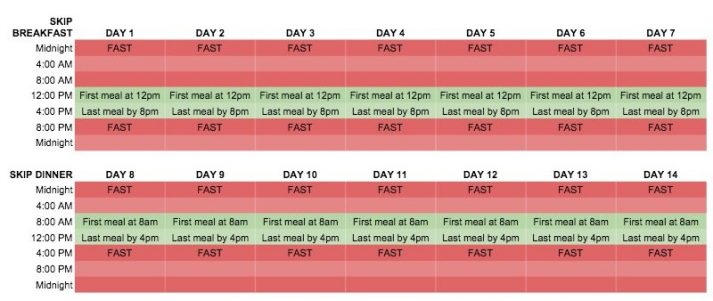
Adjust this window to make it work for your life:
- If you start eating at: 7AM, stop eating and start fasting at 3pm.
- If you start eating at: 11AM, stop eating and start fasting at 7pm.
- If you start eating at: 2PM, stop eating and start fasting at 10pm.
- If you start eating at: 6PM, stop eating and start fasting at 2AM.
#2) INTERMITTENT FASTING 24-HOUR PLAN
With this plan, you eat your normal 3 meals per day, and then occasionally pick a day to skip breakfast and lunch the next day.
Eat on a normal schedule (finishing dinner at 8PM) and then don’t eat until 8PM the following day.
If you can only do an 18 hour fast, or a 20 hour fast, or a 22 hour fast – that’s okay! Adjust with different time frames and see how your body responds.
Two examples: skipping breakfast and lunch one day of the week, and then another where you skip lunch and dinner one day, two days in a week.

These are just two popular strategies, though there are many variations of both that you can modify for yourself:
- Some people eat in a 4-hour window, others do 6 or 8.
- Some people do 20-hour fasts or 24-hour fasts.
- Another strategy is to eat only one meal a day (OMAD).
You’ll need to experiment, adjust to work for your lifestyle and goals, and see how your body responds. If there’s one thing we’ve learned after Coaching over 15,000 1-on-1 clients: there is no “one-size-fits-all” approach to exercise and nutrition that works for everyone, all of the time.
Let’s first get into the science here behind Intermittent Fasting and if you should consider it!
How Does Intermittent Fasting Work?

Now, you might be thinking: “okay, so by skipping a meal, I will eat less than I normally eat on average (2 meals instead of 3), and thus I will lose weight, right?”
All things being equal, yes.
By cutting out an entire meal each day, you are consuming fewer calories per week – even if your two meals per day are slightly bigger than before. Overall, you’re still consuming fewer calories per day.

In this example, you’re eating LARGER lunches and dinners than you normally do, but by skipping breakfast you’ll consume 500 less calories per day.
And thus, weight loss!
However, that doesn’t mean this works 100% of the time, for everyone. By understanding the underlying mechanism of weight loss (i.e. calorie deficit), we can better understand how our dieting strategy is affecting our behavior. Then we know if this strategy will work for us or not.
In the case of intermittent fasting, by condensing the eating window, many people feel more full and naturally eat less (like in the example above.)
However, it’s also totally possible for somebody to be so hungry as a result of fasting that they overconsume calories during that same period, which would result in weight gain instead of weight loss.
If you were reliant on the idea that “Intermittent Fasting works for weight loss” – full stop – you could be easily discouraged if it didn’t work.
You might think: “Is my metabolism broken?” But because we know that intermittent fasting is one dieting strategy that CAN work for weight loss if it helps you stick to a caloric deficit more easily, you’re empowered to decide if this is a good fit for you. Eureka!
This is highlighted in a recent JAMA study[2] in which both calorie-restricted dieters and intermittent fasters lost similar amounts of weight over a year period.
You might be thinking: “Ok, ok, I get it. Caloric deficit. But what about the timing of meals – can’t that also influence how your body reacts?”
Yes, your body operates differently when “feasting” compared to when “fasting”. But it’s important to understand how this fits into the big picture.
When you eat a meal, your body spends a few hours processing that food, burning what it can from what you just consumed.
Because it has all of this readily available, easy-to-burn energy (thanks to the food you ate), your body will choose to use that as energy rather than the fat you have stored.
During the “fasted state” (the hours in which your body is not consuming or digesting any food) your body doesn’t have a recently consumed meal to use as energy.
Thus, it is more likely to pull from the fat stored in your body as it’s the only energy source readily available.
However, when we compare the differences in energy used from body fat over an entire day, that’s entirely dependent on the total calories consumed. So while your body is more likely to pull energy from a recent meal, and will rely on fat stores once that energy runs out, if you eat the same amount of calories throughout the day, the result is the same amount of energy pulled from fat. It all balances out in the end.
The same goes for working out in a “fasted” state.
Without a ready supply of glucose and glycogen to pull from (which has been depleted throughout your fasted state, and hasn’t yet been replenished with a pre-workout meal), your body is forced to adapt and pull from a source of energy that it does have available: the fat stored in your cells.
While many of us get excited about the idea of being in a “fat-burning mode”, the same principle holds. If we burn an equal amount of calories, whether fasted or not, the result is less total energy stored in our fat cells at the end of the day. (There’s even an argument for athletes whose sports require glycogen to be readily available to meet their energy demands – making sure these stores are never depleted is important so an athlete doesn’t ‘bonk’ in the middle of their competition.)
Hopefully, you can see how easy it is to take a true fact of our biology (we burn more fat from fat stores when in a fasted state) and extrapolate it to seem more than it is. The same goes for six meals a day!
The truth is, there isn’t a magic pill or solution that’s going to overcome the basics. The best reason to do Intermittent Fasting is because you like it and it fits within your lifestyle.
TL/DR: Fasting can help promote weight loss and muscle building when done properly ~ though it isn’t the ONLY method that works.
Should I Eat 6 Small Meals a Day?

There are a few main reasons why diet books recommend six small meals:
1) When you eat a meal, your body does have to burn extra calories [9] just to process that meal. So, the theory is that if you eat all day long with small meals, your body is constantly burning extra calories and your metabolism is firing at optimal capacity, right? Well, that’s not true.
Whether you eat 2000 calories spread out throughout the day, or 2000 calories in a small window, your body will burn the same number of calories processing the food [10].
So, the whole “keep your metabolism firing at optimum capacity by always eating” sounds good in principle, but reality tells a different story.
2) When you eat smaller meals, you might be less likely to overeat during your regular meals. I can definitely see some truth here, especially for people who struggle with portion control or don’t know how much food they should be eating.
However, once you educate yourself and take control of your eating, some might find that eating six times a day is very prohibitive and requires a lot of effort. I know I do.
Also, because you’re eating six small meals, I’d argue that you probably never feel “full,” and you might be MORE likely to eat extra calories during each snack.
This is why personal preference is so important when picking a diet strategy that works for you.
Although grounded in seemingly logical principles, the “six meals a day” doesn’t work for the reason you think it would (#1), and may feel prohibitive to prepare and eat 6 times a day (#2). Other people may find that 6 meals a day fits them perfectly. If you find what works for you, that rules!
If we think back to caveman days, we’d have been in serious trouble as a species if we had to eat every three hours. Do you think Joe Caveman pulled out his pocket sundial six times a day to consume his equally portioned meals?
Hell no! He ate when he could, endured and dealt with long periods of NOT eating (no refrigeration or food storage) and his body adapted to still function optimally enough to still go out and catch new food.
A recent study (written about in the NYT, highlighted by LeanGains) has done a great job of challenging the “six-meals-a-day” technique for weight loss [11]:
There were [no statistical] differences between the low- and high- [meal frequency] groups for adiposity indices, appetite measurements or gut peptides (peptide YY and ghrelin) either before or after the intervention. We conclude that increasing meal frequency does not promote greater body weight loss under the conditions described in the present study.
That’s why we made this:

Should I Try intermittent fasting? (4 Big Benefits)
Now that we’re through a lot of the science stuff, let’s get into the reality of the situation: why should you consider Intermittent Fasting?
#1) Because it can work for your goals. Although we know that not all calories are created equal, caloric restriction plays a central role in weight loss.
When you fast, you are potentially making it easier to restrict your total caloric intake over the course of the week, which can lead to consistent weight loss and maintenance.
#2) Because it simplifies your day. Rather than having to prepare, pack, eat, and time your meals every 2-3 hours, you simply skip a meal or two and only worry about eating food in your eating window.
It’s one less decision you have to make every day.
It could allow you to enjoy bigger portioned meals (thus making your tastebuds and stomach satiated) and STILL eat fewer calories on average.
It’s a point that Coach Matt makes in this video on intermittent fasting:
#3) It requires less time (and potentially less money). Rather than having to prepare or purchase three to six meals a day, you only need to prepare two meals.
Instead of stopping what you’re doing six times a day to eat, you simply only have to stop to eat twice. Rather than having to do the dishes six times, you only have to do them twice.
Rather than having to purchase six meals a day, you only need to purchase two.
#4) Plus, Wolverine does it:
If adamantium-clawed superheroes do Intermittent Fasting, it can probably work for you too, if you can make it work for your particular lifestyle and situation!
What Are the Negative Effects of intermittent fasting?

It’s important to understand Intermittent Fasting is NOT a cure-all panacea.
Let’s talk about some of the potential drawbacks of Intermittent Fasting:
#1) If you skip breakfast, you might be so hungry from this that you OVEREAT your other meals, which can lead to weight gain. The important thing here is that with an intermittent fasting plan, you’re eating fewer calories than normal because you’re skipping a meal every day (if your goal is weight loss.)
In other words, don’t delude yourself into thinking that if you skip breakfast and then eat 4,000 calories of candy bars for lunch and dinner that you will lose weight.
This is simply a math and behavior strategy for giving yourself fewer chances to overeat and put your body into a caloric surplus.
(If you struggle with portion control, figure out your calorie goals and track your calorie intake in your meals to make sure you’re not overeating.)
#2) Skipping meals can result in feelings of lethargy, hunger, and “hangriness”!
If you eat breakfast every morning, your body expects to wake up and eat food.
Once you retrain your body to NOT expect food all day every day (or first thing in the morning), it’s possible that these side effects become less of an issue. In addition, ghrelin (a hormone that makes you hungry [13]), is actually lowest in the mornings and decreases after a few hours of not eating.
#3) Intermittent Fasting can be more complex for people who have issues with blood sugar regulation, suffer from hypoglycemia, have diabetes, etc. If you fit into this category, check with your doctor or dietitian before adjusting your eating schedule.
#4) Intermittent Fasting can affect women differently: there’s a whole section dedicated to that here.
Can I Build Muscle and Gain Weight While Intermittent Fasting? (Pros and Cons)

It is possible to build muscle and strength while Intermittent Fasting, though it’s not inherently superior to building muscle and strength while following a traditional eating pattern.
(We have our big “how to build muscle” guide, in addition to a whole “Strength 101” series – and I’d recommend you read those if you’re looking for a place to start strength training.)
Personally, I did intermittent fasting from 2015 to 2020 while building muscle and strength:
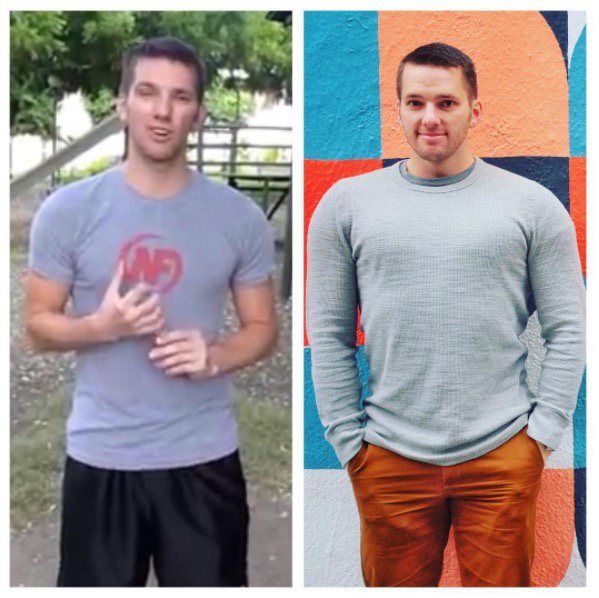
Let’s talk first about the nutritional strategy first, and then we’ll get into the exercise portion.
Here’s how I built muscle while simultaneously fasting: In order to gain weight and build muscle, I had to be in a caloric surplus.
And because I was not eating for 16 hours, that meant I was cramming 3000 nutritious calories into an 8 hour window, which often left me feeling bloated and overly full.
- 11 AM Work out with heavy strength training in a fasted state.
- 12 PM Immediately consume 1/2 of my calories for the day (a regular whole-food meal, followed by a calorie-dense homemade protein shake).
- 7 PM Consume the second portion of my calories for the day in a big dinner.
- 8 PM – 12 PM the next day: Fast for 16 hours.
After following this strategy for a number of years, I gave up fasting in 2019, and instead consumed my calories throughout the day.
Here’s a different strategy for Fasted Muscle Building: my friend Nate Green packed on a crazy amount of muscle while fasting for a full 24 hours on Sundays. [15]
Let’s now talk about strength training!
If you want to build muscle while fasting, you need to work out. Specifically, by lifting heavy, so here are a few workout options!
#1) “Build Your Own Workout Routine” and get your hands dirty. Our guide will walk you through building a full-body exercise program in 10 simple steps.
#2) Follow our Strength Building Guide and start training today. You’ll want to do lots of heavy compounds lifts:
How to tie it all together: pick up heavy things, eat enough protein, and consume enough calories, and you’ll build muscle and strength.
Should You Do Intermittent Fasting and the Keto Diet?

We have a crazy extensive guide on the Keto Diet in case you’re not familiar with it, so here it is in a nutshell:
By only eating fat and protein, your body must adapt to run on fat for fuel instead of carbohydrates. In the absence of carbs/glucose, your body converts fats to ketones and uses them for fuel.
This process is called “ketosis,” and there are two ways for a body to enter ketosis:
- Eating in a way that induces ketosis (very low carb, high fat).
- Fasting…Hey, that’s what you’re reading about right now!
We actually have an amazing success story here on Nerd Fitness, Larry, who followed our strategies, went Keto and start intermittent fasting. He ended up losing weight, getting stronger, AND overcame the challenges of rheumatoid arthritis (click on the image for his story)!

Why Keto and Fasting can work: eating Keto can be really challenging. And every time you eat, it’s an opportunity to do it wrong and accidentally eat foods that knock you out of ketosis.
You’re also tempted to overeat.
So, by skipping a meal, you’re eliminating one meal, one decision, one chance to screw up.
Note: if you’re thinking “Steve, am I losing weight because I’m skipping 1/3rd of my meals for the day, AND eliminating an entire macronutrient?”, then you’d be right.
Both Keto and IF have secondary effects that could also be factoring in – physiological benefits which I explain in both articles.
Your value may vary!
You need to decide what works for you.
You probably won’t become “keto-adapted” (your body running on ketones) just skipping breakfast every day – your body will still have enough glucose stored from your carb-focused meals for lunch and dinner the day before.
In order to use fasting to enter ketosis, the fast needs to be long enough to deplete your carb/glucose stores, or you need to severely restrict carbohydrates from your meals in addition to IF in order to enter ketosis.
MORAL OF THE STORY: Experiment and try different strategies that will work for you.
By skipping a meal or minimizing carbohydrate intake, you’re more likely than not to lose weight:
- You can do intermittent fasting without eating a Keto Diet and lose weight.
- You can do a Keto Diet without intermittent Fasting and lose weight.
- You can combine them and lose weight.
- You can do neither and lose weight.
Sticking with Keto is BRUTALLY difficult, and probably not the right diet for 98% of the planet. Those people would be better off following our “Start Eating Healthy” guide with small changes.
Does Intermittent Fasting Have Different Effects on Men and Women?

The quick answer is: “yes, Intermittent Fasting can affect men and women differently.”
Anecdotally, we have many women in our online coaching program that swear by Intermittent Fasting, while others have had adverse effects.
Let’s dig into the science and studies.
A recent PubMed summary concluded that “fasting can be prescribed as a safe medical intervention as well as a lifestyle regimen which can improve women’s health in many folds [18].
Now, in that extract, many of the studies cited are focused on specifically calorie restriction (and not just fasting), and they also say that “future studies should address this gap by designing medically supervised fasting techniques to extract better evidence.”
Digging into the PubMed Archives brought me to the following conclusions [19]:
One small study (with 8 men and 8 women, all non-obese) resulted in the following: “Glucose response to a meal was slightly impaired in women after 3 weeks of treatment, but insulin response was unchanged. Men had no change in glucose response and a significant reduction in insulin response.”[20]
Another small study (8 women) studied the effects on their menstrual cycles after a 72-hour fast – which is significantly longer than any fast recommended in this article: “in spite of profound metabolic changes, a 72-hour fast during the follicular phase does not affect the menstrual cycle of normal cycling women.” [21].
Yet another study tracked 11 women with 72-hour fasts (again, longer than we’d recommend) and it found that “Fasting in women elicited expected metabolic responses – included increased cortisol (a stress hormone) – and apparently advanced the central circadian clock (which can throw off sleeping patterns). [22]
Those studies above, in working with small sample sizes, and different types of fasting than recommended here, would lead me to believe that fasting affects men and women differently, and that many of the weight loss benefits associated with intermittent fasting (that affect insulin and glucose responses) work positively for men and negatively for women.
There are also a series of articles[23] out there that dig into the potential reproductive health issues, stress challenges, induction of early-menopause [24] associated with fasting (and calorie restriction) for women.
Precision Nutrition – a great resource – recommends not attempting Intermittent Fasting as a woman if:
- you’re pregnant
- you have a history of disordered eating
- you are chronically stressed
- you don’t sleep well
- you’re new to diet and exercise
The challenge associated with all of this is that there aren’t enough long-term studies, with large enough sample sizes, specifically targeting female humans, with relation to the different types of Intermittent Fasting.
It does appear that men and women will have different experiences with intermittent fasting; we’re all unique snowflakes (yep, especially you), and your body will be affected by intermittent fasting differently than the person next to you.
There is enough evidence as cited in the articles and studies above that would give me pause to recommend Intermittent Fasting for women, especially if you are considering getting pregnant in the near term.
If you are looking to attempt fasting for weight loss reasons, my research has shown me that Intermittent Fasting could be less effective for women than men with regards to weight loss, and thus you would be wise to keep your efforts elsewhere:
- Focusing on the total calories and quality of your food (here’s how to eat better).
- Start exercising regularly!
- Make sure you are getting enough sleep.
Now, if you’ve read the above warnings, you are still curious about Intermittent Fasting, and you want to give it a try as a female, that is your choice!
You know your body best.
So, get blood work done, speak with your doctor and get a check-up.
Give intermittent fasting a shot, track your results, and see how your body/blood work changes as a result of Intermittent Fasting and decide if it’s right for you.
Your mileage may vary, so speak with a doctor or find a doctor versed in intermittent fasting plans and treat it like an experiment on yourself!
Top 5 Questions about Intermittent Fasting

1) “Won’t I get really hungry if I start skipping meals?”
As explained above, this can be a result of the habits you have built for your body. If you are constantly eating or always eat the same time of day, your body can actually learn to prepare itself for food by beginning the process of insulin production and preparation for food.
After a brief adjustment period, your body can adapt to the fact that it’s only eating a few times a day. The more overweight you are, and the more often you eat, the more of an initial struggle this might be.
Remember, your body’s physical and cognitive abilities most likely won’t be diminished as a result of short-term fasting.[25]
2) “Where will I get my energy for my workouts? Won’t I be exhausted and not be able to complete my workouts if fasting?”
This was a major concern of mine as well, but the research shows this might not be the case: “Training with limited carbohydrate availability can stimulate adaptations in muscle cells to facilitate energy production via fat oxidation.”[26]
In other words, when you train in a fasted state, your body can get better at burning fat for energy when there are no carbs to pull from!
The caveat to this is that pulling energy from fat oxidation is a slower process than breaking down carbohydrates. If your workout is super intense (high-intensity interval training, MMA, even bodybuilding) – you’ll likely benefit from having more readily available energy to fuel your workouts for better performance.
3) “I like the idea of fasted training, but I work a regular 9-5 or a night shift and can’t train at 11AM as you do. What am I supposed to do?”
Depending on your training schedule, lifestyle, and goals, go back to the portion above where I talk about the 16/8 protocol and simply adjust your hours of fasting and feasting.
LeanGains digs into various options here, but here is really what you need to know:
- Don’t overthink this. If you can’t train until 5pm, that’s okay. Consume a small meal for lunch, or shift your Intermittent Fasting window to eat all of your meals in the 8 hours post-workout. Better to do that than abandon it as a lost cause and have 0% compliance.
- If you are an elite athlete, speak with a coach or nutritionist about your specific concerns and expectations. Otherwise, make intermittent fasting work for you Consider trying the 24-hour protocol below instead of the 16/8 protocol.
- If you train later in the day (say, 7pm) but break your fast before training (aka Lunch), make it a smaller meal focused around fats and protein – which should be a solid goal even if you aren’t Intermittent Fasting! Try to time your carb and big meal consumption to happen AFTER your workout.
- If you exercise BEFORE work, but then don’t eat until lunchtime: consider a protein supplement immediately after your workout, or simply wait until lunch to start eating. See how your body responds and adjust accordingly.
Do what you can, and don’t psyche yourself out! Get started and adjust along the way.
4) Will Intermittent Fasting cause muscle loss?
Good news: Our bodies are quite adept at preserving muscle even when fasting [27], and it turns out that protein absorption by our body can take place over many many many hours.
Not only that, but you can even burn fat AND build muscle at the same time if you have the right system in place!
Protein consumed in a shorter period of time has no difference on the body compared to protein spread throughout the day.
5) How much should I eat while intermittent fasting?
Simple: Eat for your goals! You do know how many calories you should eat every day, right?
If your goal is weight loss, you still need to consume fewer calories than you burn every day to lose weight, full stop. If your goal is bulking up, you’ll need to consume more calories than you burn every day. Intermittent Fasting isn’t a cure-all, it’s a PART of the puzzle.
To start, begin intermittent fasting and eat your normal-sized meals and track your weight and performance. If you are losing weight and happy with the progress, keep doing what you’re doing! If you are NOT losing weight, you could be eating too much. It’s a message I really strike home in our guide “Why Can’t I Lose Weight?”
That’s why you should track your calories for a week, and then target a 10% reduction in calories and continue. Here’s a calculator for you to determine the amount of calories you need daily.
6 Tips and Tricks about Fasting

#1) Don’t freak out! Stop wondering: “can I fast 15 hours instead of 16?” or “what if I eat an apple during my fasted period, will that ruin everything?” Relax. Your body is a complex piece of machinery and learns to adapt. Everything is not as cut and dry as you think.
If you want to eat breakfast one day but not another, that’s okay. If you are going for optimal aesthetic or athletic performance, I can see the need to be more rigid in your discipline, but otherwise…freaking chill out and don’t stress over minutiae!
Don’t let perfect be the enemy of good when it comes to your intermittent fasting plan. It’s just one tool in your toolkit.
#2) Listen to your body during your strength training workouts. If you get lightheaded, make sure you are consuming enough water.
If you notice a significant drop in performance, make sure you are eating enough calories (especially fats and protein) during your feasting window.
And if you feel severely “off,” pause your workout. Give yourself permission to EASE into intermittent fasting and fasted workouts. This is especially true if you are an endurance athlete.
#3) Stay busy. If you are just sitting around thinking about how hungry you are, you’ll be more likely to struggle with this. For that reason, I time my fasting periods for maximum efficiency and minimal discomfort:
- My first few hours of fasting come after consuming a MONSTER dinner, where the last thing I want to think about is eating.
- When I’m sleeping: 8 of my 16 hours are occupied by sleeping. Tough to feel hungry when I’m dreaming about becoming a Jedi.
- When I’m busy: After waking up, 12 hours of my fasting is already done. I spend three hours doing my best work (while drinking a cup of black coffee), and then comes my final hour of fasting: training.
#4) Zero-calorie beverages are okay. I drink green tea in the morning for my caffeine kick while writing. If you want to drink water, black coffee, or tea during your fasted period, that’s okay. Remember, don’t overthink it – keep things simple! Although be aware that Dr. Rhonda Patrick over at FoundMyFitness believes that a fast should stop at the first consumption of anything other than water, so experiment yourself and see how your body responds.
If you want to put milk in your coffee, or drink diet soda occasionally while fasting, I’m not going to stop you. Remember, we’re going for consistency and habit-building here – if milk or cream in your coffee makes life worth living, don’t deprive yourself.
There are MUCH bigger fish to fry with regards to getting healthy than a few calories here and there during a fast.
80% adherence that you stick with for a year is better than 100% adherence that you abandon after a month because it was too restrictive.
If you’re trying to get to a minimum bodyfat percentage, you’ll need to be more strict with overall calories – until then, however, do what allows you to stay compliant!
#5) Track your results, listen to your body:
- Concerned about losing muscle mass? Keep track of your strength training routines and see if you are getting stronger.
- Buy a cheap set of body fat calipers and keep track of your body fat composition.
- Track your calories, and see how your body changes when eating the same amount of food, but condensed into a certain window.
#6) Don’t expect miracles. Yes, Intermittent Fasting can potentially help you lose weight, increase insulin sensitivity and growth hormone secretion (all good things), but it is only ONE factor in hundreds that will determine your body composition and overall health. Don’t expect to drop to 8% body fat and get ripped just by skipping breakfast.
You need to focus on building healthy habits, eating better foods, and getting stronger.
This is just one tool that can contribute to your success.
Getting Started with Intermittent Fasting: Next Steps

Intermittent fasting can potentially have some very positive benefits for somebody trying to lose weight or gain lean body mass.
Men and women will tend to have different results, just like each individual person will have different results. The ONLY way to find out is through a conversation with your doctor and self-experimentation.
There are multiple ways to “do” an Intermittent Fasting Plan:
- Fast and feast regularly: Fast for a certain number of hours, then consume all calories within a certain number of hours.
- Eat normally, then fast 1-2x a week: Consume your normal meals every day, then pick one or two days a week where you fast for 24 hours. Eat your last meal Sunday night, and then don’t eat again until dinner the following day.
- Fast occasionally: probably the easiest method for the person who wants to do the least amount of work. Simply skip a meal whenever it’s convenient. On the road? Skip breakfast. Busy day at work? Skip lunch. Eat poorly all day Saturday? Make your first meal of the day dinner on Sunday.
After that, get started! Take photos, step on the scale, and track your progress for the next month.
See how your body responds.
See how your physique changes. See how your workouts change.
And then decide if it’s something you want to keep doing!
4 years later, I have no plans on going back to eating breakfast. Sorry General Mills and Dr. Kellogg!
Thanks for reading, and I hope we gave you ALL the information you wanted about Intermittent Fasting, it’s underlying mechanisms for success, and reasons it may (or may not) work for you!
-Steve
PS: Before you take off, grab our Intermittent Fasting Worksheet to help you start your fasting practice:
PPS: Make sure you check out the rest of our guides on losing weight:
- The 5 Rules of Weight Loss
- How to Start Eating Healthy (Without Being Miserable)
- 9 Strategies for Losing Weight Quickly
###
Photo Source:[29]
The post Intermittent Fasting Guide: Myths, Facts, & Strategies first appeared on Nerd Fitness.
]]>The post 5 Best Strength Training Workout Routines For Beginners (Home & Gym) first appeared on Nerd Fitness.
]]>
Want to get strong like these LEGO lifters but don’t how to start?
In this Beginner’s Guide to Strength Training (part of our Strength 101 series), you’ll have both the confidence to start getting strong with resistance training AND a plan to follow.
These are the exact strategies we use with our Online Coaching Clients to help them start strength training, and I’m excited to cover everything you need.
We’ll be digging into the following:
- How do I start strength training or resistance training?
- What are some examples of strength training?
- Which strength training program is right for me?
- 5 best strength training workouts for beginners.
- How much weight should I lift?
- The 9 best strength training exercises.
- How to know you’re doing an exercise properly (form checks)
- Strength training for weight loss.
- “Just TELL ME what strength program I should do.”
By the way, we’ve combined this article along with the rest of our strength articles into a “Strength Training 101: Everything You Need to Know” guide.
Grab it free when you join the Rebellion by putting your email in the box below.
How Do I Start Strength Training?

Welcome to the first day of the rest of your life.
You’ll look back years from now and thank “Past You” for starting strength training today.
And I promise, you WILL start strength training today.
After all, strength training or resistance training doesn’t need to be scary or overcomplicated!
Strength training really comes down to two things:
#1) Movement of any weight against “resistance”(including your body weight) – Doing ANY exercise that pushes your muscles outside of their comfort zone, forcing them to rebuild stronger to prepare for the next challenge.
#2) Progressive overload: doing slightly more than last time (lift heavier weight or do 1 more rep) consistently. Your muscles will break down slightly during your workout, and then rebuild themselves as you rest and recover to be stronger and able to handle more the next time.{1}}[[1]]Powers SK, Howley ET. (2011). Exercise physiology: Theory and application to fitness and performance. New York: McGraw-Hill Humanities/Social Sciences/Languages.[[1]]
Coach Jim explains the ins and outs of progressive overload in this video:
That’s all there is to it: do some resistance training and attempt to make it more and more challenging, and you’ll grow stronger.[2]
- This means if you do ONE push-up off of a countertop right now, technically you’ve done a strength training workout.
- It also means if you then do TWO countertop push-ups tomorrow, then you are officially following a strength training routine.
In other words…

Now, it’s SCIENCE TIME!
While learning the strength training exercises, you are allowing for proper communication to develop between your neuromuscular systems.

More efficient communication between your neuromuscular systems will result in something known as “proper motor unit recruitment.”
You may be asking yourself: what is a motor unit?
That’s okay because I was asking myself this same question.
A motor unit is a single motor neuron and the muscle fibers it innervates.
You can think of two different types of motor units:[3]
- We all have small motor units, meaning that a single motor neuron innervates relatively few muscle fibers, and these smaller motor units are good for precise and detailed movements (e.g., moving your fingers).
- We all also have large motor units, meaning that a single motor neuron innervates hundreds of muscle fibers, and these larger motor units are good for generating a lot of force (e.g., getting larger muscle groups like the quads to generate a lot of force to help in sprinting).
When you start strength training, you really are helping your muscles communicate better together.[4]
How cool is that?
Now, there are many different “strength training” and “resistance training” paths.
Like a “skill tree” in a video game (with branching paths and progressions), you can progress up one path, and mix and match movements from others depending on the situation.
These paths depend on your goals and what equipment you have available to you.
What Are Some Examples of Strength Training?

Let’s chat about a few different types of strength training.
#1) BODYWEIGHT TRAINING
Bodyweight training is simply doing an exercise in which your own body is the “weight” you are “lifting.” For example, you might do a squat, a push-up, or an inverted row. These are all bodyweight strength training exercises.
This is the place where we start many of our 1-on-1 clients on their strength training journey.
Why? Two big reasons:
A) You always have your body with you (unless you are a ghost, in which case, this is awkward). This means you can work out ANYWHERE with bodyweight training:
- Our Beginner Bodyweight Workout Routine in your living room.
- Our Hotel Workout in a hotel (obvi).
- Our Park Workout in a…well, you get the point.
B) Using your body for resistance training is the most “human” thing ever! By learning to push and pull and hang and squat and lunge, you are doing what your body is literally designed to do.
And by building strength, you’re making yourself antifragile and less injury-prone.
For many of our clients, bodyweight exercises are right in that sweet spot of being challenging while lowering the barrier to entry to get started.
Bodyweight training isn’t as easy to ‘scale’ the difficulty as some of the other strength training methods (“put more weight on barbell”), but you can get REALLY strong with just bodyweight training.
For example, you can start with knee push-ups, then go to regular push-ups, then elevated push-ups, then even up to things like handstands and handstand push-ups.
You just have to know HOW and WHEN to scale up (we can help there too).
#2) DUMBBELL TRAINING

Dumbbells are a great first step into the world of weight training and strength training:
- Most gyms will have dumbbells, even if it’s a basic gym in your apartment complex.
- An adjustable set of dumbbells doesn’t take up a lot of room, which means you can have a pair at home without a large footprint.
- Dumbbells make it easy to add difficulty to a bodyweight movement: holding dumbbells while doing lunges, for example.
- Dumbbell exercises can be less intimidating than barbell training for some, and are a step towards barbell training.
- Dumbbells have an added stabilization challenge,[4] and will point out muscle imbalances pretty easily (“oh my right arm is stronger than my left arm.”).
- Dumbbells allow for single-arm and single-leg exercises to be performed. This can allow you to strengthen any muscle imbalances and can come in handy, especially after an injury.
- You can scale easily. Once the 10-pound weights become too easy, pick up the 15-pound ones!
#3) KETTLEBELL TRAINING

A kettlebell is essentially a cannonball with a handle on it. They come in any weight imaginable, don’t take up a lot of room, and can be used in dozens of ways for a great compact workout.
Our 20-minute kettlebell workout has 8 simple exercises you can do with just one weight.
Although there are “adjustable kettlebells,” you’ll most likely be working with a single kettlebell, and then adjusting your movements for “progressive overload” (making the workout slightly more difficult each time).
If you are a member of a gym, they’ll probably have multiple kettlebells that you can use to level up.
#4) BARBELL TRAINING

Regardless of sex or gender age, if your goal is to get strong quickly, use 20 seconds of courage and get comfortable training with a barbell (I’ll help you, I promise):
- “Progressive overload” is easy – you simply add weights to either side of the bar, allowing you to progressively lift more and more weight each week.
- It’s much easier to go heavy safely – especially for lower body movements like the squat and the deadlift.
The biggest downside to barbell training is that to train at home, you need to have purchased a squat rack, a barbell, a bench, and enough weights for your house or garage (which can be an expensive investment, especially when starting out!).
If you want to try it before you buy it, you definitely will need to join a gym.
#5) MACHINE TRAINING
Although they’ve gotten a bad rap in previous years, machines are another excellent entry point into strength training! These are going to be one of the most common options at gym franchises like Planet Fitness or Anytime Fitness, and usually come with instructions on the side for how to set up and perform the exercise. They have the benefit of being able to add weight quickly to scale, and usually require less stability to perform. (I.e. you’re not trying to balance and coordinate the movement at the same time as lifting it as much.)
While we still encourage our clients to do free-weights to build stability, when you’re first getting started having the extra guidance from a machine can be helpful!
WHICH RESISTANCE TRAINING PATH IS RIGHT FOR YOU?
Not sure which path to pick? You’re not alone – this stuff can be overwhelming. The truth is that you’ll probably mix and match a variety of these different options as you go. However, if you’re unsure, we recommend starting with bodyweight exercises. Then you can add in one dumbbell or machine movement at a time to introduce more variety and options for yourself!
Want to take the thinking off of your plate and have a program designed with your specific needs and equipment in mind? Check out our 1-on-1 Coaching Program. We get to know you and your goals, check your form via video, and make adjustments based on your progress!
Which Strength Training Program is Right for Me?

So, what’s the best workout program to start as a beginner?
Realistically, it’s the one that you will ACTUALLY do.
We have a saying that we love around here: “Start where you are. Use what you have. Do what you can.”
Barbell training might be optimal in terms of building pure strength quickly, but if you don’t see yourself getting to the gym regularly – or you’re too self-conscious to enter the free weight section (for now) – no problem!
Start with bodyweight training.[5]
Conversely, bodyweight training might seem convenient and easy to start now, but if you can’t motivate yourself to work out at home, you might be better off joining a gym.[6]
So let’s get you a workout program!
As we cover in our “How to Find the Perfect Workout Plan (for you)”: MOST beginners will be best served by following a “full-body” or “total body” routine, 2 to 3 times per week, with a day of rest in between each workout.[7]
This full-body workout will have 4-5 big compound movements.
A compound movement is an exercise that recruits LOTS of muscles simultaneously and forces your body to work in unison. These compound exercises are considered multi-joint exercises meaning that they involve more than a single muscle group.[8]
An example would be the barbell squat, which recruits every muscle in your core, butt, and legs to work together to lift the weight.

This is WAY more efficient – and effective at building pure strength – than doing 5 different isolated leg exercises.[9]
Why do 5 exercises when 1 exercise will get you better results in 20% of the time?
In order to balance our full-body workouts, we want to make sure we pick exercises that spread the work out across the entire body. One helpful way to do this is to think of exercises as fitting into one of three different ‘buckets’:
- Push Exercises – these are exercises that generally work the front of your upper body. Things like push-ups, bench press, and overhead press all fit in this category.
- Pull Exercises – these are exercises that generally work the back of your upper body. This includes rows, pull-downs, and chin-ups.
- Lower Exercises – these are exercises that work your legs. Squats, deadlifts and lunges are some of the biggest bang for your buck exercises here.
By balancing your workouts across all three of these buckets, you get a well-rounded full-body strength program!
I can already tell what you’re next question will be: but how many sets and reps of each of these exercises should I do as a beginner?
As we explain in our “How Many Sets and Reps” guide:
- Reps in the 1-5 range build super dense muscle and strength.
- Reps in the 6-12 range build equal amounts of muscular power, strength, and size.
- Reps in the 12+ range primarily build muscular endurance and size and also cardiovascular health.[10]
If you want more, Coach Jim breaks down different set and rep ranges in this video:
Many beginner strength programs will encourage you to keep things simple, doing just 5 sets of 5 reps for each exercise.
Personally, I encourage people to aim for a weight that they can lift for 8-10 reps. This gives you a chance to really work on your form and lift safely!
The max lifts will come later, my friend. You gotta learn to walk before you can run!
To recap, our recommendations as you get started are:
- Pick a type of strength training that you have access to and are excited to try (body weight, barbell, etc.)
- Perform 2-3 full body workouts per week, with at least 1 day of rest in between each
- Pick 4-5 compound exercises that work multiple muscles at once for each workout
- Perform 8-10 moderately challenging reps of each exercise for 1-3 sets
If your main goal is general fitness and fat loss, doing these exercises in a circuit training workout will likely help you reach your goals (make sure you see our section below for “strength training for weight loss”).[11]
If your main goal is to get stronger and/or put on muscle, following a more traditional, pure-strength-style gym workout is going to get you there faster.
TRUTH BOMB: ANY strength training workout will help you reach nearly any goal provided you do two things:
- Eat correctly for your goals too. How you eat will account for 80-90% of your success or failure when it comes to weight loss or bulking up.[12]
- Increase the difficulty of your workouts. This is that “progressive overload” stuff we were talking about earlier. Doing 1 more bodyweight squat, lifting 5 more pounds, or completing your circuit 10 seconds faster than the last workout. By forcing your body to constantly adapt, your muscles will never get complacent and have to keep burning extra calories and rebuilding themselves stronger.
The 5 Best Beginner Strength Training Programs

“Alright Steve, are there any ‘out of the box’ beginner workout programs I can start following now?”
Yup! Let me share with you some of our suggestions:
Here are 5 resistance training workouts you can follow TODAY. Pick the level that you feel most comfortable with, and then level up when you feel ready:
#1) BEGINNER BODYWEIGHT WORKOUT:
Our Beginner Bodyweight Workout has a variety of rep ranges to promote endurance, strength, and cardiovascular health. We’ve added new progressions and even created a handy tracking sheet for free if you sign up for our newsletter.
Complete one set of each exercise and then move directly to the next exercise:
- 10 assisted bodyweight squats
- 10 elevated push-ups
- 10 dumbbells rows (using a gallon milk jug)
- 15 to 30-second knee plank
- 10 bodyweight good mornings
- 20 walking jacks
- Repeat for 2 rounds
Once that feels easy and you want to level up, try this sequence:
- 20 bodyweight squats
- 10 push-ups
- 20 walking lunges
- 10 dumbbell rows (using a gallon milk jug)
- 15-second plank
- 30 Jumping Jacks
- Repeat for 3 rounds
Want to stick with bodyweight training? When you’re ready to level up, check out our advanced bodyweight training circuit.[13]
Otherwise, you can move on to weight training when you feel comfortable!
#2A) BEGINNER NERD FITNESS DUMBBELL WORKOUT
If you are just getting started with dumbbells and you’re looking for a beginner workout program to follow, this is an example of a workout that includes dumbbells with your bodyweight training:
- 10 goblet squats
- 10 push-ups
- 10 dumbbell rows per side
I knew you’d ask, so here is a Goblet Squat video explanation:
And here is our video on how to do dumbbell rows:
#2B) BEGINNER NERD FITNESS KETTLEBELL WORKOUT
Our Beginner Kettlebell Routine is a workout you do anywhere you have room to swing a kettlebell.
So, probably not in a phone booth or a closet or a bathroom stall. But other than that, pretty much anywhere else.
Complete 3 Kettlebell Workout Circuits:
- 8 Halos (each side)
- 10 Goblet Squats
- 8 Overhead Presses (each side)
- 15 Kettlebell Swings
- 8 Bent Over Rows (each side)
- 6 Front Rack Reverse Lunge (per side)
#3) BARBELL TRAINING: 2-DAY WORKOUT SPLIT
As we cover in our “How to Train in a Gym” guide (where we take you from “lost sheep” to “barbell badass”), this routine is a much more focused weight training, strength-building workout that gets your feet wet with barbell training. Click on ANY exercise to learn how to do it properly.
NF BEGINNER BARBELL STRENGTH WORKOUT: DAY A
Do 3 rounds of:
- 10 barbell squats
- 10 push-ups
- 10 bodyweight rows
NF BEGINNER BARBELL STRENGTH WORKOUT: DAY B
Do 3 rounds of:
Alternate between these 2-4x per week and there’s your program!
WHAT ARE SOME OTHER POPULAR STRENGTH TRAINING PROGRAMS?
#1) “Starting Strength” is considered the gold standard beginner barbell weight training program by many. We highly recommend you pick up the actual book if you are serious about barbell training – it’s one of the most important training books you can ever read.
#2) Strong Lifts 5X5: A solid workout program that starts you out very slow, with just the barbell, and helps you master form before you get too heavy. It also keeps things VERY easy with “do 5×5.” Strong Lifts has been around for a long time and is a solid program.
#3) Jim Wendler’s 5/3/1: This program allows you a little more freedom to do exercises that you enjoy, or work on personal weaknesses, because you choose some of the assistance work.
Note: You can modify any of the barbell training programs to be done with dumbbells, if that’s what you have at home!
Lastly, you can always write your own workout plan!
We do have our own 1-on-1 Online Coaching Program where you’ll work with a coach who will build a strength training workout program for your body type and goals, check your form on each exercise via video, and even help you plan out your nutrition too.
How Much Weight Should I lift?

We have a FULL resource on how to determine your starting weight for lifting, but I’ll give you the gist here.
The simple-to-learn but tough-to-implement answer: lift enough so that you can get through the set, but not too much that you have NO fuel left in the tank at the end.
And then, try to lift sliiiightly more than last time.
Here are two common questions on strength training:
#1) How much weight should I start with?
- If you are using dumbbells or a kettlebell, always err on the side of “too light” versus “too heavy.” You want to learn the movement correctly and build correct form.
- If you are training with a barbell, ALWAYS start with JUST the bar, no matter the exercise (By the way, a standard barbell weighs 45 pounds).
#2) How fast should I add weight to the bar?
Here’s what we teach all of our coaching clients: add the minimum amount of weight each week you can, even if you THINK you can lift more. It’s better to finish a workout full of momentum and say “I can do more!” than defeated and saying “That was too much, crapola.”
Think of it this way, even if you are adding just 5 pounds per week to the bar, within a year you would be lifting 300+ pounds!
The National Strength and Conditioning Association (NSCA) recommends a similar approach:[14]
- For less trained people (i.e., beginners), it is recommended that for upper body exercises you increase the load by 2 – 5 pounds and by 5 – 10 pounds for lower body exercises.
- For more trained people (i.e., advanced), it is recommended that for upper body exercises you increase the load by 5 – 10 pounds or more and by 10 – 15 pounds or more for lower body exercises.
So go SLOW. Even slower than the NSCA recommends if needed.
I even bought little half-pound weights and increased many of my lifts by just 1 pound per week. It’s a big part of how I transformed (jokingly) from Steve Rogers to Captain America.
The 9 Best Strength Training Exercises to Learn

If you’re new to all this “strength training” stuff, hopping into a program and going from zero to sixty might be a recipe for failure.
Instead, be patient, and take the time to learn these movements first.
I’m going to share with you the 9 best strength training exercises that every beginner should master (scroll down for full video and explanations!):
- 1. Push-up: uses every push muscle in your body (chest, shoulders, triceps)
- 2. Bodyweight squat: uses every muscle in the lower body (quads, hamstrings, glutes, core)
- 3. Bodyweight row: works every “pull” muscle and helps prepare you for a pull-up!
- 4. Pull-up or chin-up: the best “pull” exercise in history! Everybody should have a goal to get their first pull-up.
- 5. Bodyweight dip: advanced “push” movement that targets your push muscles (chest, shoulders, triceps) in a different way than push-ups.
- 6. Barbell squat: the best bang for your buck on muscle building. recruits nearly every push muscle in your whole body, and a great core workout.
- 7. Barbell deadlift: the favorite exercise of every coach at Nerd Fitness. Uses every “pull,” leg, and core muscle in your body.
- 8. Barbell benchpress: as basic and powerful as they come. Uses every “push” movement in your upper body and can get you strong as heck!
- 9. Barbell press: press the bar above your head! Targets shoulders and triceps more than the chest.
All of the exercises listed above are considered functional (closed-chain) exercises. That means they relate to our everyday movements and can be used to predict our success in sports, recreational and occupational activities, and activities of daily living.[15]
When attempting all of these above-listed exercises, aim to master the movement and perform the exercise through its entire range of motion (ROM).
Why?
Because it will decrease your risk for injury, activate all of the appropriate muscle groups, and result in greater muscle hypertrophy.[16]
Let’s go over these now.
Click on any of these exercises to get a FULL explanation of the movement, step-by-step:
1) The Push-Up: The best exercise you could ever do for yourself when it comes to using your bodyweight for push muscles (your chest, shoulders, and triceps):
2) The Bodyweight Squat: This exercise serves a dual purpose: it is the foundation for building strength AND helps build proper mobility. If you are going to ever do barbell squats, you need to work on hitting proper depth with a bodyweight squat first!
3) The Inverted Bodyweight Row: Until you can get your first pull-up or chin-up, these exercises are GREAT to start building your pull-muscle strength: your back, biceps, and forearms.
4) The Pull-Up and Chin-Up: Once you can support your bodyweight above the bar, the world becomes your playground. No strength training routine should be without pull-up or chin-up work! (Click here if you can’t do a pull-up or chin-up yet?)
5) The Bodyweight Dip: As you start to get stronger with push-ups and need to find a way to increase the challenge, consider doing dips – warning: these are very advanced, but incredible strength-building exercises.
And now we’re into the best weight training exercises:
6) The Barbell Squat: Probably the best exercise when it comes to building strength and muscle throughout your whole body. It also burns crazy calories and makes life better. This is a MUST:
7) The Barbell Deadlift: Maybe the best exercise of all time. Actually no, it IS the best exercise of all time. It’s certainly the most primal: “pick the weight up off the ground. Done.”
This is a very technical lift, so make sure you read our article on how to do it with proper form:
8) The Barbell Press: Press a barbell above your head. This recruits all of the muscles in your chest, shoulders, and arms in order for you to lift the weight over your head.
As a bonus, you need to really flex and brace your core, which gets those muscles working too.
9) The Barbell Bench Press. Lie on a bench, and lower a barbell until it almost touches your chest. Pause, and press it back up towards the sky. Repeat! And get strong.
NOTE: All exercises were explained according to the guidelines that have been established by the NSCA.[17]
Your mission, should you choose to accept it: commit to trying ONE of these movements in the next week. Use 20 seconds of courage, recruit a friend who has lifted or trained before, and try your best.
How to Know You’re Doing a Strength Training Movement Properly (Form Checks)

Always start out with just your body’s weight and make sure your movement is correct!
- If it’s a barbell movement, use a broomstick (or PVC Pipe).
- If it’s a dumbbell movement, use two sections of PVC or something else that is light and small to simulate a dumbbell.
When it comes to movements like squats, deadlifts, pull-ups, bench presses, your form is crucial. Develop good habits with lightweight and you will save yourself months of frustration later and will protect you from injury.[18]
If you’re struggling with certain elements of a movement, don’t get frustrated! Remember, proper communication between your neuromuscular systems needs to develop.
Things will start to improve.[19]
How do you know if your movement is correct?
Do regular video form checks! Record yourself and watch the video.
Alternatively, an expert reviewing your specific movement can be invaluable.
If you’re looking for someone who can do video form checks, provide feedback, and adjust your workouts based on your progress, you can check out our 1-on-1 Online Personal Training!
I’ve had an online coach for years and it’s changed my life.
You could also get expert guidance in person: Look around at your local strength and conditioning gyms and see if you could hire a coach (here’s how to find a good personal trainer) for one or two sessions just to go over the basic movements.
If you can’t do either of those two options, no big deal! Videotape yourself and compare it to the videos here in the articles. You can also post your video to our private Facebook community and let other friendly nerds help you out.
When I started, I really liked practicing all of the movements at home because I could watch a video online at the same time as I was watching myself do it in a mirror. Studies have found this can actually help![20]
Strength Training for Weight Loss

So you’re looking to lose weight, and tired of hours of cardio (me too).
And you’re wondering if strength training for weight loss – by following one of the workouts in this guide is a viable solution.
Yes, Strength training will help you lose weight IF you do two key things for effective weight loss:
- Calorie restriction: eating fewer calories than you burn every day[21]
- Strength training with progressive overload (picking up heavier stuff)
As we point out in our “Cardio vs Intervals vs Weight Training” article, strength training is the MOST efficient method for weight loss.
Not only that, but you can find study after study after study that shows you the benefits of strength training for weight management when combined with “calorie restriction.”[22]
As we cover in our “Why Can’t I Lose Weight?” article, here’s why eating a caloric deficit and strength training is SO magical when combined:
When you strength train – by picking up something heavy – your muscles are “broken down” during the exercise itself, and then they rebuild themselves stronger over the next 24-48 hours.
Guess what happens during those 24-48 hours?
Your body will divert as many calories consumed as necessary to “Rebuild Muscle!”[23]
It also diverts additional calories to “Burn as Fuel” to handle this increased “muscle rebuilding” activity.
This means two amazing things:
- Your metabolism is revved up for this time period, burning more calories than normal.
- Rebuilding muscle is a calorie-taxing activity!
Not only that, but when you eat a caloric deficit, your body doesn’t have enough calories to fuel all the day’s activities. In these instances, your body will pull from your stored fat to make sure all the work still gets done.
This is the trifecta of physical transformation victory:
- You get stronger and keep the muscle you have.
- You burn through the fat you’re trying to get rid of.
- You’re decreasing your body fat percent and keeping your muscle = look good naked.
In other words, strength training + eating right is the BEST path for weight loss out there! And yes, in certain situations, you can actually lose weight AND build muscle at the same time.
Coach Matt explains how to gain muscle WHILE losing fat in this video:
So how do you put this into practice? Pick one of the strength workouts in this article. Calculate your daily caloric needs. Learn about healthy eating. And start.
In other words…
Pick up something heavy, and eat a vegetable.
“Just Tell Me What Strength Training Program to Follow!”

Okay! Unless you are collecting underpants, you should now have a workout program you want to try out!
“Steve, this is a lot, can you just TELL me what to do?”
Okay fine.
Here are the steps again for you:
STEP #1: PICK YOUR WORKOUT PATH:
A) If YOU ARE TRAINING AT HOME. Pick one of these 3 based on what equipment you have:
- Beginner Bodyweight Workout (no equipment)
- Kettlebell Beginner Workout
- Dumbbell Division Workout (Level 3 of Gym Guide)
B) IF YOU ARE TRAINING IN A GYM: Amazing! I love gyms.
Read our “How to train in a gym” guide and go from Level 1 to Level 6 over the next month. Gym closed? Here’s how to build a home gym.
STEP #2: TRY A NEW EXERCISE: In addition to following a workout program, I’m gonna push outside of your comfort zone – that’s where real growth happens.
Learn ONE new movement this week.
Pick one of the exercises below and try it out!
- How to squat
- How to deadlift
- How to bench press
- How to do the overhead press
- How to do a pull-up
- How to do a push-up
- How to do an inverted row
Here are 42 bodyweight exercises you can do too.
STEP #3) HIRE A YODA: If you are somebody who just wants to be told exactly what to, how to train for your goals, and are good at following directions, consider hiring a coach.
I’ve been working with an online coach since 2014 and it has changed my life – and I do this stuff for a living!
- Read our guide on “Is a personal trainer worth it?”
- Consider the NF Online Coaching Program!
No matter what you do today:
Don’t be afraid of doing anything wrong – truth be told, the majority of the people in the gym don’t have any idea what they are doing, and are just as nervous as you are!
Muster up your 20 seconds of courage if you need to, and let me know in the comments how it goes!
What questions do you have about getting started?
So, what’s the biggest thing holding you back from starting strength training?
-Steve
PS – Check out the rest of the articles in our STRENGTH TRAINING 101 series:
- Strength Training 101
- Strength Training 101: Finding the Right Gym
- Strength Training 101: How Much Weight Should I Be Lifting?
- Strength Training 101: How to Build Muscle Quickly
- Strength Training 101: How to Squat Properly
- Strength Training 101: How to Deadlift
- Strength Training 101: How to Bench Press
- Strength Training 101: How to Do a Pull-Up
- Strength Training 101: How to Do a Bodyweight Row
- Strength Training 101: How to Do a Dip
- Strength Training 101: How to Overhead Press
photo source: LEGO bench pres, tonobalaguer © 123RF.com, Stormtroopers lifting, Chris Christian:Strongman, W_Minshull: Stormtroopers in Gym, Lego Lifting, Rainstorm, Kristina Alexanderson: Teddy Love,
The post 5 Best Strength Training Workout Routines For Beginners (Home & Gym) first appeared on Nerd Fitness.
]]>The post A Hobbit’s Guide to Walking to Mordor (with Calorie Calculator) first appeared on Nerd Fitness.
]]>
There’s two things every nerd should know:
- How many calories do I burn walking a mile?
- How far is it to Mordor?
Today, we’re answering both of them (and much more).
Walking is a great form of exercise and something we often recommend to folks starting our coaching program. Some have had great success walking, including Megan, who has a daily practice to maintain her weight loss journey.
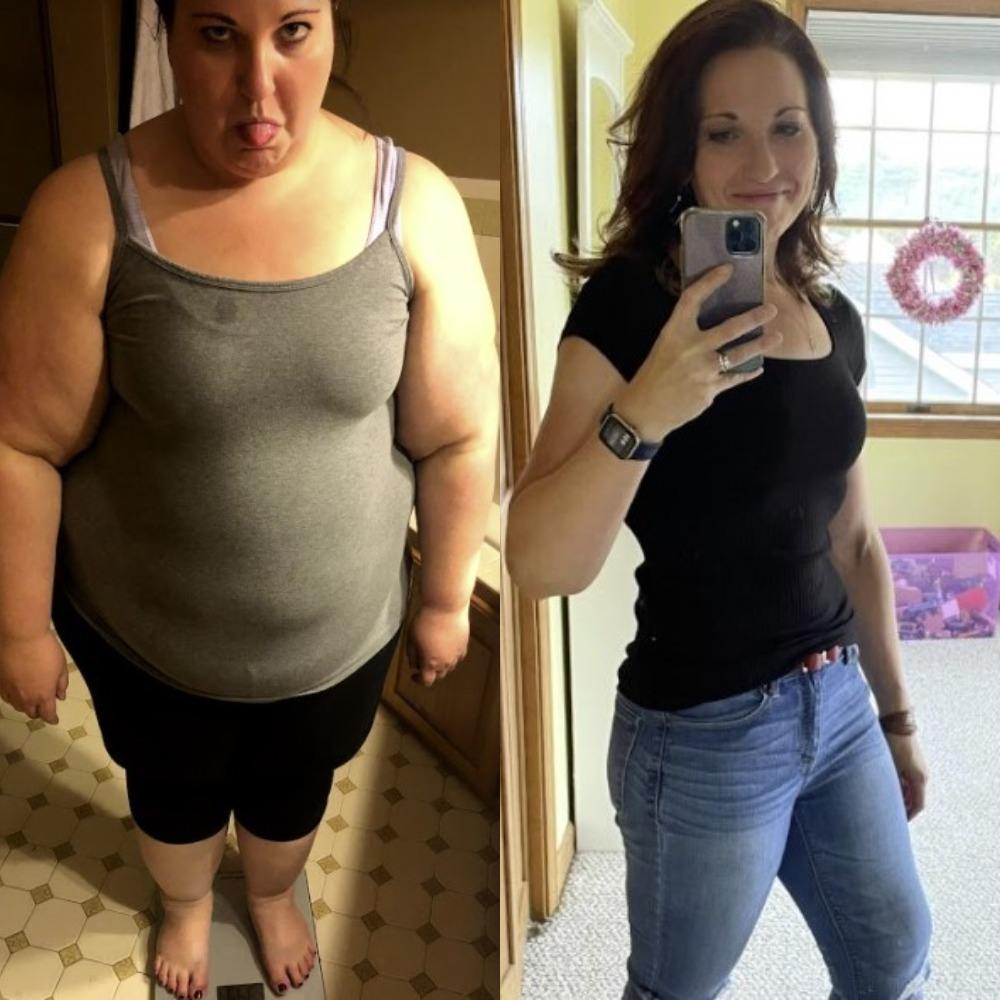
Here’s what we’ll cover:
- How many calories does walking burn? (Calorie Calculator)
- What are the benefits of walking?
- How walking can change your life.
- How to walk properly.
- Is walking enough for weight loss?
- The best practices for walking (tips and tricks).
- Is a Fitbit helpful for walking? (Which fitness tracker is best for me?)
- How long is the walk to Mordor? (And is it simple?)
Without further ado, let’s step right in.
How Many Calories Does Walking Burn? (Calorie Calculator)
In true Nerd Fitness fashion, we scienced the crap out of this, and even created a handy calculator for you – simply put your stats in the calculator here:
Walking Calories Burned Calculator
Gross calories burned
0
Net calories burned
0
We used the formulas and information found on this page for this calculator.
A few things to remember about the above equation:
There’s a difference between gross calories (total calories) expended and net calories (additional calories) expended! Your body burns most of its calories every day JUST by existing.
- Gross calories: calories burned while walking PLUS the calories burned just existing
- Net calories: ADDITIONAL calories you burned thanks to exercise.
(Calculate your calories “in” and “out” with this calculator.)
Also, our calculation is an ESTIMATE. You’re a unique snowflake, and no box or formula can capture your awesomeness/uniqueness. This equation below is JUST a starting point!
Also, if you don’t feel like playing with our calculator (boo), here’s how many calories you burn walking:
On average, a mile burns about 100 calories when walking.
Another point: ANY exercise pales in comparison to a much more important part of the weight loss equation: nutrition.
In addition to consistent dietary changes, Megan credits her walking habit with helping keep her consistent on her journey to a leveled-up life!
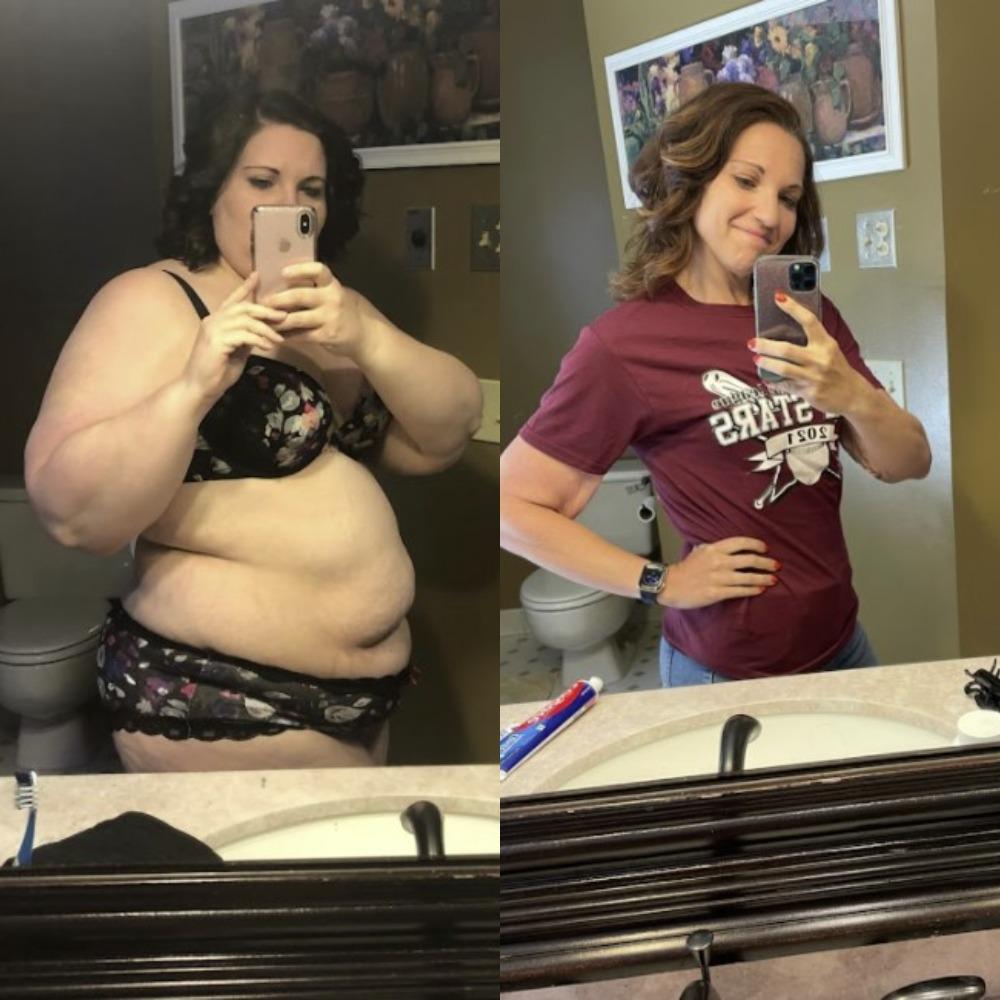
If you’ve come this far, and you want to learn more about why walking is so amazing, continue reading.
And you’re damn right, I’ll show you exactly how to walk to Mordor too.
What Are The Benefits of Walking?

We are designed to walk. It’s in our DNA, and it’s a huge part of our emergence as the dominant species on this planet (along with opposable thumbs, big brains, and Nintendo).
Let’s get the basic stuff out of the way:
Every day, it’s recommended by the CDC that we walk around five miles, or 10,000 steps.[1]
Hence the reason why your Fitbit – which I’ll get to shortly – has that 10k step goal as its default number.
Unfortunately, we Americans tend to average HALF that: 2.5 miles or 5,000 steps.
And I’d imagine that people who work outdoors or have more physically active jobs drag that average wayyyy up.
Which leaves us desk jockeys, who don’t walk nearly enough.

We use our feet to get us from the front door, to our car, to our desk, to our car, to our front door, to our couch… where we put them up while watching four hours of TV before going to bed.
Not walking enough can be a big factor in the creep-up of weight gain over the years.
You might have questions like:
- Can I walk more to lose weight?
- Is walking REALLY good for me?
- Do I need to do more intense exercise?
Long story short:
You should walk more and it can help you lose weight and be healthier.
Short story long…
Here’s why walking is important:
#1) Walking burns calories without exhausting you. If you walk the recommended mileage each day (5 miles instead of just 2.5), it can lead to a tremendous amount of weight loss over time. You’ll burn an extra 100 calories walking just ONE more mile each day than normal: When that’s multiplied out, it’s an extra 700 calories burned per week, which results in approximately a pound of fat lost every five weeks, or 10 pounds in a year. You can scale up your distances to get your desired results!
#2) Walking doesn’t add to training stress. If you are strength training regularly, adding in more weight training or running can lead to burnout, breakdowns, and injuries. If you are trying to look like a super-hero, extra cardio sessions (or long-distance cardio sessions) might kill your gains. But you can just walk. You can walk great distances, provided you’ve built up your body’s physical ability, and not get tired or sore – walking (especially outside while soaking in some sunlight) can make you feel better, not worse.
#3) Walking is low impact. Unlike running, which can wreak havoc on people’s joints if they run improperly or are severely overweight, walking doesn’t have those impact issues. If you go for a walk and your feet or joints hurt, you’re doing it wrong – read the next section!
#4) Walking can burn fat. Because walking is low impact and low intensity, your body doesn’t need to pull much glycogen and glucose stores to fuel itself, which happens when you strength train or push yourself into “aerobic training” with higher intensity cardio. Proponents of intermittent fasting suggest walking in a fasted state in the morning before eating anything in order to help burn extra fat. It’s a little controversial, so this will have to be something you attempt and measure for yourself.
#5) Walking relieves stress. Seriously! Put on your favorite playlist, and go for a pleasant walk around your neighborhood or through the woods as the sun is going down. It’s a recipe to forget the worries of your day.
Bonus points if you can get someone to follow you with a boombox:

#6) Walking improves mental health (especially in older hobbits). Walking can improve mental health, increase brain size, improve memory, and is correlated with improved, longer lifespans.[2]
How Walking Can Change Your Life

If you are severely overweight and can’t run or strength train, walk on.
If you are building muscle and bulking up, walk on.
If you are trying to lose weight, walk on.
If you struggle with following a routine, or have failed in the past with weight loss, walk on.
Why? I’m a HUGE fan of small habit change and tiny victories – walking is the PERFECT habit builder. If you’re brand new and starting out, go for a walk TODAY and begin your journey to Mordor.
This afternoon, go for a five-minute walk. Tomorrow morning before work, before breakfast, as SOON as you wake up, put on your shoes, and go outside for a five-minute walk. No snoozing, no lying in bed, no checking email or Twitter. Put on your headphones, pick your favorite song, go outside, and start walking.
Here’s Why Walking Can Change Your Life:
- Walking for just five minutes a day is the start of a new habit. Every morning for a few weeks, you’ll have to force yourself to walk. Initially, it will take effort and willpower to walk instead of snoozing. However, with each passing day of success, you’ll need to use less effort and willpower to get out the door. After all, it’s only five minutes, right? Once it’s something you do automatically without thinking, you can add on to it by increasing your walk time.
- Walking briskly outdoors in the fresh morning air can be a great caffeine-free wake up call! If you make walking the FIRST thing you do in the morning, especially if you’re doing it before anybody else is awake, there will be zero distractions and no reason to say “sorry, I didn’t have time.” Of course, we like caffeine too (in moderation).
- Walking will give you a chance to gather your thoughts and clear your head before the day begins. We’re constantly distracted at home: TV, iPads, smartphones, etc. Walking is so primal – no gadgets, just walking. Many people cite walking as the impetus for their creative or intelligent breakthroughs.
- Walking and successfully building a habit will give you a habit blueprint to follow for anything else you’d like to accomplish: “Hey, I was able to make walking a habit, what else can I tackle in the same way?” Slow and steady wins. One foot in front of the other, my friend.
How to Walk Properly

“Uhhh, Steve, I know how to walk. I do it every day!”
Welp, if you’re starting from only walking from your car to the office, we need to make sure you’re walking the right way for when you push that mileage up.
Let’s start with your feet, provided you’re not gonna glue hair to your feet and go barefoot to become a hobbit.
I recommend walking in shoes that have a wide toe box and minimal drop (height at the heel vs height at the toes), as we discuss in our monster post on healthy feet and footwear:
- Low profile shoes like those from Vivo barefoot.
- I trained in Vibrams for years.
- Now I train in Merrell Vapor Glove 3s.
You might not be used to walking with minimal cushioning under your heels, so walk slowly and land softly. Walking on softer surfaces to start isn’t a bad idea either.
We were designed before the invention of big clunky shoes… thus, we should be able to walk without big clunky shoes.[3] If you are interested in going barefoot as a runner, get started by walking short distances first. Your feet will toughen up (though they probably won’t grow hair quite like Frodo and Sam), your joints and muscles around your feet and ankles will strengthen, and your knees will deal with less stress.
When going for a lazy stroll, focus on landing softly, which is much easier when you don’t have thick-soled shoes to cushion your stride: land softly with your heel barely touching before rolling onto the middle (ball) of your foot, and then push off. You might need to take shorter strides than you’re used to if you were a big heel striker with a long stride.
If you’re aiming to walk quickly and up the intensity, shorten your stride and aim to land in the middle of your foot while pumping your arms. This is more easily done when walking uphill (which is also a great way to burn extra calories).
Is Walking Enough for Weight Loss?
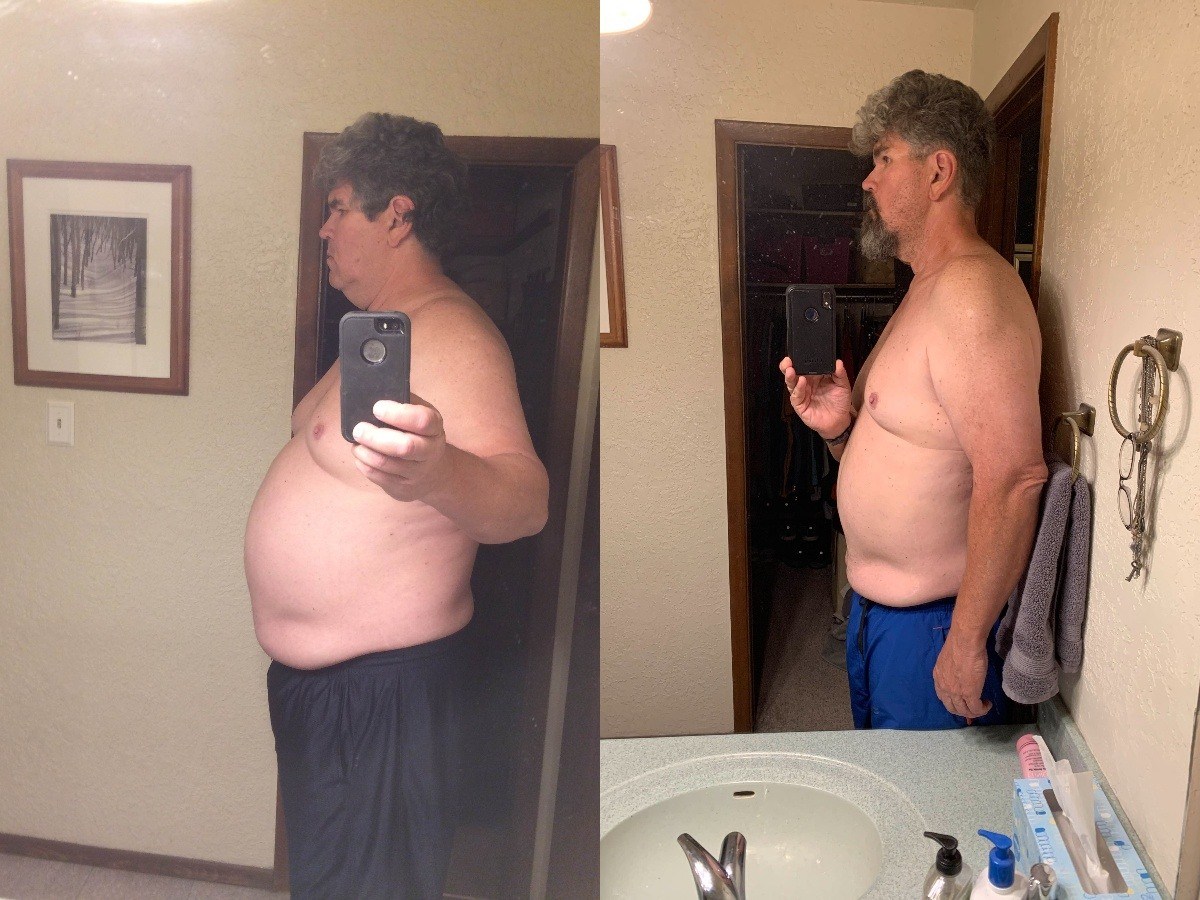
Can walking help you lose weight?
You’re darn right it can!
The above photos are from Don, one of our coaching clients. Don credits his daily walking practice with helping him lose 85 pounds!
He’s not our only example of walking for weight loss:
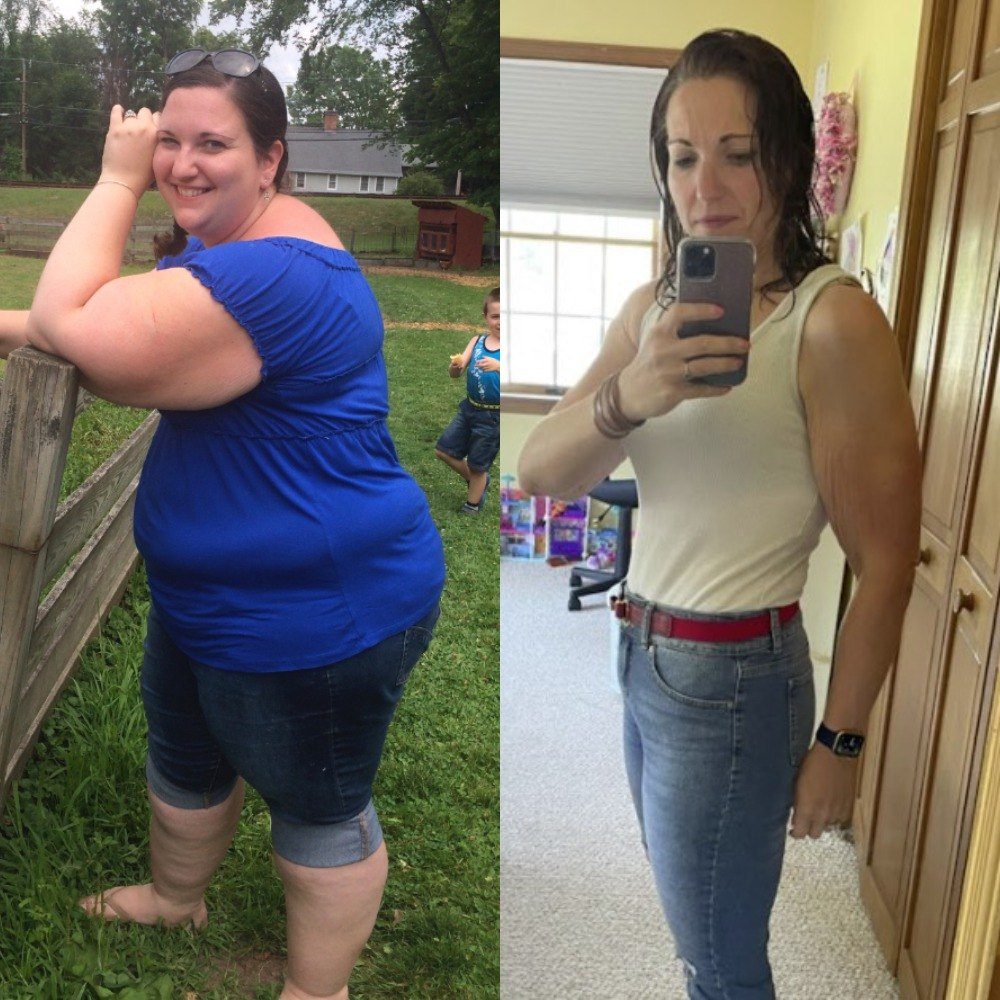
Megan, who I mentioned earlier, is another client who walks daily to maintain her weight loss.
Case closed?
Of course not!
Both Don and Megan also made adjustments to their nutrition to reach their amazing results.
One of the Rules of the Nerd Fitness Rebellion is that we know “you can’t outrun your fork.” No amount of exercise can counter a bad diet, as your nutrition will be responsible for 90% (not an exaggeration) of your success or failure.
Here’s an example:
- Let’s say you go for a 5-mile walk, which takes you 90+ minutes.
- If you then consume a 20 oz Gatorade and a small bag of Fritos (a typical snack for many here in America), you will have already undone all of the calories burned while walking.
Depending on your nutrition and love/hatred for exercise, this is either great news or bad news!
The BAD news: you can’t eat very badly in mass quantities and then expect to lose weight with a bit of exercise every week, even if it’s strenuous.
The GOOD news: Even if you dislike exercise, you can avoid exercise and still lose weight! Instead, put ALL of your focus instead on fixing your nutrition, and then go for a walk every once in awhile.
I’d also consider reading the following:
Oh, and if you want to see if a Nerd Fitness Coach can build you a program to lose weight while doing movements you enjoy (like walking), click on the button below:
The Best Practices for Walking (Tips and Tricks)

Here’s how to improve your walking technique:
#1) Focus on posture! Head up! Shoulders back! Walk with a confident stroll – practice this one in the morning if you’re not used to walking like this. It’s also a great way to appear instantly more confident; we nerds and hobbits need all the confidence we can get! Look around at your surroundings with your head up, arms swinging in rhythm.
You can also do some well-placed neck swings and jacket removals:

#2) Walk uphill to burn more fat. If you are walking on a treadmill, set it to an incline to increase the intensity and thus increase the amount of fat burned. Just don’t be that person who sets the incline way up, then holds onto both sides and leans their body back to be perpendicular with the incline. Keep good posture, lean forward into the incline, shorten your stride, and pump your legs.
#3) Hiking is a great way to practice walking, enjoy the scenery, and play Lord of the Rings in the woods with plastic swords and capes. Not that you should do that (you totally should). Here’s a beginner’s guide to hiking!
#4) When walking downhill, especially while barefoot (or wearing minimalist shoes), keep that stride short and be careful on how you are walking. Make sure your knee is bent when you land and absorb the impact rather than jamming the impact through your heel, knee, leg, hips, and lower back.
#5) Consider going for “fasted walks” in the morning. When you wake up first thing in the morning, your body has burned through most of the carb-fueled energy stores during the night. This means when you go for a walk first thing in the morning, your body is more likely to have to pull from the only fuel source available to it: fat! This is the entire philosophy behind things like Intermittent Fasting or really low-carb diets like the Ketogenic diet.
#6) Get yourself a sturdy walking stick, if only so you can use it to battle imaginary ogres, goblins, cavetrolls, etc. It can also make you feel far more adventurous than if you’re just walking, and help you get up hills and land softly when going back down.
#7) Try Temptation Bundling. Load up an audiobook or your favorite podcast, and tell yourself that you can ONLY listen to the book or podcast while walking.
Is a Fitbit Helpful for Walking? (Which Fitness Tracker Is Best for Me?)
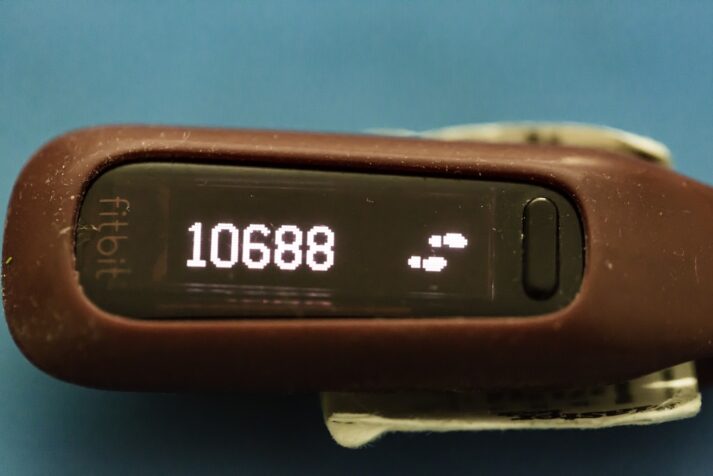
If you’re somebody who has been interested – or is getting interested – in walking, you’re probably familiar with step-tracking devices:
- Fitbit (the Charge 4 is pretty awesome)
- Garmin
- Apple Watch
- Polar
Personally, I’m a huge fan of fitness wearables, but not for the reasons you’d think.
For starters, you’re wearing a constant reminder that you are prioritizing movement, which can only be positive. You can even trigger it to remind you to get up and move every hour.

It can also allow you to see how many steps you normally take, and thus allow you to prioritize moving MORE.
Although Fitbit has a history of being sued for the inaccurate heart-monitor portion of its devices, I’m less concerned about heart rates and 100% accuracy of step distance, and instead think in terms of personal improvement.
Just like with tracking your bodyfat percentage or your weight, “that which gets measured gets improved,” and that carries over to your total steps. The fact that you’re tracking it means you’re going to be more aware of it, which means you’re going to be more likely to be able to improve it.
And that’s why, in a weird way, I’m not very concerned about the total accuracy of these devices. Even if your scale is off by 5 pounds, or your body fat caliper is inaccurate by 1%, as long as you use the same device and measure in the same way under the same conditions, you can track trends and paint the picture of your health and whether or not it’s improving!
And that’s what these fitness trackers should be used for: a reminder and a trend tracker!
What you SHOULDN’T do: take your fitness tracker as gospel, and use that to calculate down to the calorie and macro how much food exactly you can consume.
What you SHOULD do: track your trend over time, and see if you can improve your average. Use the technology to aid your fitness quest. Use the community portion of the band to compare your stats against friends and get some positive friendly peer pressure to get you off your ass.
Okay, if nerdy fitness technology isn’t nerdy enough for you, let’s go full-nerd.
How to Actually Walk to Mordor
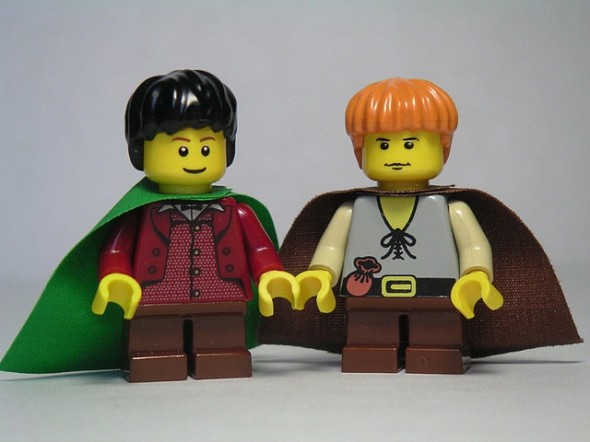
Did you know it’s 1779 miles between Hobbiton to Mount Doom? [4]. We can actually determine how far Sam and Frodo walked, and then set out on the journey ourselves! It’s one thing to go for a stroll around your neighborhood. It’s another to know that, “If I take one more step, it’ll be the farthest away from home I’ve ever been.”

So let’s take a look at how far we need to walk first:
- 458 miles: Go from Hobbiton to Rivendell.
- 462 miles: Set out with the Fellowship from Rivendell, through Moria, to Lothlorien.
- 389 miles: From Lothlorien, down the Anduin, to Rauros Falls.
- 470 miles: Follow Frodo and Sam on the quest from Rauros to Mt. Doom.
- 535 miles: From Minas Tirith to Isengard
- 693 miles: From Isengard to Rivendell.
- 397 miles: From Rivendell to Bag End.
- 467 miles: (bonus!) Follow Frodo to the Grey Havens and return home with Sam.
Following this path, you need to walk a total of 1779 miles to get from Hobbiton to Mt. Doom. Then it’s time to destroy the ring and get carried to Minas Tirith by the Great Eagles.

Then you’ll walk 1625 miles back to Bag End (and an additional 467 miles if you’re interested in doing a round trip to the Grey Havens).
Obviously, you don’t need to move at the same speed as the hobbits (18 miles on the first day is no joke! Damn, those hobbits covered some ground!), but it’s still fun to track your walks and your total miles to see where you’d be on your journey.
However, like Frodo and Sam, it starts with the first step.
I’ve created a Google Doc that you can copy for yourself to track your distances to follow Frodo and Sam on your journey to destroy the One Ring.
Here’s how to do it:
- Open the document, and then click on “file,” “save a copy,” and then you can edit your own copy of the document.
- Track your distances with a pedometer, Fitbit, your iPhone or Android phone.
- Input your distances and work towards completing each section of the journey over months. As you input your distances, it will automatically let you know when you reach each destination so you can get you started on the next one. 5 miles a day on average will have you destroying the Ring within one year.
Oh, and if you’re curious, according to my rough gorilla math, Frodo burned at least an additional 61,0000+ calories (100,000+ gross calories) by walking “there and back again” – you’re welcome[5].

What’s that?
You want some help getting out the door?
You got it – but only cause you asked nicely.
Here are three ways to level up alongside Nerd Fitness.
#1) Our Online Coaching Program: a coaching program for busy people to help them make better food choices, stay accountable, and get healthier, permanently.
You can schedule a free call with our team so we can get to know you and see if our coaching program is right for you. Just click on the image below for more details:
#2) If you want an exact roadmap on how to get in shape, check out NF Journey. Our fun habit-building app helps you exercise more frequently, eat healthier, and level up your life (literally).
We even have fun missions that will help you walk more, all while you earn XP! Righteous.
Try your free trial right here:


#3) Join the Rebellion! We need good people like you in our community, the Nerd Fitness Rebellion.
Sign up in the box below to enlist and get our Rebel Starter Kit, which includes all of our “work out at home” guides, the Nerd Fitness Diet Cheat Sheet, and much more!
Alright, your turn:
What questions do you have about walking?
How have you incorporated it into your daily routine?
And have you walked to Mordor?
Let me know in the comments!
-Steve
Photo source: fourbrickstall Hiking in Candelario, Lego Frodo, logoboom © 123RF.com, gynane © 123RF.com, arushigakaito © 123RF.com, snehit © 123RF.com, Thad Zajdowicz Keep walking! HMM!, Frodo and Sam,
The post A Hobbit’s Guide to Walking to Mordor (with Calorie Calculator) first appeared on Nerd Fitness.
]]>The post Strength Training For Women: 7 Things You Should Know First! first appeared on Nerd Fitness.
]]>Well you’ve come to the right place!
We help women just like you grow strong, and today we’ll get you started on your strength training journey.
Here’s what we’ll cover in our strength training guide for women:
- Should women lift weights? (Why you should start strength training)
- Is strength training different for women?
- Strength Training Level 1: Bodyweight Workouts
- Strength Training Level 2: Dumbbell Workouts
- Strength Training Level 3: The Wide World of Barbells
- How much weight should women lift?
- Can strength training help with weight loss?
- The best strength training exercises for women
- A meal plan for strength training (Healthy Eating 101)
- The top frequently asked strength training questions for women
- How to begin lifting weights as a woman (Next Steps)
After today’s guide, you’ll know exactly how to transform yourself into a superhero!
What makes me so confident? How do I know so much about women growing strong?
Allow me to introduce myself: My name is Staci Ardison.
This is me deadlifting 455 pounds:

I’m currently the Senior Coach here in the Nerd Fitness Coaching Program.
And no, I wasn’t born this strong (that would be strangely awesome). It’s only after discovering a love of strength training that I learned how to handle weight like this.
Obviously, we won’t start you out lifting that much at first. But we will set you up on a path that if you want to, one day you’ll be able to.
Before we get to it, if you’re in a hurry, I want you to know we’ve compiled all our strength training material into a friendly guide so you can read it at your leisure (I’m picturing you reading the guide poolside, sipping a lemonade).
Download Strength Training 101: Everything You Need to Know when you enlist in the Rebellion (that’s us!) below:
Alright, let’s do this!
Should Women Lift Weights? (Why You Should Start Strength Training)

Everyone should start strength training: people of every sex and gender, the young, the old…everyone.[1]
We discuss the benefits heavily in our introduction to strength training, but I’ll highlight some examples now.[2]
Here’s why every woman should strength train:
#1) When you’re stronger – life is easier. No need to call for help to get that 50lb bag of dog food off the top shelf, or carrying an air conditioner unit up a flight of stairs. LIFE is easier when you’re stronger.
#2) Less injury risk – when you build strong muscles, you’re also building stronger bones, ligaments, and tendons, making you less prone to injury doing things you love (like playing in a quidditch league).[3]
#3) Helps combat age-related muscle loss,[4] allowing us to remain independent longer as we age:
#4) Muscle is harder to maintain, which means you need to eat more just to hold on to it.[5]
#5) Reduce pain – having a strong body makes living easier on your joints, as well as allows you to hold a better posture and reduce back / hip pain.[6]
#6) Appearance – this is a personal preference! Some women like to have a lot of muscle, and some don’t. While you can’t spot reduce fat, you can choose to build more muscle in specific areas, changing your body shape. Growing up, I was an extreme pear shape, but due to strength training, I now have more of an hourglass shape.

#7) Live longer – want to spend more time on Earth? Strength training and growing muscle will help you do just that.[7]
Boom!
Although strength training is one of the best things you can do for your health, it’s estimated that only about 20% of women do it, far below that of our male counterparts.[8]
That sucks.
It’s part of my life’s work to reverse this trend and to do so, I’m going to need your help.
You in?

Perfect!
Is Strength Training Different for Women?

Here’s something that may shock you: there’s no reason everybody – of any gender or sex – shouldn’t strength train the same way!
Yep, you don’t need 3-pound pink dumbbells, unless you like 3-pound pink dumbbells! You can train with free weights and barbells just like everybody else at the gym.
Sure, there are biological differences between the sexes. For example when strength training, people with typical male anatomy will produce more type IIa fibers than people with typical female anatomy, who will in turn produce more type I fibers than men.[9]
Don’t worry about any of this though.

We don’t need to get you lost in the weeds.[10]
The American College of Sports Medicine doesn’t differentiate between sexes in their strength training recommendation.[11] So neither shall we.
So what exactly is strength training, you may be asking?
“Strength training” of any kind can be explained by two things:
#1) Movement of any weight (including your body weight) – Doing ANY exercise that pushes your muscles outside of their comfort zone, forcing them to rebuild stronger to prepare for the next challenge.
#2) Progressive overload: exerting slightly more effort than last time (lift a heavier weight or do 1 more rep) consistently. Your muscles will constantly have to adapt and will constantly be rebuilding themselves to get stronger.
Coach Jim walks you through different strategies for progressive overload in this video:
Before we get into the ins and outs of strength training, I need to address a question we get over and over from the women in our coaching clients:
Will I get bulky if I lift weights?
If you see a woman who is incredibly muscular and at an extremely low body fat percentage, I guarantee she has been working her butt off for a very long time with the very specific goal of building muscle and looking that way.
It’s not something that happens overnight, or by mistake.
We simply don’t have the same amount of testosterone as people with male anatomy to get there easily.[12] It’s something we cover in great detail in our guide on How to Build Muscle as a Woman.
If you’d like to build muscle, but not as much as a professional bodybuilder – don’t worry, it’s not something that happens by accident.
It’s something Rebel Leader Steve brings up in the video below:
So strike “I don’t want to get bulky” from your vernacular.
Alright, let’s talk about how to actually get started strength training.
Strength Training Level 1: Bodyweight Workouts

If you’re just starting your strength training journey, our first stop will be a bodyweight workout.
Bodyweight training is simply doing an exercise in which your own body is the “weight” you are “lifting.”
Duh.
This is the BEST place for anybody – regardless of weight or age – to start their strength training journey.
Why is this the best place to start?
Here are two big reasons to do bodyweight training:
#1) You always have your body with you (unless you are a ghost, in which case, this is awkward). This means you can work out ANYWHERE with bodyweight training:
- Our Beginner Bodyweight Workout Routine in your living room.
- Our Hotel Workout in a hotel (obvi).
- Our Park Workout in a…well, you get the point.
#2) Using your body for resistance training is the most “human” thing ever! By learning to push and pull and hang and squat and lunge, you are doing what your body is literally designed to do.
By getting strong with bodyweight movements, you’re making yourself antifragile and less injury-prone.
Bodyweight training isn’t as easy to ‘scale’ the difficulty as some of the other strength training methods (“put more weight on barbell”), but you can get REALLY strong with just bodyweight training.
For example…
You can start with knee push-ups:

Then go to regular push-ups:

Then elevated push-ups:

Then even up to things like handstands:

And even handstand push-ups:

You just have to know HOW and WHEN to scale up (we can help there too).
Want a sample bodyweight workout you can try? You got it:
This is the Beginner Bodyweight Workout (3 Circuits):
- 20 Bodyweight squats.
- 10 Push-ups.
- 10 Walking lunges (each leg).
- 10 Dumbbell rows (use a milk jug or other weight).
- 15 Second plank.
- 30 Jumping jacks.
Want some variety? Try 8 other “at-home workouts.”
You can also create your own “no equipment workout” by reading the 42 Best Bodyweight Exercises.
Strength Training Level 2: Dumbbell Workouts

The next stop on our strength training journey includes lifting some actual weights!
Woot.
Dumbbells are a great first step into the world of weight training and strength training:
- Most gyms will have dumbbells, even if it’s a basic gym in your apartment complex.
- A set of dumbbells doesn’t take up a lot of room, which means you can have a pair at home without a large footprint.
- Dumbbells make it easy to add difficulty to a bodyweight movement: holding dumbbells while doing lunges, for example.
- Dumbbell exercises can be less intimidating than barbell training for some, and are a step towards barbell training.
- Dumbbells have an added stabilization challenge, and will point out muscle imbalances pretty easily (“oh my right arm is stronger than my left arm.”).
- You can scale easily. Once the 10 pound weights become too easy, pick up the 15 pound ones!
Here’s a beginner workout that you can do, taken from our Level 4 Gym Workout “Dumbbell Division”:
- 10 goblet squats
- 10 push-ups
- 10 dumbbell rows per side
Here’s how to perform a goblet squat:

This is a push-up done in proper form (in case you skipped the last section[13]):
And here is how to do a dumbbell row:

If you’re following along at home, you just did your first full-body workout using weights!

Want a custom-built dumbbell workout? Something designed for the weights in your apartment’s gym?
Our Nerd Fitness Coaches can do just that! Plus they’ll scale your workouts as you grow stronger, turning you into a superhero!
Strength Training Level 3: The Wide World of Barbells

You made it! It’s now time to start training with barbells!
This is going to help you become ultra-powerful and strong.
It’s how I transformed myself into the person I am today.
The reason barbell training is so important is that it allows you to pick up heavy weights and do movements that recruit every muscle in your body. This is great for building powerful, strong muscles in your core, legs, glutes, and so on.
We’re talking about exercises like the Back squat:

And the Barbell Deadlift:

Show me somebody that’s strong at both of these movements, and I’ll show you somebody that’s in better shape than most of the human population.
But wait!
Even an empty barbell can be heavy (normally 45 pounds or 20Kg), so before we jump into the deep end, let’s make sure you are strong enough to proceed.
You’ll need to be able to complete a goblet squat with a 45 pound dumbbell (shown earlier) and the Romanian deadlift with 20 pound dumbbells.
Here’s how to perform the Romanian deadlift with dumbbells:
Our test to see if you can handle barbell training will be the Level 4 Gym Workout: Dumbbell Division C (taken from our Beginner’s Guide to the Gym).
You’ll need to be able to go through the following before you start training with barbells:
- 10 goblet squats – 45 lbs (20Kg dumbbell),
- 10 Romanian deadlifts with 20 lbs dumbbells (9-10 Kg)
- 10 push-ups (on knees or regular)
- 10 dumbbell rows with each arm – at least a 20 lb dumbbell
Can’t do those movements at that weight? Stick to the Level 4 Gym Workouts until you build up the strength to progress to barbells.
Once you CAN do the above, the real fun is going to start!
We’re gonna replace the goblet squat with a back squat and the RDL with a barbell deadlift.
Here’s a video demonstration on how to perform the barbell back squat:
I would also encourage you to read How to Squat Properly for a full tutorial, especially if you’re just learning how to squat.
Here’s a step-by-step video on how to do the deadlift:
Again, make sure you read How to Deadlift Safely With Proper Form if you’re just starting your deadlifting journey.
Once you get the handle of these two moves, it’s time for a full-body workout using barbells!
We’ll give you two different days to alternate between.
NF BEGINNER BARBELL STRENGTH WORKOUT: DAY A
Do 3 rounds of:
- 10 barbell squats
- 10 push-ups
- 10 bodyweight rows
NF BEGINNER BARBELL STRENGTH WORKOUT: DAY B
Do 3 rounds of:
- 5 barbell Romanian deadlifts
- 10 push-ups
- 10 dumbbell rows per arm
That’s it! Do each of these once a week and you’ll be rocking an awesome strength training practice.
Are you doing the workouts correctly?
A good way to tell would be to record yourself doing the movement and then match them against the gifs and videos in this guide. If they look close you’re doing great!
We also provide form checks in our 1-on-1 Online Coaching Program. Through our snazzy app, a Nerd Fitness Coach (like me!) will review your movement to make sure you are training correctly and safely!
How Much Weight Should Women Lift?
We have a FULL resource on how to determine your starting weight for lifting, but I’ll give you the gist here.
The simple to learn but tough to implement answer: lift enough so that you can get through the set, but not too much that you have NO fuel left in the tank at the end.
And then, try to lift sliiiightly more than last time.

How much weight should I start with?
- If you are using dumbbells or a kettlebell, always err on the side of “too light” versus “too heavy.” You want to learn the movement correctly and build correct form.
- If you are training with a barbell, ALWAYS start with JUST the bar, no matter the exercise (as a reminder, a standard barbell weighs 45 pounds).
“How fast should I add weight to the bar?”
Here’s what we teach all of our coaching clients: add the minimum amount of weight each week you can, even if you THINK you can lift more. It’s better to finish a workout full of momentum and say “I can do more!” than defeated and saying “that was too much, crapola.”
Think of it this way, even if you are adding just 5 pounds per week to the bar, within a year you would be lifting 300+ pounds!
So go SLOW. Team NF’s Steve even bought little half-pound weights and increases many of his lifts by just 1 pound per week.

It’s a big part of how he transformed (jokingly) from Steve Rogers to Captain America.
And if you are looking for this content in an easily digestible form, make sure you download our free Strength 101 Guide when you join the Rebellion below:
Can Strength Training Help with Weight Loss?

We get questions relating to weight loss and strength training all the time, and it’s something we cover throughout our Strength Training 101 series.
Let me quickly address it here:
Fat and muscle are two different things – one can’t transform into the other.
We all have plenty of muscle right now (otherwise we wouldn’t be able to move, walk, sit upright, etc.), the muscle is just hiding underneath a layer of body fat.
In order for us to lose weight and look better, we want to do two things:
- Build our muscles stronger and tighter.
- Reduce the fat covering those muscles!
And luckily, both of those things happen simultaneously through strength training!
Coach Matt explains exactly how in this video on losing fat while gaining muscle (also known as “getting toned”):
So NO, you don’t need to lose weight first before you start strength training.
You will lose weight BY strength training (and keep the muscle you have).
You do NOT need to do hours of cardio for weight loss – weight loss is 90% a result of your nutrition. So honestly, you don’t need to ever set foot on a treadmill again (unless you WANT to).

Strength training will help you lose weight and look better IF you do two key things for effective weight loss:
- Calorie restriction: eat fewer calories than you burn every day.
- Strength train with progressive overload (picking up heavier stuff).
As we cover in our “Why can’t I lose weight” article (full of fun Harry Potter references), combining a caloric deficit and strength training is magic:
- You’re not consuming enough calories to carry out your body’s daily functions.
- Your body needs to use lots of calories to rebuild the muscle that was broken down during the strength training workout.
- Your body has no choice BUT to pull from fat stores to get stuff done!
Just by doing those two things (get strong, reduce calories), all sorts of wizardry and witchcraft takes place in your body:
- Get stronger and keep the muscle you have.
- Build tight dense muscle.
- A revved-up metabolism while rebuilding muscle.
- Burning of body fat to get things done.
Yeah, you’re hearing me correctly.
Lose the body fat that sits on top of your muscles and you’ll make your muscles tighter and denser = look better without clothes on.
So how do you put this into practice?
- Pick one of the strength workouts we covered earlier (start at the Beginner Bodyweight Workout if you feel unsure where to begin).
- Calculate your daily caloric needs.
- Learn which diet is best for you and make a small change.
Oh, what’s that? You just want somebody to tell you exactly how to train for your body, and how to eat for your goals?
Fine!
Check out our 1-on-1 Coaching Program – it’s helped hundreds of women lose weight through strength training – and proper nutrition. We work with you on habit-building and lifestyle design to actually get stuff done!
The Best Strength Training Exercises for Women

Great news:
The best strength training exercises are universal. No matter your size, shape, sex, gender, age, or whether you love Star Trek more than Star Wars, these are the best exercises to build a great physique.
I’m going to share with you the exercises that every beginner should master (scroll down for full video and explanations!).
The 9 Best Strength Training Exercises for Women are:
- Push-up: uses every push muscle in your body (chest, shoulders, triceps)
- Bodyweight squat: uses every muscle in the lower body (quads, hamstrings, glutes, core)
- Bodyweight row: works every “pull” muscle and helps prepare you for a pull-up!
- Pull-up or chin-up: the best “pull” exercise in history! Everybody should have a goal to get their first pull-up.
- Bodyweight dip: advanced “push” movement that targets your push muscles (chest, shoulders, triceps) in a different way than push-ups.
- Barbell squat: the best bang for your buck on muscle building. Recruits nearly every push muscle in your whole body, and a great core workout.
- Barbell deadlift: the favorite exercise of every coach at Nerd Fitness. Uses every “pull,” leg, and core muscle in your body.
- Barbell benchpress: as basic and powerful as they come. Uses every “push” movement in your upper body and can get you strong as heck!
- Barbell press: press the bar above your head! Targets shoulders and triceps more than the chest.
Click on any of these exercises to get a FULL explanation of the movement, step-by-step:
1) The Push-Up: The best exercise you could ever do for yourself when it comes to using your bodyweight for push muscles (your chest, shoulders, and triceps):
2) The Bodyweight Squat: This exercise serves a dual purpose as it’s the foundation for building strength AND helps build proper mobility. If you are going to ever do barbell squats, you need to work on hitting proper depth with a bodyweight squat first!
3) The Inverted Bodyweight Row: Until you can get your first pull-up or chin-up, these exercises are GREAT to start building your pull-muscle strength (back, biceps, and forearms).
4) The Pull-Up and Chin-Up: Once you can support your bodyweight above the bar, the world becomes your playground. No strength training routine should be without pull-up or chin-up work! (Click here if you can’t do a pull-up or chin-up yet?)
5) The Bodyweight Dip: As you start to get stronger with push-ups and need to find a way to increase the challenge, consider doing dips. Warning: these are very advanced, but incredible strength-building exercises.
And now we’re into the best weight training exercises:
6) The Barbell Squat: Probably the best exercise when it comes to building strength and muscle throughout your whole body. It also burns crazy calories and makes life better. This is a MUST:
7) The Barbell Deadlift: Maybe the best exercise of all time. Actually no, it IS the best exercise of all time. It’s certainly the most primal: “pick the weight up off the ground. Done.”
This is a very technical lift, so make sure you read our article on how to do it with proper form:
8) The Barbell Press: Press a barbell above your head. This recruits all of the muscles in your chest, shoulders, and arms in order for you to lift the weight over your head.
As a bonus, you need to really flex and brace your core, which gets those muscles working too.
9) The Barbell Bench Press. Lie on a bench, and lower a barbell until it almost touches your chest. Pause, and then press it back up towards the sky. Repeat! And get strong.
Your mission, should you choose to accept it: commit to trying ONE of these movements in the next week. Use 20 seconds of courage, recruit a friend who has lifted or trained before, and try your best.
And if you want somebody to help you put these into a workout program, teach you HOW to do these movements properly, and have the confidence to know you’re training correctly for your goals…
A Meal Plan for Strength Training (Healthy Eating 101)

So far, we’ve been more or less just talking about exercises when it comes to strength training.
This is logical, because this is in fact a guide on how to perform certain exercises to grow strong.

However, we constantly remind our coaching clients that 90% of their success or failure on their fitness journey will come down to what they eat.
“Success” in this context really comes down to your goals.
- Are you looking to bulk up? You’ll need to eat more calories than you burn.
- Are you looking to slim down? You’ll need to eat fewer calories than you burn.
At this point, you might be thinking “Staci, how many calories do I need?”
To answer that question, it’s time for the Nerd Fitness Calorie Calculator!
Nerd Fitness Total Daily Energy Expenditure Calculator
Basal Metabolic Rate (BMR)
0
Your BMR is an estimate of the total calories burned a day, while in a state of rest.
TDEE
0
Your TDEE is an estimate of the total calories burned during a single day, when exercise is factored in.
(Note: we have used The Mifflin-St Jeor Equation to create this calculator! [14]).
- If you want to bulk up and gain weight, take your TDEE and add 250 calories to it to get your daily goal. This should result in gaining half a pound per week.
- Want to lose weight? Take your TDEE and subtract 250 calories to receive your daily goal. This should result in losing about a half-pound a week.
The other piece of the equation outside of a caloric surplus/deficit is protein.
Since you will be strength training and building muscle, you’ll need to make sure you are eating protein at every meal. It’s the number one macronutrient for creating new muscle tissue.[15]
Protein can come from any number of sources, including:
- Meat (steak, bison, pork).
- Fowl (chicken, turkey, duck).
- Eggs![16]
- Cheese and dairy.
- Fish and shellfish (salmon, tuna, shrimp).
- Legumes (black beans, chickpeas).
- Other vegetarian protein sources here.
As we cover in our “How much Protein do I need?”, claims for the amount of protein required for muscle growth vary wildly from source to source (and woman to woman).[17]
Here is our recommendation:
- If you’re of healthy weight, active, and wish to build muscle, aim for 1 g per pound of bodyweight (2.2 g/kg).
- If you’re an experienced lifter on a bulk, intakes up to 1.50 g/lb (3.3 g/kg) may help you minimize fat gain.
Let me simplify it for you:
“To build muscle, target at least 1 gram of protein per pound of bodyweight (2.2 grams per kg).”
If you’re curious, from our healthy eating article, this is what a portion of protein looks like:
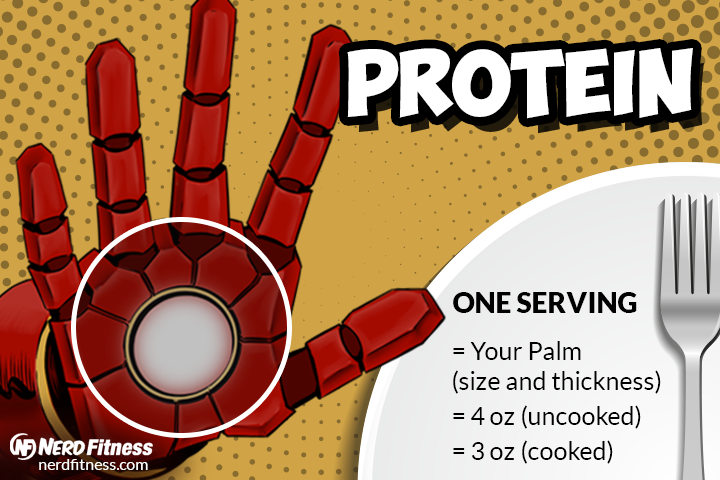
Here’s how much protein is in a serving of food:
- 4 oz (113 g) of chicken has around 30 g of protein.
- 4 oz (113 g) of salmon has 23 g of protein
- 4 oz (113 g) of steak has 28 g of protein.
Want to get more protein? Consider protein shakes. Rebel Leader Steve and I both supplement with shakes daily to meet our protein goals.
Whatever you do, make sure you’re getting enough!
Whenever we speak with new Online Coaching Clients, protein is the macronutrient we begin every discussion with! It’s THAT important when it comes to either weight loss or building muscle. I’m not kidding when I say it should make up a portion of every meal you eat.
The Top Frequently Asked Strength Training Questions for Women

Here are some of the most common questions we receive from women beginning their strength training practice in our 1-on-1 Coaching Program.
#1) Will I get bulky lifting weights? I really don’t want to.
I have GREAT NEWS!
Strength training will not make you bulky, UNLESS you want it to!
And if you want to bulk up? That’s AWESOME!

Here’s how to build muscle correctly.
You get to pick how you want to look, so you do you.
Just remember that women who compete as bodybuilders didn’t start looking like overnight:
- They have eaten, trained, and potentially taken supplements specifically so they can look like that! Which is great. Good for them.
- They’ve been working towards that goal for years, probably decades.
Here’s the truth: when you pick up heavy things (like barbell training), your muscles get STRONGER (but not necessarily bigger).
If you actively eat for the goal of building muscle and getting bigger, you CAN build muscle and size.
Again, if you want bigger arms or stronger glutes, AWESOME. You do you.
Let’s talk about the reverse: If you pick up heavy things and eat a caloric deficit, your muscles will get stronger and denser; you will burn the fat on top of your muscle, and you will lose weight and get that “toned” look that many women are after.
Jump back to our healthy eating section for more on caloric deficits and surpluses.
#2) Can I spot reduce fat with certain exercises?
Sir Mix-A-Lot was wrong. Don’t do side bends and sit-ups, because you’re wasting your time!
- Side bends don’t get rid of love handles. They will simply strengthen your side muscles without actually reducing any fat there, potentially making you bigger around the waist unless you change your diet as well.
- Sit-ups will not remove belly fat. They can also wreak havoc on your lower back, and are an incomplete exercise.
Your body cannot spot reduce fat in specific locations. If you have flabby arms or a big stomach, doing thousands of bicep curls and thousands of crunches won’t help.
Your body is genetically predisposed to storing fat in certain locations in a certain order.
When you start to lose weight, your body will lose the fat you currently have in a certain order as well – it might come off your arms first, then your legs, then your belly, then your chest, and THEN your butt.
Or in a different order, depending on your personal genetic makeup.
No amount of targeted exercise will change how that fat disappears.
Want to lose weight? Reduce your caloric intake in a way that doesn’t make you miserable:
- For some people, that’s counting calories.
- For others, it’s following a Paleo Diet.
- For a rare few, it’s doing a Ketogenic Diet.
We cover ALL the popular diets, and why they will ALL work…temporarily in our article on “which diet is right for you?” (Just don’t do the Military Diet!)
Here’s the truth: your diet – specifically how MUCH you eat – will be responsible for 80-90% of that fat-loss equation.
The other 10%-20% can come from strength training and fun exercises.
Big compound movements that recruit lots of muscle (and thus force your body to rebuild lots of muscle, which requires extra calories burned, even after the workout is done). Our section on the best strength training exercises for women would be good examples of compound movements.
#3) How many days a week should a woman lift weights?
Unless you’ve been strength training for years and know what you’re doing, we recommend that you pick a full-body routine that you can do 2-3 times a week.
You build muscles while resting, not working out, so you generally want 48 hours before engaging the same muscle group again.
If you made it up to our “The Wide World of Barbells” section, you can do the DAY A workout on Monday and the DAY B workout on Thursday. That’ll give you plenty of time to recover.
Want more? Maybe on the weekend, you sneak away for a short hike.

Read “Exercise Without Realizing It” for more ideas on how to keep your body moving!
Don’t worry if this doesn’t seem like a lot at first. We are interested in building the habit of strength training initially. We can up the frequency once you’re rocking and rolling.
Learning to meal prep would also be a good use of your time between training sessions.
4) Can I do strength training at home?
You sure can!
Many of our coaching clients have gotten in great shape simply by doing bodyweight exercises at home.
Here are a few resources to get you strength training in your living room:
- Beginner Bodyweight Workout: many a Rebel have started their fitness journey here, and you can do it right in your own living room (if your dog will let you).
- Advanced Bodyweight Workout: crushed the Beginner Bodyweight Workout? Then try this advanced circuit on for size.
- 42 Best Bodyweight Exercises: want to get your hands dirty? Use this guide to create your own bodyweight workout you can do anywhere!
- 20-Min Kettlebell Workout: own a kettlebell? Want one? With one single piece of equipment you can get in a great workout.
We can also build you a custom workout for your exact situation, whether you’re stuck at home or in an office, we can create a solution that fits your busy life!
How to Begin Lifting Weights as a Woman (Next Steps)

Since 2009, Team Nerd Fitness has learned a tremendous amount about how to best serve the ladies of this community.
I want to share with you my favorite success story.
Meet Leslie, a very sedentary single mom who works long hours that managed to lose 100+ lbs with the Nerd Fitness Coaching Program:

What spurred her epic transformation?
In two words: strength training.
Leslie learned to train the right way, picked up a barbell, fixed her diet, and now does crazy things like handstands and ring work!
So if you’re tired of the same ole same ole and you’re ready to start strength training, you’re in the right place!
Not sure what to do or how to get started?
1) Check out our 1-on-1 Coaching Program! Our philosophies help women like Leslie above and they can be the philosophies that help you become strong inside and out.
Click on the image below to schedule a call and see if we’re a good fit for each other!

2) If you want a daily prompt for doing workouts at the gym (or at home), check out NF Journey. Our fun habit-building app helps you exercise more frequently, eat healthier, and level up your life (literally).
Try your free trial right here:


3) Join the Rebellion! Our free community numbers in the hundreds of thousands scattered throughout the globe, and we need good people like you!
You can join by signing up in the awesome yellow box below, and I’ll send you a bunch of free guides and printable workouts, including our Strength 101 guide!
4) Do a strength training workout this week! The most important step you can do is to actually start.
- Training at home? Perfect. Try our Beginner Bodyweight Workout.
- Heading to the gym? Great! Read our “How to Train in a Gym” and go from Level 1 to 6 in the next month.
You got this. You can do it. I know because we’ve seen it countless times here at Nerd Fitness.
Enough from me though, now it’s your turn:
Are you just starting your strength training journey?
Do you strength train at home or the gym?
Any weight lifting tips or tricks we missed?
Let us know in the comments!
-Staci
PS: Make sure you read the rest of the articles in our Strength Training 101 series:
- Strength Training 101: Finding the Right Gym
- Strength Training 101: Where do I start?
- Strength Training 101: How Much Weight Should I Be Lifting?
- How to Build Muscle as a Woman
- How to Hire a Personal Trainer
###
Photo source: Women’s day 2015, Goodbye Batman, Scenes from an empty lot in Brooklyn, DSC_0254, tonobalaguer © 123RF.com, Pirate girl, The Breakfast of Jedi, Cecaelia has come, Lance Cpl. Tayler P. Schwamb.
GIF source: Thumbs up, Emma Stone Yes, Bird Delete, Lisa Simpson, Duh, Ninja Turtles, hiking.
The post Strength Training For Women: 7 Things You Should Know First! first appeared on Nerd Fitness.
]]>The post 7 Ways to Measure or Calculate Your Body Fat Percentage (and Lower It!) first appeared on Nerd Fitness.
]]>
Today we are going to teach you everything you’ve ever wanted to know about body fat percentage but were too afraid to ask.
We’ve been helping thousands of people get their body fat percentage to their desired level through our 1-on-1 Online Coaching Program, and I’m pumped to share with you our strategies in this guide.
Plus, lots of cute animal videos as rewards for reading each section.

Fair warning: lots of half-naked people of all different shapes and sizes in this guide!
In this Body Fat Measurement Ultimate Guide, we’ll cover:
- What is body fat percentage?
- What are some examples of body fat percentage?
- What should my body fat percentage be?
- How do I calculate or measure my body fat percentage?
- What’s the best way to lower body fat percentage?
- Is BMI the same as body fat percentage?
If you have been struggling with your weight (and having too high of a body fat percentage) for a while, I know how frustrating that can be.
It’s why we built our popular 1-on-1 Online Coaching program, so this time things can be different. Your NF Coach will help you track the right metrics (like body fat percentage) and set the right goals.
What is Body Fat Percentage?

In its simplest form: body fat is the amount of fat in your body, compared to everything else:
- your organs
- muscles
- bones
- tendons
- water
- any demons currently possessing you
- and so on
Both men and women carry different amounts of body fat percentage due to…you know…being different.
A super ripped male bodybuilder who is minimizing body fat percentage could have a percentage down as low as 3-4%, while a super ripped female bodybuilder who is minimizing body fat percentage would only get as low as 8-9%.
A male athlete could be in fantastic shape and have 10% body fat, while a women at a comparable level of athleticism and appearance might be at 18-20% body fat.
To take the comparison to the other end of the spectrum, an overweight male at 30% will look vastly different than an overweight woman at 30%.
Feel free to take a break with this video of a lion cub hanging out with a puppy and a rabbit.
What are Some Examples of Body Fat Percentage?
Below, you’ll see images of what people look like with different amounts of body fat.
Some Examples of Body Fat % for Men:


Some Examples of Body Fat % for Women:


A quick note: your body fat percentage is just the amount of body fat you have.
It has nothing to do with the amount of muscle mass you have, which means you can have two people with the same amount of body fat percentage that look WAY different from each other.
Are you surprised about what you thought and what the actual percentages look like?
If so, don’t worry about it – most people have no idea what their body fat percentage is, and will often over or underestimate it pretty dramatically.

We’ll get into what’s a good number to AIM for, and how to measure it next.
We work with both men and women in our Online Coaching Program, and help them reach a level of body fat that they’re happy with.
More importantly? We do it sustainably, and without making you only eat chicken and broccoli.
You have unlocked this video of a baby sea otter trying to sleep on mom:
What Should My Body Fat Percentage Be?

Here is the “generally accepted” (yeah, I don’t like this term either) chart for women and men when it comes to body fat percentage:
|
Women |
Men |
|
|
Essential fat |
10-12% |
2-4% |
|
Athletes |
14-20% |
6-13% |
|
Fitness |
21-24% |
14-17% |
|
Acceptable |
25-31% |
18-25% |
|
Obese |
32% plus |
26% plus |
In what I’m sure is news to nobody, body fat is essential to survival – fat protects your internal organs, provides you with necessary energy stores in times of peril, and more.
“Essential fat” means the minimal amount of fat required for survival – Anything less than this amount would mostly likely result in organ failure, but even approaching this amount of body fat is dangerous.

It’s for this reason that bodybuilders, who can minimize their body fat to the “essential fat” level only do so when prepping for a show – during the rest of the year they maintain a higher body fat percentage so that they can stay healthy and function properly.
If you are looking to have that “ripped” or “toned” look, you’ll want your body fat percentage to hover in the “athletes” section.
(I cover the philosophy behind this extensively in our “How to build any physique” article.)
If you’re just looking to get healthy and look in the mirror with pride, aim for the Fitness range.
Once you get into the upper ends of “acceptable” and “obese,” a decrease in body fat percentage would benefit your health.
Now, I’m going to GUESS you’re reading this article because you’re interested in reducing your body fat percentage.
For starters, you need to determine what’s an optimal goal for you:
- If you are trying to look like Ryan Reynolds or Jessica Beil in Blade III, good luck! You’ll need to aim for a body fat percentage of 6-8% (men) or 13-15% (women). Note: your athletic/strength gaining performance will most likely suffer at this percentage, and can be really really challenging to maintain. Your call.
- If you are interested in getting that coveted six pack, drop your body fat down to the 8-11% range for men and 15-17% range for women.
- If you are an athlete and interested in optimal athletic performance, aim for a body fat percentage around 15% (men) or 20% (women). NF team member Staci trains much better at 20% body fat than at 15% body fat.
- If you are just interested in looking pretty good and feeling pretty good, anything less than 18% for men and anywhere in the 20-23% range for women should get you the “hey, lookin pretty good!” response from your friends.
- Ladies: if you are concerned about menstruation or fertility, it has been said not to drop below 15% body fat. Studies are conflicted on this, your results may vary, but I thought it was worth mentioning!
Want a step-by-step plan to follow that will help you lower your body fat percentage safely and permanently? Great!
That’s literally what our Online Coaching Program is for!
Hey, you’re still awake!
You’ve unlocked the “cute baby pigmy goat jumping around” video:
How Do I Calculate or Measure my Body Fat Percentage?

This question I get asked above ALLLLLL others.
There are seven main methods that you can use, each with varying levels of accuracy and cost:
Here’s How to Calculate Your Body Fat %:
1) Take a Look – This might be my favorite method, although it requires a trained eye and isn’t exact. By having an accurate progression of pictures from week to week and comparing a picture of yourself, you can determine somewhat closely what your body fat percentage is.
Make sure to note the difference in the two men, both at 10% body fat further down the page.
2) Body Fat Calipers – Pick up a set of calipers for $5. Pull the fat away from your muscles, pinch them with the caliper, take the measurements, and look at a chart to figure out your body fat percentage. Some recommend using one test site, some multiple.
In my experience, I have found that these calipers tend to slightly underestimate body fat percentage (mine tell me that i’m 9 or 10% when I’m really 12%, and Staci’s say she’s 17% when she’s more like 20%), but are surprisingly accurate considering how cheap they are.
However, the accuracy isn’t as important as the fact that you pinch and measure the same area, under the same conditions, from week to week. By doing so, you can track overall trends in how the measurement changes to make sure you’re on the right path.
3) The measurement method – By taking measurements (like the US Navy measurement or the YMCA measurement), you can calculate your body fat percentage. I have found, as have others, that this method isn’t incredibly accurate as it can very easily overestimate your body fat.
Considering it only takes a few points of data, this is not surprising.
4) Body fat scales and monitors – An electrical current is sent through your body and uses “biometrical impedance analysis.” I don’t really like this method, as I find the number that it spits out can be horribly inaccurate.
Because they send an electrical current through your body, the amount of water you are carrying can drastically adjust this number too.
5) The Bod Pod – The method calculates your body fat percentage by using air displacement to measure your body mass, volume, and density. This is also pretty darn accurate, but also pretty darn expensive at usually around $75 per session. Find a bod pod location by putting in your location in the right hand column.
6) Water displacement – Although very accurate (within 1-3% percent), it’s expensive, tedious, and a huge pain in the butt. If anybody has any experience with a water displacement test, please share your story in the comments.
7) DEXA Scanning– This is considered the most accurate method, as it actually takes a full dual X-ray of your body composition and gives you numbers. You can get this done at a health facility, and involves you lying on an X-Ray table for about 10 minutes. It’s typically expensive, anywhere from $50-150 per session depending on where you are located.
VERY IMPORTANT: If you are going to start testing your body fat percentage, do whatever you can to test yourself under the same conditions each and every time.
For example: every Monday morning, on an empty stomach, while drinking a single glass of water. This way, even if you’re not getting the correct body fat percentage (due to user error), you’ll at least get a consistent incorrect body fat percentage and can calculate how much you lost or if you are progressing in the right way.
“Steve, just tell me the best method!”
If you have the money, and you have a Bod Pod center close to you, then I’d say this would be the best combination of practicality and accuracy.
If you don’t have the money, then I would go with a simple body fat caliper, along with the “take a look” method of taking weekly photos. Take a photo of yourself each week and compare the photos week to week to see if you can notice more definition in your muscles (which happens when you start to reduce your body fat percentage!).
Here’s the thing with body fat percentage: although it’s fun to know and fun to see it getting lower as you get leaner, methods to track it can often be inaccurate.
Take multiple tests with your preferred methods and understand that even then it might be off by 1-3% in either direction. So, track overall TRENDS and go off how you look, and that will get you 95% of the way there.
It comes down to this: Look in the mirror, and compare your progress photos: do you like how you look and are you moving in the right direction? Awesome.
DON’T like what you see?
Let us help!
Our Online Coaching Program is changing people’s lives every day. We help folks like you make better food choices, follow the right workout program for your goals and keep you accountable!
Another section, another reward.
You’ve unlocked the “baby otter attacks a stuffed animal walrus” video:
What’s the Best Way to Lower Body Fat Percentage?

Alrighty! Let’s say you’re interested in dropping your body fat percentage, like my childhood friend Saint above.
Staci (follow her full success story) also followed the principles of Nerd Fitness to get her results and significantly reduce her body fat percentage:
I’m sliiiiiightly biased, but both Saint and Staci, along with 35,000+ other students, reduced their body fat percentage by following the methods we teach all clients in our 1-on-1 Online Coaching Program.
Not only that, but Staci is now one of our Lead Coaches!
As you’ll read below, the biggest piece of the puzzle to getting to a low body fat percentage is having the right nutritional strategy of consistent caloric restriction, the right mental attitude, a supportive network of people to help you, and a plan to follow.
We know how tough it can be to change your diet. If you’re not sure what to eat, or you’re sick of trying a diet only to give up a few weeks later, I got you covered.
It’s something I’m really proud of, and I know it’s helped a lot of people: our 10-level Nerd Fitness Diet Cheat Sheet. Pick the level you’re comfortable with, stick with it for at least 2 weeks, and then level up when ready and follow the next level! Simple.
Grab your cheat sheet free, along with 4 other free guides, when you sign up in the box below – I’m confident it can help you reduce your body fat percentage permanently.
I can’t teach you everything in a quick article, though I can absolutely give you some overall tips and tricks below to get you started.
Here are the Nerd Fitness methods we recommend to all coaching clients get down to a lower body fat percentage.
Note: these are JUST suggestions, your results may vary!
If you only want to drop a few percentage points (to a healthier weight), you can start with the advice at the top, and work your way down towards the bottom as you get lower and lower – the closer you get to single digits (dudes) or low double digits (ladies), the more strict you need to be with your diet and training.
1. Eat a caloric deficit – Although I believe there is more to it than just this, in order to lose weight, you need to be eating a caloric deficit – burning more calories than you consume consistently.
Don’t forget to calculate your daily caloric needs first! If you are not strength training while eating a caloric deficit, you will most likely be losing muscle along with fat, which is not optimal but will help you lose body fat.
Do this consistently and you’ll start to lose body fat.
2. Lift heavy things and move frequently – When you strength train with heavy objects (or with intense bodyweight training), you get stronger and keep the muscle mass that you already have.
And yes, you can build muscle and burn fat at the same time. On top of that, you also push your metabolism into an “afterburner” effect which burns extra calories even after you are done working out.
3. Incorporate sprints into your off days – When you run sprints, you create a similar afterburner effect with strength training, meaning extra calories burned after the completion of your workout.
4. Consume enough protein, experiment with lower carb or lower fat – Set your caloric intake to be low enough that your body must pull from fat stores to fuel itself, resulting in fat loss.
I’d recommend consuming enough protein to keep your muscles growing and rebuilding, while determining what’s best for your body to make up the rest of your calories each day: many people work better on a low carb diet.
Others (like myself) can lose weight faster on a low-fat diet. Your results may vary. Read up more on the Keto Diet, the Paleo Diet, the Carnivore Diet, and the Mediterranean Diet for popular strategies.
And no, don’t do the Military Diet.
5. Work out in a fasted state, consider intermittent fasting – Although advanced techniques to get to super low body fat percentages are beyond the scope of this article, here’s another tactic if you want to drop the last few percentage points:
Strength train in a fasted state, and don’t consume your first meal of the day until AFTER your workout.
Added bonus: by skipping a meal occasionally, you’re more likely than not to end up in a caloric deficit compared to when you were eating 6 meals per day.
I’ve been training in a fasted state for 5 years with zero issues on energy, but your results will vary.
6. Not losing weight? You’re eating too much! Get more accurate with your tracking. Consider a cheap food scale to make sure you’re actually eating the number of calories each day you think you’re eating.
Example: I eat 1 serving of oats each day. If you look at a container of oats, it says “1 serving = 1/2 cup, or 40 grams.” I then put half a cup of oats on a food scale, and it weighed 60 grams. This means that every day, I was eating 1.5 servings of oats, not 1 serving.
By weighing my food, I got my calories dialed in, and managed to lose about 15 pounds over the past 6 months, dropping my body fat down to 8%, while also hitting a deadlift PR.
7. Hire a Coach! Doing all of this stuff alone is absolutely manageable, it just requires a lot of trial and error. If you are somebody that wants to work with a trainer, here’s how to find a good trainer!
Oh what’s that? You want a coach you can take with you everywhere, that will check your form AND help you with food and essentially do everything except the actual heavy lifting of weights?) Sure!
Along with the above, keep reading Nerd Fitness articles, join our community, and start to implement the philosophies here and you’ll be on the right track.
The important thing to remember: this is NOT an overnight process. The best thing you can do is start treating yourself like a science experiment.

Implement the suggestions above, track your bodyfat and see how it changes, and then course-correct and adjust based on results!
And another big thing to remember:
TEMPORARY CHANGES GET TEMPORARY RESULTS.
If you starve yourself to get shredded but then rebound aggressively by eating buckets of ice cream when you’re “done,” say goodbye to those abs!
Instead, our advice would be to find a nutritional strategy that works for you, a workout you enjoy, that you can see yourself sticking with permanently, that gets you at a body fat percentage you can maintain without being miserable.
Also, here’s a video of a wombat. Because, wombats:
Is BMI the Same as Body Fat Percentage?

When you go to a doctor, they will most likely ONLY calculate your Body Mass Index (BMI).
Body Mass Index looks at your height and weight; based off this ratio, it tells you whether you are underweight, normal, overweight, or obese.
Seems pretty straightforward right? Obviously, as your weight increases disproportionately compared to your height, you are more likely to be overweight.
Notice I just said “more likely.”
Here’s why: Your BMI isn’t directly correlated to your body fat percentage – it only factors in your height and weight. It will give you the same reading if you’re made of 180 pounds of pure muscle, or 180 pounds of pure Cheetos.
For example, if I was six feet tall and 185 pounds with a body fat percentage of 10%, I would be put in the same “overweight” category as a guy who was six feet tall, 185 pounds, and a body fat percentage of 25%.
If two women have the same amount of body fat, and one tends to carry more water weight or have bigger bones than the other, one woman could be considered “overweight” while the other might be “average.”
For example: LeBron James is considered borderline obese when measured on the BMI scale, at a height of 6’8″ and 250 pounds.
Of course, unless you look like LeBron James, or you can see your abs, disregarding BMI is missing the point.
I do believe BMI can be helpful if you are above 20% body fat (men) or 25% (women). Both your BMI and your body fat percentage would tell you that fat loss can be a worthwhile goal.
HOWEVER, as soon as you start to get serious about your body weight and training and drop down to flat stomach levels of body fat percentage, then BMI becomes less of an accurate indicator of health.
If you like our style here with cute animal videos and fun content, let us help you reach your body fat and BMI goals with our 1-on-1 Online Coaching Program!
You’ve unlocked the final reward: “the hedgehog boat”:
What Other Questions Do You Have on Body Fat Percentage?

And that concludes today’s lesson on body fat percentage, friend!
I do most of my work in coffee shops these days, so I hope you understand the amount of work and the ridiculous number of awkward Google searches that had to happen in order to bring this post together.
Now, I know this is one of those super complicated topics, so I’d love to help any other way than I can.
If you are somebody that wants to know they are following a program that is tailor-made for their life and situation and goals, check out our popular 1-on-1 Coaching program.
You’ll work with our certified NF instructors who will get to know you better than you know yourself, and program your nutrition and workouts for you.

If you are fired up and want to start reducing your body fat percentage in a healthy, sustainable way, consider trying our 10 Level Nerd Fitness Diet – we’ll send you a cheat sheet telling you exactly how to change your diet each week so you don’t get overwhelmed!
Grab your NF Diet sheet along with four guides to help you reduce your body fat percentage when you sign up in the box below:
We’ve helped tens of thousands of people transform into real life superheroes.
Either way, continue to poke around Nerd Fitness – all of our content is focused on helping you get results in a fun, non-condescending, supportive, and (most importantly) effective way.
Also, if you’re willing to put in the time, you WILL get the results you’re after.
Okay, time to watch more cute animal videos 
-Steve
PS: Admittedly this article took 10 hours longer than it needed to, because I kept getting lost in YouTube watching cute animal videos!
###
The post 7 Ways to Measure or Calculate Your Body Fat Percentage (and Lower It!) first appeared on Nerd Fitness.
]]>The post Healthy Eating Ultimate Guide: Start Eating Healthy Without Being Miserable first appeared on Nerd Fitness.
]]>Amazing!
We’ve helped hundreds of thousands of people like you transform into actual superheroes, and we focus on proper nutrition to do so.
These are the exact strategies we teach our Online Coaching clients, and we’ve used these tips to help them lose weight and get in great shape without being miserable.
Plus, we use fun LEGO photos and gifs to keep you entertained.
In this Ultimate Guide, we’ll cover everything you need to start eating healthy today:
- The TRUTH about healthy eating (DON’T SKIP).
- What is “healthy eating” exactly?
- How to start eating healthy (healthy food list).
- What about fruit. Is fruit healthy?
- Are cheese and dairy healthy?
- What’s the right diet for me: Keto, Paleo, Mediterranean?
- Healthy grocery shopping, cooking, and meal prep.
- 19 healthy meals you can cook today.
- How to simplify nutrition (3 steps)
- None of this matters without your BIG WHY:
- Healthy Eating: Next Steps.
Let’s jump in!
The Truth About Healthy Eating

It’s really easy to tell people the following advice:
“To lose weight, just eat more REAL food.”
“Just eat less fast food and junk food.”
“Try to eat more organic vegetables watered by unicorn tears, farm-to-table meals served by centaurs, and kale omletes made with eggs from chickens that you raised since birth.”
Okay so maybe people don’t say the last one.
But it’s not far from what healthy people say to people who can’t seem to get healthy.
In my opinion, these positions are completely out of touch with reality and it makes me plum dog mad.

For starters, fast food is crazy delicious and dirt cheap, and often the only way that many busy parents can feed themselves and their kids.[1]
Next, applying morality and guilt to food consumption (“I’m being ‘so bad’ by eating this cookie”) creates an emotional rollercoaster – my least favorite kind of roller coaster.
I mean come on, we don’t need to be told that freshly grown fruits and veggies are better for us than junk food.
We don’t need to be told that organic grilled chicken and kale salad is healthier than a Double Whopper with Cheese.

We all know this!
So rather than “trying harder” to eat healthier we’re going to use things like “science” and “human psychology” and “excessive quotation marks.”
Cool?
Here’s what you need to know: If you’re just trying to be healthier and maybe lose some weight, there’s no need to start funneling kale smoothies, mainlining chicken and broccoli, and abandoning your loyalty to the Burger King.
You can lose weight and be healthy while still eating these foods occasionally.
Heck, people have lost weight by eating Twinkies[2] and drinking soda and eating at McDonald’s 3 times per day.[3]
I share this info not to promote those foods, but rather to make a big point:
If you are terrified of giving up all “junk food”…
You do not need to give up fast food if it brings you joy.
You do not need to feel shame for eating ice cream.
You do not need to use terms like “cheat meal” or “guilty pleasure” when talking about a chocolate chip cookie.
Food isn’t good or evil, my dear friend!
It’s just food!
Let’s bring it all together:
If we have certain health goals, we can give ourselves the best chance of success by getting strategic about what foods we say “YES” to, and what foods we say “SOMETIMES” to.
These YES foods give us more energy and have fewer calories on average than “junk food,” which means we’re likely to eat fewer total calories without realizing it.
And thus, we end up with the Triforce of Awesome:

So what are these magical foods we’re talking about?
I thought you’d never ask.
What is Healthy Eating?

Removing all the morality and science of food, let’s talk about a realistic definition of “healthy food”:
“Foods I can eat frequently that give me enough fuel to get through the day AND don’t make me miserable.”
Most doctors, websites, and books have generally the same list of “healthy foods”:
- Protein like poultry, meat, low-fat dairy, and legumes.
- Fruits and vegetables.
- Healthy carbohydrates like rice and quinoa.
- Healthy fats like almonds and olive oil.
- Occasional full-fat cheese and dairy.
(A more complete list of healthy foods is below).
Why is it that these are the foods that happen to end up on every list on every website when it comes to “healthy eating?”

Simple.
They are full of vitamins and minerals while also being lower in calories than ultra-processed foods that are easily overconsumed.[6]
They also fill us up, making us feel satiated, and keep us under our calorie allotment for the day.[7]
Now you’re starting to get it:
If we can prioritize these foods on our plate even occasionally, we’ll feel full more often while eating fewer calories…
Which leads to sustainable weight loss and maintenance!

Let me drive this point about into your brain (not literally).
Each of the following foods contains 200 calories in the quantities shown (courtesy of wiseGEEK):


And here’s a huge plate of broccoli, also 200 calories:

In this context, the realization that we might overeat certain foods compared to others starts to become more clear:
- If we accidentally overeat broccoli, we might eat an extra 20 calories. And who accidentally overeats broccoli?
- If we accidentally overeat spaghetti, we might eat an extra 500-1000 calories.
- If we accidentally eat a family-sized bag of Sour Patch Kids, we might eat an extra 2000 calories (and have no tastebuds left on your tongue)[8].
Which brings me to the next point:[9]
We humans are terrible at estimating how many calories we eat.
Like, really really bad at it. I bet the proportions of the above foods surprised you.
We consistently eat much more than we realize, by as much as 47%+.[10]
To make matters worse, we also OVERestimate how many calories we burn through exercise.
One study showed that Fitness trackers like AppleWatch or Fitbit do not estimate energy burned through exercise accurately, some by as much as 90%![11].
That’s why we made this fun infographic:

So when we “can’t lose weight,” it’s not because we have a broken metabolism.
It’s not because we have bad genetics[12].
Or that we’re not eating for our blood type.
It’s because we consistently eat too much food without realizing it.

Because we always have a ready supply of new energy from recently eaten food, more than we need, our body NEVER has to dip into our stored fat to burn for fuel.
And when we think we’ve out-exercised our bad diet, we really haven’t.
So it’s time to stop “trying harder” and instead “try differently”:
In order for us to get healthy, we need to find ways to include more foods that fill us up AND taste good.
Luckily, I have that list riiiiight here!
How to Start Eating Healthy (Healthy Food List)

There are three big macronutrients that we’re going to focus on as we build our plate like the image above:
- Protein: building blocks for our muscles.
- Carbohydrates: our bodies will burn as fuel.
- Fats: can be burned as fuel, and also helps with nutrition absorption!
#1) PROTEIN: Priority Numero Uno.
Protein is amazing.
Your body uses protein to rebuild your muscles and keep you strong, especially if you are exercising or strength training regularly.
Protein is both good for you AND highly satiating.[13]
Protein can come from any number of sources, including:
- Meat (beef, bison, pork).
- Poultry (chicken, turkey, duck).
- Eggs![14]
- Fish and shellfish (salmon, tuna, shrimp).
- Legumes (black beans, chickpeas).
Not a meat-eater? Read our massive plant-based guide!
A serving of protein is about the size and thickness of your palm.
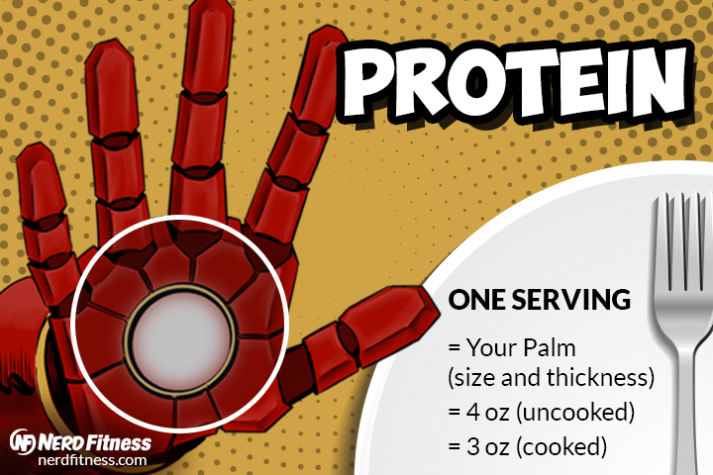
*The 4 oz serving is for an uncooked piece of meat. Cooking reduces about 25% of the weight, bringing it down to about 3 oz.
When building a plate, aim for the following amount of protein:
- Dudes: 1-2 servings (6-8 oz or about 170-228 g): two palms
- Dudettes: 1 serving (3-4 oz or about 85-114 g): 1 palm.
If you’re curious, here’s how much protein is in a serving of food:
- 4 oz (113 g) serving of chicken has around 30 g of protein.
- 4 oz (113 g) serving of salmon has 23 g of protein
- 4 oz (113 g) of steak has 28 g of protein.
As we cover in our “how much protein should I eat per day?” you can target anywhere from 80% to 100% of your bodyweight in pounds per gram of protein, with an upper limit of 250g[15]:
- If you weigh 150 pounds (68 kg), target 120-150g of protein.
- If you weigh 200 pounds (90 kg), target 160-200g of protein.
- If you weigh 250 pounds (113 kg), target 200-250g of protein.
- If you weigh more than 250 pounds (113 kg), target 250g of protein.
#2: VEGETABLES: The difference-maker when it comes to healthy eating and weight management.

They are nutrient-dense: full of all the good nutrients that your body can use to function at optimal performance.
Next, they are voluminous but calorie-light, which means you can eat lots of them, you’ll feel full, but you’re unlikely to over-consume calories.
A serving of veggies is about the size of your fist.
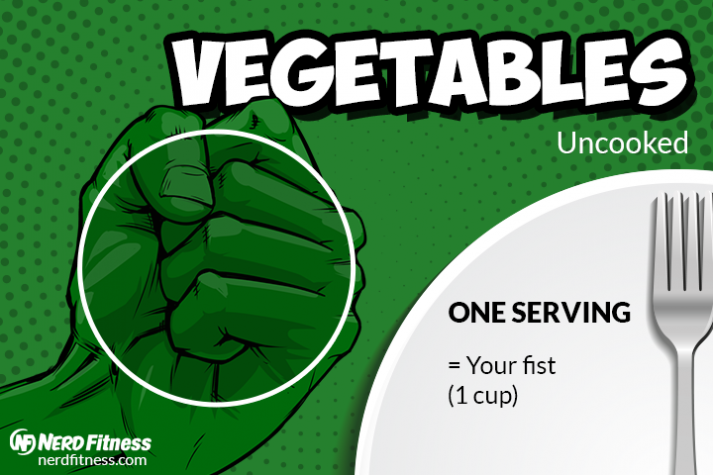
Remember this is what just 200 calories of broccoli looks like (holy crap). This is at least 5 full servings:
Here’s a quick, non-complete list of veggies that can fill your plate:
- Broccoli
- Broccolini
- Cauliflower
- Spinach
- Kale
- Spaghetti squash[16]
- Brussels sprouts
- Zucchini
- Cucumber
- Carrots
- Onion
- Asparagus
Target 2 servings of vegetables on your plate – it should take up ½ the plate!
“But Steve, I don’t like vegetables…yet!”
That’s cool, I didn’t eat vegetables until I was 22. Now, they’re a main staple of every meal I eat.
If this is you, read our guide on “how to make vegetables taste good.”
To recap portion sizes of protein and vegetables:

#3) HEALTHY CARBOHYDRATES: Fuel and fiber!
These are the foods that can be an important part of a diet, provided you eat them in the right quantities for your goals.
These foods are also great to consume right after a strenuous strength training workout to help your muscles and liver refill their glycogen stores (their energy tanks[17], essentially).
Examples of healthy carbohydrates:
- Rice
- Legumes, lentils
- Quinoa
- Potatoes
- Sweet potatoes
- Yams
- Whole grain bread (or pasta)
This is a list of REAL food, minimally processed, that also have plenty of fiber[18].
If you’re wondering how fruit factors into this equation, that’s the next section.
Back to healthy carbs: when consumed in appropriate amounts, these are great foods that can help you feel full and give you energy and all that jazz.
Just make sure you know what an actual portion of these foods are!
A LOT of people accidentally overeats carbohydrate-heavy foods, even healthy ones, and then wonders why they aren’t losing weight.
To help you get better at eyeballing serving sizes:
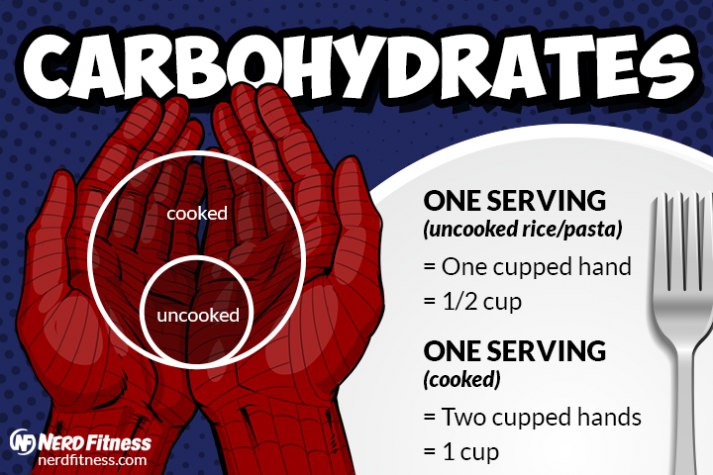
1 serving of a starchy carbohydrate is 1 cupped hand (uncooked), or your two hands forming a cup (cooked).
Here are some images to help you learn proper portion sizes (thanks to SafeFood):

#4) HEALTHY FATS: No longer the enemy!
Fat had a bad rep in the 70s, 80s, and 90s, but now things are swinging wayyyyy back in the other direction.
In some circles, dietary fat is considered a superfood – the healthiest thing on the planet that also does your taxes for you.
Let’s get to the truth:
Fat is neither a superfood nor evil.

It’s just a macronutrient that you can eat that can help you reach your goals in the right quantity, or keep you from your goals if it’s overconsumed.
When your doctor tells you to eat more healthy fats, she’s referring to polyunsaturated and monounsaturated fats[19].
Healthy fat can be found in foods like:
- Avocado
- Almonds
- Walnuts
- Macadamia nuts
- Olive oil
- Almond butter
- Peanut butter
Now, science has recently come around on saturated fat too[20] – once completely vilified, but now cautiously considered okay for moderate consumption.
Saturated fats can come from things like:
- Whole milk
- Full fat dairy
- Coconut oil
- Grass-fed butter
- Lard
- Fatty cuts of meat
Fat can be good for you provided you’re eating the right quantity for your goals.
However, like carbs, fats can be overconsumed accidentally too.
To help you gauge: a serving size of fat is roughly the size of your thumb!
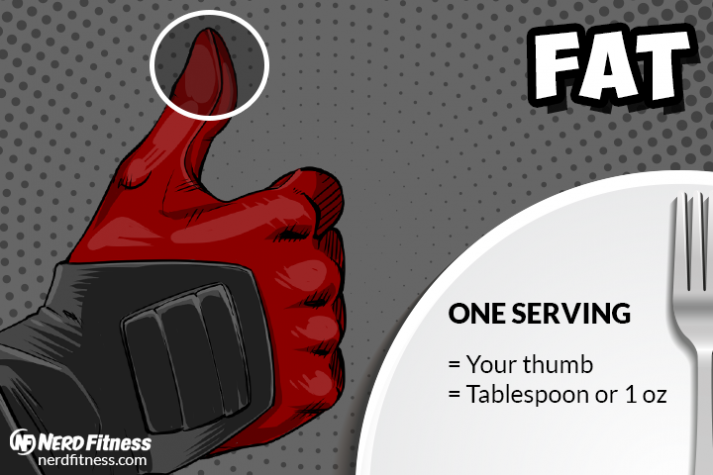
THIS is a single serving of almonds (162 calories):
THIS is a serving of olive oil (119 calories, taken from Runtastic):

As you can see, if you’re not careful – you can accidentally eat an extra 500 calories of “healthy fats” by absentmindedly eating too many “heart-healthy” fats.
Many folks in our Coaching Program had us analyze why they weren’t losing weight, even though they “only ate grilled chicken and veggies.”
When we dug into it, they had been preparing all of their food in an extra 500-600 calories worth of olive oil they weren’t accounting for.

To recap carbs and fats: feel free to include a starchy carb on your plate in the form of rice, potatoes, pasta, or legumes. Healthy fats can spice up a meal, provided you’re using an appropriate portion size

I realize that was a CRAZY amount of info, so let’s put it all on the same Healthy Plate:
- 1-2 servings of protein (¼ of plate)
- 2 servings of vegetables (½ of plate)
- 1 serving potatoes, rice, or pasta. (1/4th of plate)
- 1 serving of fat (size of your thumb)
- 1 zero-calorie or low-calorie beverage (water, diet soda, tea)
I know that not all of your meals are going to be perfectly segmented like a bento box. For example:
- A fatty cut of meat like chicken thighs means your fat and protein are commingling. Cool.
- Lentils and legumes mean your protein and your carbs are attached at the hip. Swell.
- A burrito bowl with chicken, rice, guacamole, and cheese means all of your macros are cohabitating. Neato!
- Salmon cooked in olive oil and coated in almond flakes means your fat and protein have fused. Stupendous!
This plate and serving size stuff above is just to help you get started thinking about healthy food differently and in proper portion sizes:
- Trying to lose weight? Reduce your portions of carbs and fats.
- Trying to gain weight? Increase your portions of carbs and fats!
Remember, all calories count.
I can already predict your next series of questions:
- “What about beverages?” Simple. Liquid calories count too. So stick to low or zero-calorie drinks like water, tea, coffee, and diet soda.
- “How about condiments?” Grilled chicken slathered in 1000 calories of buffalo sauce means you’re still eating a calorie bomb!
- “But what about things like Paleo or Keto? I thought low carb = healthy?” I address that in the “which diet is right for me?” section. Keep reading.
What’s the Deal with Fruit? Is Fruit Healthy?

As we lay out in our “Is Fruit Healthy?” Guide, fruit is absolutely healthy and can help you reach your goals – in the right quantities.
Fruits are full of nutrients, packed with fiber, and can make for a great snack or part of a protein-focused breakfast!

Personally, I blend up frozen mixed berries in my post-workout smoothie.
Just remember that fruit, like every other food, obeys the laws of thermodynamics.
So, simply be aware of the calories (and carb and fiber content if you’re following a lower-carb diet).
Here’s a list of the calorie, carbohydrate, and fiber content of some common fruit:
- Apple: 95 cal, 25g carbs, 4.4g fiber.
- Banana: 105 cal, 27g carbs, 3.1g fiber.
- Orange: 45 cal, 11g carbs, 2.3g fiber.
- Pear: 100 cal, 28g carbs, 3g fiber.
- Peach: 59 cal, 14g carbs, 2.3g fiber.
- Strawberries (1 cup): 47 cal, 11g carbs, 3g fiber.
- Pineapple (1 cup): 82 cal, 22g carbs, 2.3g fiber.
- Grapes (1 cup): 62 cal, 16g carbs, 0.8g fiber.
- Raspberries (1 cup): 65 cal, 15g carbs, 8 fiber.
Fruit is a better, healthier alternative to nutrient-empty food from a vending machine.

Where fruit can get you in trouble is if you start to move in the direction of “fruit-like”:
#1) Fruit juices (cranberry juice, orange juice, grape juice): these are high calorie, sugar-filled beverages.
For example, here are the calories in one 8 oz (or 1 cup)[21] serving of:
#2) Dried fruit: notoriously easy to overeat because they are so small. Since the water has been taken out, all that’s left is the sugar and fiber.
Here’s 1 serving of raisins, which is 108 calories and 21 g of sugar:

If you are saying “oh man, I eat 5x that many raisins when I eat them…” then multiply those calorie and sugar numbers by 5!
3) Fruit Smoothies: Just because it’s a fruit smoothie doesn’t mean it won’t make you fat! Have you seen the calorie count and sugar content of smoothies and ‘green drinks’? Yikes.
- Green Machine Naked Juice (15.2 oz or 450 ml bottle): 270 calories, 53 g of sugar.
- Smoothie King Banana Boat (20 oz or 591 ml smoothie): 450 calories, 70 g of sugar.

**If you prepare your smoothie at home with a blender, it can actually be healthy since the fiber is intact. Here’s my personal recipe.**
To recap: fruit is healthy, provided you stick to fresh or frozen and not fruit-like food, dried fruit, or canned fruit packed in syrup.
If you enjoy a small glass of orange juice occasionally, or you pack a serving of raisins in your lunch and it makes life worth living, by all means!
Just don’t chug OJ by the gallon, drink a 64 oz “real fruit smoothie,” and eat raisins by the handful and then wonder why you’re not losing weight.
Are Cheese and Dairy healthy?

We get questions about these two types of food frequently.
Let me start by saying I’m assuming you’re not doing Paleo (which says “NO dairy and NO cheese”), or plant-based (which says NO to all animal products).
I’ll also assume you’re not doing Keto, which almost requires you to load up on dairy and cheese to eat enough fat every day!
Let’s pretend you’re just curious if cheese and/or dairy can be consumed on a “healthy diet:”:
YES, you can still eat cheese and be healthy.
YES, you can still eat dairy and be healthy.
And there was much rejoicing:

Like the healthy carbs and fats listed above, it all comes down to your calories consumed in a day, and if these foods fit into your daily calorie goals:
- Want to put cheese on top of your salad of chicken and vegetables? Great!
- Want to eat greek yogurt, a scoop of protein powder, and frozen berries for your breakfast? Amazing!
- Want to eat a bowl of cereal with skim milk (or whole milk) in the morning with your kid before school? No problem.
This is true for higher-fat cheeses or full-fat dairy too – the food just needs to fit into your goals!
Luckily, all dairy comes labeled, and most cheese will come with a nutrition label on it too.
Just ensure that you’re choosing appropriate portion sizes. For reference, here are four different servings of cheddar cheese (about 113 calories a serving):

And here’s a serving of greek yogurt (120 calories in 142 grams):[25]

And although nobody in the history of the world has ever eaten just one serving…here is a serving of ice cream:

(A scoop of ice cream the size of a tennis ball is about 127 calories, cleverly shown above.)
So, dairy and cheese are both perfectly acceptable healthy food options! Just make sure they fit into your goals.
If you are NOT losing weight, and you consume a lot of dairy and/or cheese, consider measuring your intake and see if it’s in line with your expectations!
What’s the Best Diet for Me? Keto vs Paleo vs Plant-based.

“Low fat diets? Low carb diets? No carb diets? I don’t know which one is the BEST diet!”
“Help me, Steve Kamb, you’re my only hope.”
Okay, you’re probably not saying that, but it’s an excuse to pay homage to Star Wars so I can use the great photo above.
You probably do have questions though about what’s healthier, a low fat diet or a low carb diet.
Low carb diets are all the rage right now, but are they healthy and will they help you lose weight?

Maybe.
It may depend on how your body regulates glucose (blood sugar):[26]
Some who don’t regulate glucose well may do better on a lower-carb diet.
Others who do regulate glucose well might do better on a lower-fat diet.
Studies show that people who follow EITHER a low fat OR a low carb diet will still lose weight, as long as they are in caloric restriction and can adhere to the diet for at least a year.[27]
So, it comes down to: “which diet are you more likely to stick with for a year or longer?”
I personally lost 22 pounds over 6 months on a lower-fat diet (and eating plenty of carbs), but everybody is different.
This means you’ll need to experiment and see which is better for your lifestyle, and your day-to-day well-being.
But I bet you have questions about the big popular diets too.
I’ve written a huge guide that covers all popular weight-loss diets together, but we’ve also written individual ultimate guides that cover:
- The Keto Diet (Ketogenic Diet).
- Intermittent Fasting.
- The Paleo Diet.
- The Mediterranean Diet.
- Vegan and Plant-Based Diets.
- Carnivore Diet.
- The Military Diet.
Let’s look at each of these diets and explain why they will help you lose weight, at least temporarily:
Truth #1: Every diet works in the short term.
Truth #2: Nearly every diet fails in the long term.
Let’s address these two truths individually:
Why does every diet work in the short term?

All the diets above have a clever way of restricting calories without you needing to count calories, which leads to weight loss:
- Paleo Diet: eliminate everything but veggies, meat, fruit, and nuts.
- Intermittent Fasting: skip an entire meal!
- Keto Diet: remove an entire macronutrient from your diet (carbs).
- Military Diet: Only eat specific foods in certain quantities.
- Plant-based Diet: Only eat foods from plants.
- Carnivore Diet: Only eat meat! Eliminate everything else.
Of course, there are plenty of benefits from following certain diets for certain groups of people. For example, Larry went Keto and it helped him reduce inflammation from rheumatoid arthritis.
However, 99% of the reason why these diets result in short-term weight loss is that they get us to eat fewer calories!
The problems arise when we get to Truth 2:
“Nearly every diet fails in the long term.”
Put another way:
Temporary changes create temporary results.
If somebody “goes Keto” for 60 days, they’ll most likely lose weight, and might even feel better! This is cool.
BUT!
(There’s always a but…)
If they spend those 60 days in misery, dreaming of carbs, counting down the meals until they can “go back to eating like normal,” they will put all of the weight back.

In order for restrictive diets to create permanent results for somebody, they need to be adopted PERMANENTLY!
For most of us mere mortals, we can’t stick with a restrictive diet for 30 days, let alone a year or a decade.
For these reasons, I strongly advise you to change how you think about dieting.
You need to determine how likely you are to stick with a restrictive diet permanently:
- How averse are you to change?
- How likely are you to stick with your changes?
- Have you tried a restrictive diet in the past and failed?
- Do you have a healthy relationship with food?
- Do you have an “all or nothing?” mindset?
Like playing a video game, you need to determine what level of difficulty you are willing to attempt.
Playing on “Ultra Hard Difficulty” (like Keto) gives you less room for error, but it can also produce impressive results quickly – if you don’t rage quit.
And 99% of people rage quit restrictive diets like Keto.
So what’s the best diet for you?
I’ll give you the same answer that I give people when they ask me, “What’s the best workout plan?”:
The best diet is the one that helps you reach your goals, that you ENJOY, and that you’ll actually stick with permanently!
Personally, I don’t follow any sort of restrictive diet.
I’m a big fan of small changes that eventually produce big results, like my boy Optimus Prime:

This is why I’ve SLOWWWWLY adjusted my diet over the past decade, so that no change was too drastic and I could stick with it permanently.
It’s not a diet. It’s a lifestyle change. Permanently.
And that’s what I would recommend for you:
Small, non-scary, permanent changes over a long time period!
You need to start thinking in terms of “days and years,” not “weeks and months:”
How to Grocery Shop, Cook and Meal Prep!

Okay! Now that you’ve determined your healthy eating strategy, it’s time to take action.
There are three big steps you’ll want to master if this is your path:
Step #1: Grocery Shopping!
You can read our full guide on “How to grocery shop”, and we even have a video that keeps things fun too:
Here’s how to grocery shop like a pro:
- Stick mostly to the outer rim. This means you’re mostly buying meat, fruit, and veggies[28].
- Read the nutrition label! Just because it says it’s healthy on the front doesn’t mean it is. Read the nutrition label and learn portion sizes. This can help keep you below your daily calorie goal.
- Don’t shop hungry! It may seem silly, but you end up buying way more junk food accidentally if you shop while hangry (a mix of hungry-angry, never a great emotion).
- Make a list. Before you go grocery shopping, write down everything you should get. You can even put “non-healthy” food items on the list. But then you can only buy what’s on your list! This means no candy in the check-out aisle, or buying Oreos just because they’re on sale! Plan ahead. Stick to the script, sister.
Step #2: Learn to cook!

In the next section, we share recipes for basic healthy meals that you can cook at home.
Here’s why cooking at home is amazing:
- You know all of the ingredients. When you eat at restaurants or pick up fast food, there are often hidden calories in the cooking oils and sauces that are sabotaging your healthy efforts. Because of this, it’s really hard to have an idea of how many calories you’re consuming. When you prepare food at home, you know what you’re getting.
- You can recreate healthier versions of your favorite foods. Making homemade tacos or pizza with homemade dough can be a great date-night experience, makes your stomach happy, AND can help you reach your goals!
- You save money. If your budget is tight, grocery shopping and cooking your own meals is a great way to balance your budget and free up some cash! Our most successful coaching clients work with their coaches on building the habit of cooking at home.
Now, if you’re somebody who only ever uses your kitchen to heat up microwave meals, that’s no problem.

Here are the guides you should check out:
- Cooking 101: Essential Kitchen Tools: Not sure what kind of knives to get, or what you REALLY need? I’ve been there. This is why we created this guide for you!
- How to Stock Your Pantry: If you’re not sure what to stock your shelves with, and how to set yourself up for long-term success.
Step #3 (BONUS): Meal Prep and Batch Cooking!
This step isn’t necessary, but if your goal is to make healthy eating a habit for you and your family, batch cooking can be the difference maker!
By “batch cooking,” I simply mean setting aside time to prepare larger quantities of food at the start of the week, so that throughout the week you already have meals to eat!
Personally, batch cooking changed my life.

And every single success story we’ve featured on Nerd Fitness (like this one) involved some sort of batch cooking (planning your meals for the week ahead).
- Here’s our guide on “How to start Batch Cooking and Meal Prep.”
- Let me walk you through how I batch cook chicken for the week. There’s even a video too:
Follow these rules, and you will crush it in the Healthy Eating Department[29]!
19 Healthy Eating Meals You Can Cook Today

“Okay Steve, you have me convinced I should be eating more healthy foods. But I am a nerd and I need specific instructions to follow!”
I got you.
As a kid raised on LEGO and K’nex, I am the exact same way!

Here are options to get the ball rolling on healthy breakfasts, lunches, snacks, and dinners. Use these as inspiration or starting points for your meal planning!
3 BREAKFASTS (Unless you do Intermittent fasting!)
Breakfast 1: Prosciutto-Wrapped Mini Frittata Muffins (4 muffins)

-
- Calories: 440
- Protein: 32g
- Fat: 24g
- Carbs: 16g
Breakfast 2: Kale Breakfast Salad (1/4 of recipe)

-
- Calories: 331
- Protein: 15g
- Fat: 12g
- Carbs: 14g
Breakfast 3: Breakfast Meal Prep Bowls (1 bowl)

-
- Calories: 204
- Protein: 10g
- Fat: 10g
- Carbs: 19g
3 LUNCHES
Lunch 1: Spicy Tuna Cakes (4 cakes)

-
- Calories: 368
- Protein: 20g
- Fat: 20g
- Carbs: 28g
Lunch 2: Chicken Zucchini Enchilada (1 enchilada )

-
- Calories: 154
- Protein: 16.7g
- Fat: 7.2g
- Carbs: 6.1g
Lunch 3: Lettuce Wrap Sandwich (1 sandwich)

-
- Calories: 279
- Protein: 26g
- Fat: 19g
- Carbs: 10g
3 SNACKS (Unless you’re on “Team No Snack”)
Snack 1: Green Protein Snack Pack (2)

-
- Calories: 234
- Protein: 22g
- Fat: 16g
- Carbs: 32g
Snack 2: Avocado Egg Salad (1/4 recipe)

-
- Calories: 330
- Protein: 18g
- Fat: 25g
- Carbs: 8g
Snack 3: Baked Chicken Wings (1/5 of batch)

-
- Calories: 440
- Protein: 34g
- Fat: 33g
- Carbs: 1g
3 DINNERS
Dinner 1: Big-o Bacon Burgers (2 burgers)

-
- Calories: 450
- Protein: 34g
- Fat: 40g
- Carbs: 2g
Dinner 2: Vegan Portobello Pizzas (1 pizza)

-
- Calories: 165
- Protein: 7.7g
- Fat: 10g
- Carbs: 14.5g
Dinner 3: Ground Beef Veggie Skillet (1/4 of dish)

-
- Calories: 261
- Protein: 29.5g
- Fat: 1.8g
- Carbs: 8.5g
All of these meals are nutrient-dense and low in calories, so they’ll give you the best chance at weight management without feeling miserable
Does all that seem like too much?
Watch this video from Nerd Fitness Prime where Coach Justin shows you how to make 7 “No-Cook” meals:
Meals covered in this video:
- Egg and Avocado Rice Cakes
- Cheese and Turkey Roll-ups
- Chicken Pomegranate Salad
- Shrimp Pineapple Salad
- Smoked Salmon Wraps
- Greek Yogurt (with Protein Powder)
- Two-Ingredient Desserts
Want some more ideas? Check out 26 Easy Meals You Can Cook.
Just remember, quantity counts:
- If your goal is weight loss: Keep an eye on the fat and carbs portion of your plate!
- If your goal is weight gain, then you can ratchet up your total calories consumed by increasing your fat and carbohydrate portion of your plate!
Not sure how to make these meals work or how to adjust them for your goals?
This is exactly what we do with our Online Coaching Program!
How to Simplify Nutrition (3 Steps)
In the video above, Coach Staci walks you through her step-by-step plan for simplifying nutrition.
Yeah, I’ve thrown a lot at you today.
But as Staci mentions above, you can start off small, with some simple steps. Once you get these down, we can work on adding some more simple habits.
To start eating healthy:
- Have a glass of water with every meal.
- Have a vegetable with every meal.
- Have a source of lean protein with every meal.
That’s it!
When someone joins our coaching program, these are often the steps we have them take.
Yeah, sometimes they’ll bulk, thinking this is not enough…

…but consistency is where people start to see real progress.
Don’t overlook the power of simple and consistent habits.
Will You Commit to Healthy Eating?

As we start to wrap up this guide, I have one BIG final question for you:
“Why the hell are you reading this?”
Sorry to be so blunt, but your answer matters!
If you are trying to eat better because somebody told you to, or because you think you should, you’re setting yourself up to fail.
You might be excited and motivated to eat healthy today, and that’s great!

But next week, Oscar in Accounting will put cake in front of you at work, and ask you to “live a little” and eat some cake “just this once.”
And then you’ll discover apps are half-priced at Chatchki’s during happy hour, and you figure “well I already had cake, might as well split some shrimp poppers and extreme fajitas with Meredith.”
This is how it always happens: Motivation abandons us when we need it most.
And then one “ehh” choice becomes three bad choices which becomes “crap, I failed at my diet! I’m a loser. Okay I’ll just try harder next month…”
If you are committed to this goal of eating healthier, you need a DAMN good reason to start eating healthier in the first place!
Here are some examples you can build off of:
- “I want to look better naked and start dating again.”
- “I want to do epic stuff like running my first 5K.”
- “I don’t want to die early like my dad did.”
- “I want to find out what I’m capable of.”
- “I want to feel pride, not shame, when I look in the mirror.”
There are many tough days ahead, many happy hours, and sabotaging coworkers.
Having a great reason WHY can be the light in the darkness that helps you navigate the maze of temptation.

In our Nerd Fitness Coaching program, we call this “The Big Why,” and having a reason can be the difference between success and failure:
It’s our Big Why that stops us from living emotionally and chasing instant gratification from a donut or six slices of pizza when we’re sad or stressed.
It’s our Big Why that allows us to say “Yes, I can have a slice of pizza, because I planned for it in my ‘calorie budget’ today. I’m not gonna feel bad about it either, because my breakfast tomorrow is gonna be great.”
It’s our Big Why that allows us to get back on track after a vacation or after just one day of poor eating, instead of letting things slide for a week or a month.
Have your Big Why, and remind yourself of it constantly!
Write it down, put it on a post-it note on your bathroom mirror, staple it to your forehead.
But have a REASON you’re committing to change.
It will be crucial when life starts to get busy next week and you want to give up. So let’s talk about next week (and beyond!)
Healthy Eating: Next Steps!

This guide has provided you with all of the tools you need to start making healthier choices, but if you are looking to go a bit further…
#1) Our 1-on-1 Online Coaching program: a coaching program for busy people to help them make better food choices, stay accountable, and get healthier, permanently.
You can schedule a free call with our team so we can get to know you and see if our coaching program is right for you. Just click on the image below for more details:

#2) If you want an exact blueprint for leveling up your nutrition, check out Nerd Fitness Journey! Our fun habit-building app helps you exercise more frequently, eat healthier, and level up your life (literally).
If you follow our Nutrition missions, you’ll learn to eat healthier while earning XP! Sah-weeeet.
Try your free trial right here:
#3) Join The Rebellion! We have a free email newsletter that we send out twice per week, full of tips and tricks to help you get healthy, get strong, and have fun doing so.
I’ll also send you tons of free guides that you can use to start leveling up your life too:
Healthy eating will change your life.
But it needs to fit INTO your life too.
Small changes, not dramatic shifts!
You don’t have to give up the foods you love, you just need to PLAN for them.
Learn how to make a plate like we lay out in this guide.
Prioritize protein, and always put a fruit or vegetable on your plate before filling the rest of it up!
This will get you 90% of the way towards a great healthy eating strategy.
And when in doubt, whenever you’re not sure if you should eat a particular food, ask yourself “What would Batman do?”

Seriously, this has been studied with children, and it helped them make healthier food choices by giving the decision-making over to somebody they looked up to [22]. It’s called “self-distancing,” and there’s no reason it can’t work for you too.
Oh, and when you eat a bad meal – who cares?! “Never two in a row,” right? Make the next meal healthy.
YOUR MISSION, SHOULD YOU CHOOSE TO ACCEPT IT:
Start eating healthy today with literally one change:
- Try a new vegetable.
- Cut one soda out of your day.
- Prioritize protein in your next meal.
- Swap out one high-calorie drink for a zero-calorie drink.
I don’t care what the change is, just as long as you make one!
Okay enough about me, let’s talk about you:
What’s the ONE change you’re going to make today?
For the Rebellion!
-Steve
PS: Make sure you read the rest of the articles in our “How to Lose Weight 101” Series!
###
All photo sources can be found right here: Leia eating breakfast, stuffed veggies, stormtroopers and egg, fruit ninja, Caution: Cheese Hazard, Fish soup, Yoda and R2, Happy Monday, almond serving size, olive oil, raisins, serving of cheddar, yogurt, Shopping, dinner on the beach.
The post Healthy Eating Ultimate Guide: Start Eating Healthy Without Being Miserable first appeared on Nerd Fitness.
]]>The post How to Get in Shape on the Night Shift (Workouts & Meal Plans) first appeared on Nerd Fitness.
]]>
If you work a 12-hour or night shift, this guide is going to be a game-changer.
Working weird hours provides a challenge for those looking to get in shape, so I’ll provide a step-by-plan to help you reach your fitness goals.
Because I’m nice like that. And I like you.
This is 100% doable.
After all, Batman is super ripped and he works nights too.
Today we’ll cover:
- How to lose weight working a 12-hour or night shift? Diet is still the most important thing.
- How to not gain weight while working 12-hour and night shifts: Avoid these things!
- What liquid calories will help your 12-hour or night shift.
- What foods to avoid on a 12-hour or night shift.
- Workout routines for a 12-hour or night shift.
- Prioritizing fitness 24/7.
Weird hours be damned, I’m gonna help you build up momentum to get in shape.
These are the exact strategies we work with our night-shift clients in our 1-on-1 Coaching Program! Although each situation is unique, we have certain principles that are universal and can help you start making progress even when your work life is crazy.
Want to see if we are a good fit for each other? Click on the button below to schedule a free call. We’d love to talk to you, no matter what!
How to Lose Weight Working a 12-Hour or Night Shift?

Now, whether you work weird hours or normal hours, diet is still responsible for 80-90% of your success or failure when it comes to getting in shape.
80-90 PERCENT.
This is both a blessing and a curse. It means you don’t need to freak out if you miss a workout after a long night shift, but it also means you gotta take care of yourself while you are working.
Simply put, if you’re not losing weight, it’s because you’re eating too many calories. So if you’re trying to lose weight while working a night shift or working 12-hour shifts, you need to find ways to eat fewer calories without driving yourself crazy.
I’m a fan of any diet that gets you to accomplish this goal, but you know yourself better than others. So any “diet” may help you, as long as you have access to food for that particular way of eating.
This isn’t a problem, as we have a plan for that!

This just means you need to become the master of meal preparation.
“But Steve I don’t have time to prepare food!” you say.
Yeah, I hear you.
What you’re REALLY saying is, “But Steve, preparing food ahead of time isn’t a priority for me.”
If you are working overnight shifts, bringing in your own food might help A LOT. There aren’t a lot of nutritious food options available at 4am.
Want to know how easy it is?
Here are 3 easy steps to meal prep on a graveyard shift:
- Purchase a bunch of chicken breast on Sunday Night (or whatever night you actually have off). Cook them on a tray in the oven, ALL of them. Put them in separate containers or bags in your fridge.
- Purchase a bunch of $1 steam fresh bags of frozen veggies. Stick them in the fridge at your workplace.
- Need more calories/carbs in your diet? Buy some sweet potatoes. Microwave one and put it on your plate.
This is my personal strategy for prepping food for the week.
You can watch me make this recipe of Super Simple Chicken for Lazy People right here:
In about 3 minutes and minimal effort, you know have a well-balanced meal.
“But that’s boring!” Sheesh, I have to do EVERYTHING, huh? Welp, get creative, sucka!
- Chop up the chicken and put it in a big salad with whatever you prefer (and keep it in your fridge).
- Make stir fry, put some in containers in your fridge, and then heat it up on your break.
- Google “chicken paleo marinade” and mix up how you prepare chicken. Or steak. Or pork. Or salmon.
YES, this does require effort. YES, this does require preparation. YES, it does work. YES, you will find your rhythm with it.
Again, it comes down to two things: priorities and excuses.
Do you REALLY not have time? Or are you using “I don’t have time” as an excuse to visit the vending machine?
Is your job REALLY stopping you from getting in shape? Or does it just provide some challenges that have to be worked around?
It may seem harsh, but overcoming the “this won’t work for me” mindset will be the first battle we need to win.
You can do this. Just don’t let “perfect’ be the enemy of the “good.”
How to not gain weight while working 12-hour and night shifts: Avoid these things!

Let’s talk about things to eat and avoid while on shift work: the good, the bad, the ugly.
Whether you’re at a desk or up stocking shelves or making your rounds, you probably deal with one of four points:
- Exhaustion: Let’s be honest, when you work a night shift or early shift, you never get as much sleep as if you were sleeping during the night with normal hours.
- Lack of “time.” If you’re working long days/nights and trying to raise a family/have a social life, food preparation probably doesn’t figure into your schedule. You need convenience, even if you have to pay a bit more for it.
- Hunger: If you forgot to pack your “meal” or “meals,” your only option is to eat what you can find, which is unlikely to be nutritious at that time of day.
- Boredom: If you are making rounds or stuck at a desk during the middle of the night, there may be more periods of downtime than if you were working during the day.

So you’re tired, hungry, bored, and struggle with time management.
Where do you turn? Caffeine!
Now, I have no problem with Caffeine. I wake up every morning and drink a few cups of green tea while sitting at my desk to write. We’ve even covered caffeine extensively on this site already. The short version? Don’t get caught in bad liquid calorie trap:
- Empty liquid calories are the devil. If you are drinking soda, energy drinks, or lattes for the caffeine, understand that you are also probably consuming hundreds of calories and 50+ grams of sugar. And these extra calories are contributing to your waistline. So read the labels or do the research before you drink six Monster drinks, a case of coke, or a Coffee Coolata.
- If you’re going to get caffeine, try to drink Black coffee or green tea, which will have some nutrients. But you can even go with a no-calorie or low-calorie energy drink (Monster Zero Carb, for example). Just try to wean yourself off the GALLONS of caffeine (there’s a limit on what’s good for you). Hopefully, once you start exercising, you’ll have more energy and need less caffeine to survive your shifts.
Avoid the drinks that don’t give you any nutritional value and are full of sugar and calories. See if you can get your caffeine from better sources. Speaking of better sources of calories…
What Liquid Calories Will Help Your 12 Hour or Night Shift
Low on time? Need a meal? Make yourself a smoothie!
Depending on what you put into it or where it comes from, a smoothie can be an incredibly healthy option for meals during the night or as you’re running out the door to your shift.
A few tips on making smoothies: Buy yourself a cheap blender (or, a ridiculously nice one). Have one at home, or in the break room at work.
Give this recipe a shot for a smoothie that will get you through your shift:
- Frozen fruit (I usually go with the strawberries or berry medley from Trader Joe’s).
- A cup of unsweetened almond milk, unsweetened coconut milk, or cold water.
- A scoop of protein (I use Optimum Nutrition Vanilla, but I hear the Chocolate is delicious).
- A few ice cubes if you want to ‘thicken it up’ a bit
- (Optional) Organic frozen spinach. Doesn’t change the taste, but gets you a serving of veggies.
I drink a smoothie similar to the one above for a meal almost on a daily basis (though I add in extra carbs and calories because I’m attempting to pack on extra weight). It looks like so:

Can’t bring a blender to work? Stick a scoop of protein in a shaker bottle, and BAM – there’s 25 g of protein prepared in 60 seconds. Add a bag of mixed veggies from the microwave and you’ve got yourself a really weird meal that is pretty damn easy to prepare and pretty damn good for you.
A word of caution: Smoothies from Smoothie King don’t count, as they have more sugar than two cans of Coke and HUNDREDS of calories. Naked Juices are also full of sugar, as we point out here:

They might look healthy, but they’re not. LOOK AT THE LABEL AND PAY ATTENTION TO THE CALORIE SUGAR CONTENT!
Foods to Avoid on a 12-Hour or Night Shift

Now, along with empty liquid calories, let’s talk about empty food calories.
When you are at your desk, are you eating snacks while answering the phone or while on your rounds through the hospital?
Personally, I’m a big fan of No Snacking, as I find I tend to eat more calories than I need during the day, simply because I’m not paying attention (check out the research in that snacking article for more).
Bring some nutritious snacks with you if you’re going to be snacking. My personal favorite would be apple slices with almond butter, but don’t forget almond butter can be very high in calories and easily over-consumed too
If you struggle with overeating, look at your snacking at your night job. Are you eating because you are bored? Are you eating because you’re not paying attention? Are you eating because you’ve trained your body to expect food every 5 seconds?
If it’s any of these things, try the “No eating AND _________” strategy:
- No eating and surfing the internet.
- No eating and watching TV shows.
- No eating AND _____.
If you’re going to eat, that’s the only thing you’re going to do. This can help you not accidentally, absentmindedly over calories.
It’s something we bring up in our Guide to Stress Eating.
Workout Routines for a 12-Hour or Night Shift

Let’s move on to the other 10-20% of the equation: exercise!
It’s no surprise around these parts that I’m a HUGE proponent of strength training. Guys like Joe (above) travel two weeks a month and yet still manage to have tremendous transformation because they are smart with their time.
From an efficiency standpoint, no other type of exercise gives you as much bang for your buck (aka: the most results with the least amount of time spent exercising).
You can get an incredible workout that exhausts all of your muscles and burns a crazy number of calories (not just during the workout, but in the hours afterward as your body tries to rebuild all of the muscle). Just reference any Nerd Fitness success story, all built with strength training and healthy eating.
So, if your time is limited, and your focus is staying healthy/losing weight, you need to be strength training and walking.
When’s the best time to work out? When you will actually do it! If you find yourself too exhausted after your 12-hour shift (and I don’t blame you), then get your workout done before you go to work, even if you only have twenty minutes! Heck, even if you only have 10 minutes!
As far as the workout itself...
You don’t need to be going to a gym (though if you do, big lifts like squats, deadlifts, overhead presses, and pull-ups are going to get you the best results – ask Staci), you can work out at home before your shift starts with a simple workout like the Beginner Bodyweight Circuit.
I know you don’t need a gym to grow strong because we see it daily here in the Rebellion. We work with coaching clients and design custom programs that take into account each person’s work environment, home environment, and equipment they have available. It works.
We also have the Nerd Fitness Journey which gives you more bodyweight routines and gym routines if you’re looking for specific instruction and exercise demonstrations.
You can try it out right here:
If you are somebody that works a few days on (for long shifts) and a few days off, try this: a really intense strength building routine on your first day off from work and again on your last day. Two strength training days combined with walks and proper eating (on your workdays) is more than enough to get you quality results.
Spreading out the Workout Throughout Your Long Shift

Don’t be afraid of simply exercising here and there, when you can.
Check out the Angry Birds Workout and split up your workout throughout your shift:
- Do squats in the supply closet. Weirdo? YUP. Who cares?
- Push-ups and planks in your cubicle.
- Pull-ups on the bus stop overhang waiting to go to work? I’ve been there.
- Dumbbell rows with your desk and briefcase/backpack.
- Walking up the stairs on your break. Why not?
It all adds up, and every little bit is better than nothing. The strength training benefits are key, but there’s one other key benefit to exercising throughout the day.
Coach Matt provides more tips on how to sneak in your training throughout the day right here:
And trust me, as a father of five who works from home, Matt knows how to sneak in his training.
Staying Active During Your 12-Hour or Night Shift

Along with strength training, just staying active will help.
I actually have a timer (FocusBooster) on my laptop that goes off every 15 minutes to remind me to get up, walk around, stretch, do some push-ups, etc. Your phone can do the same thing! Technology, amazing.
Stand up at your desk if you can – mix up standing and sitting.

Go for a walk around the office. If you are a nurse or doctor you are probably already doing a considerable amount of walking to make your rounds, so keep it up.
The reason for staying active is so important is three-fold:
- Every little bit counts. That push-up, those squats, that extra mile walked…they all add up!
- Your brain keeps thinking “I am active.” Because it has to work more when you move! Remember, diet is 80% of your success or failure. When you exercise and constantly stay active, you are consistently reminding yourself that you are making healthier decisions, and these should carry over to your eating decisions too. Exercising and eating poorly is kind of like paddling a row-boat with one oar – you’re just spinning in circles. Work both together and dominate!
- Exercising can make you smarter and more alert at work. Detailed incredibly well in the book Spark, studies have shown that exercising can increase brain activity and performance. Healthier on the outside, smarter on the inside = NERD FITNESS WIN.
Here are 40 ways to help you stay active during the day (without actually working out).
Prioritizing FITNESS 24/7
Remember, it comes down to one thing: taking an active role in your health.
1) Don’t use the job as an excuse, and instead remind yourself that you are in control. You don’t need anybody’s permission to get in shape.
2) It adds up. Every little change. Every meal you switch up. Every minute of exercise.
3) Plan out your day. Spending 5 minutes identifying what you’ll eat and when you’ll work out makes you WAY more likely to actually follow through with it.
Leave a comment and share your story and struggles with the Rebellion. I’d love to hear from you:
Do you work a night shift or have funny hours?
Have you had success and want to share your tips and tricks?
Have a REALLY funky job and need more help (Deathstar operator, daytime student/nighttime superhero)? Post below and I’ll see what I can do.
Let’s get weird with it.
-Steve
PS: Still reading? Want more help?
I’ll again remind you of our 1-on-1 Online Coaching Program.
Here’s how it works: we get to learn your goals, lifestyle, challenges, and situation: Kids? An old injury? Graveyard shift?
No problem!
We’ll then pair you with a coach from Team Nerd Fitness that fits your personality and situation. Click below to find out if we are a good fit for each other.
###
Photo source: cross-eyed owl, Torch lighting experiment, red bull, smoothies, chips, catdog
The post How to Get in Shape on the Night Shift (Workouts & Meal Plans) first appeared on Nerd Fitness.
]]>The post 7 Reasons For a Workout or Weight Loss Plateau (& 5 Quick Fixes) first appeared on Nerd Fitness.
]]>
So you’ve hit a workout or weight loss plateau the size of a…well, an actual plateau, eh?
Have no fear, our step-by-step guide will get you back on track! (Plus, the most badass Bruce Lee quote you’ll ever read).
Whether you’ve stalled in your weight loss journey, strength training, or some other fitness benchmark, today we’ll tell you exactly how to keep progressing by sharing with you the exact tools we use with our coaching clients.
Don’t lose morale. Together we got this!
We’ll cover:
- What is a plateau?
- How do I know If I’ve hit a plateau? (3 ways to tell)
- Why am I plateauing? (4 reasons why)
- Is a plateau normal? (The Dip)
- What should I do when I hit a plateau? (Setting Personal Records)
- 5 tips and tricks for overcoming a plateau
Alright, let’s do this thing.
What is a Plateau?

A plateau occurs when you stall out on progress despite continuing to do “all of the right things,” usually including:
And so on.
Our bodies go from losing weight consistently to getting stuck at a certain number.
Or we go from building muscle and getting stronger, to having a week or two where we can’t seem to lift anything heavier.
We call this point in our training “The Plateau,” and we don’t like being stuck on them.

As we learned in a previous article on happiness, humans (nerds especially) are happier when we make progress.
When we work hard for something and don’t see progress, we get unhappy.
How Do I Know If I’ve Hit a Plateau?

I get a lot of emails from people who tell me they’re stuck on a plateau.
They talk about how they’ve been eating right, exercising, and getting enough rest and they can’t seem to make progress!
They throw their hands in the air, freak out, get discouraged, and give up or quickly move on to the next plan that they hope will work.
When somebody comes to me saying they’ve plateaued, my first response is always:

“Have you REALLLLLLLLY plateaued? REALLY?”
In a strong majority of the cases, plateaus are really just issues with concentration, tracking, and discipline in disguise. Before you think you have plateaued, consider the following:
1) HOW IS YOUR NUTRITION…REALLY? Oftentimes we think we are being diligent, until we realize that after a few weeks of eating great we’ve started slacking. “Oh I’ve been good, just this one time…” and “Hmmm, sure why not” become more commonplace as we start to fall back into old habits. Track your calories for the next week and check your numbers.
And even if you are eating the right amounts of food, there’s this: as you lose weight, your metabolism slows down. This isn’t sabotaging black magic, it’s science.
There’s simply LESS of you that your body needs to maintain.

Here is the estimated daily resting calorie burn (“sit on your ass all day”) of a 35-year old male nerd at 3 very different weights:
- 300 lbs: 2,600 calories.
- 250 lbs: 2,300 calories.
- 200 lbs: 2,000 calories.
You might have hit a plateau simply because you’ve reached an equilibrium of calories consumed to calories burned! This means you need to adjust your calorie intake to continue losing weight.
If you are trying to bulk up, are you eating ENOUGH calories to promote muscle growth? Rededicate yourself for two weeks, track your meals, and see if progress picks back up!
2) HOW ARE YOUR WORKOUTS…REALLY? If you are weeks or months into a workout plan, I bet the initial luster of “NEW! PROGRESS! WINNING!” has worn off.
Have you been skipping that last rep, cutting out an exercise here or there, or getting bored and wanting to go home?
I know when I hit a plateau at the gym, it’s generally because I haven’t been pushing myself as hard as I had been previously. Track your workouts diligently for two weeks and see if these changes kick you back on track.
If you need a tool to track your workouts, check out Nerd Fitness Journey. It’s designed so when you wake up in the morning, you know the exact next step to help you reach your goals.
You can try it for free right here:
3) HOW iS YOUR SLEEP?…REALLY? This is one that most people skip out on. They are exercising, eating right, but for whatever reason, they’ve been slacking on their sleep.
It’s might be too much television…

We all know sleep is important – lack of sleep leads to increased levels of stress, less time for our bodies to rebuild muscle, to recover from strenuous activity, and more.
I know that if I didn’t get a good night’s sleep, then my performance in the gym the next day will suffer.
Can you honestly say you’ve spent two weeks with quality sleep, nutrition, and exercise?
In many cases, we think we’re stuck, and in need of some sort of drastic change or adjustment to kickstart progress again. Now, there are definitely instances where we ARE stuck or stalled, and that’s when things need to change.
However, before we cover the dreaded plateau, let’s get a few things clear.
Why Am I Plateauing?

To start, linear progress cannot continue indefinitely:
- If you are learning to squat and you start with just the bar, adding 5 lbs a week (which is how you should learn to squat!), you will eventually reach a point where your body cannot build the strength/muscle fast enough to continually add 5 lbs a week. If it DID work that way, in three years everybody would be squatting 1,000 pounds.
- You will run into the same issues with weight loss. For example, it’s easier for you to lose 3 pounds a week when you are at 300 lbs than it is to lose 3 pounds a week when you are 150 pounds….there’s more of you to “lose” when you’re bigger and thus progress will be easier. If you could lose 2-3 pounds a week every week forever, at some point you’d disappear, and we don’t want that. Weight loss might slow to 1 pound every other week.
- Your margin for error gets smaller. When you are at a higher body fat percentage, or just getting starting with training, you can make a lot of progress quickly due to there being MORE of you to lose, or MORE gains to make quickly. As you start to make progress, you can’t keep making big progress without making more and more effort.
- Adaptive thermogensis. Our bodies WANT to maintain the extra body fat we have (“I don’t know when I’ll need this, better save”), and are actively working in unison to preserve it – so even after a few pounds, it’s going to be a persistent challenge to keep progressing. It’s a subject a dive in deep in the article “Why can’t I lose weight?” If you’ve stalled on your weight loss journey, this might be the problem, as your body is adapting to the body fat being lost.
Your progress at a consistent pace will definitely slow down, which can FEEL like a plateau.
If you’ve been training for more than a few months, you might need to slightly adjust your expectations. Maybe this week you can only add 2.5 lbs to the bar. Or 1lb. Maybe your muscle-building will crawl to 1 lb gained a month.
It happens to all of us. Even Batman.

Now, if your progress stalls out COMPLETELY or you actually regress, AND you are doing all of the right things, then congrats!
You MAY have plateaued.
Like in games like World of Warcraft, at some point you will stop gaining experience from killing rats – you could spend all day doing so but because you’ve hit a certain level they no longer provide you with value.
It’s time to move on to attacking spiders, then orcs, then dragons.
It’s something Coach Jim brings up in this video on progressive overload:
When you started out, just doing 5 push-ups might have felt like a full workout. Now you can do 50 push-ups for a warm-up and not break a sweat.
Our bodies are constantly adapting and learning to manage the stresses we put on it, seeking the path of least resistance.
Back to our gaming analogy:
If it’s something worth doing, there will most likely be grinding involved, and that’s why I need to talk to you about The Dip.
No not a strength training type of ‘dip’, though those are good to help bust through a plateau too!
You can learn more about how we help build plateau-less workouts at Nerd Fitness by downloading our free Strength Training 101 eBook when you sign up in the box below:
Is a Plateau Normal? (The Dip)

I want to introduce you to Seth Godin, author of The Dip.
We all hit plateaus in our lives and quests for health and happiness. In order to be successful at the task at hand, we need to grind our way through that low point (or flat point) until we can climb out and continue progress.
Here’s a visualization of the dip:

When you first start something new, you can make quick progress, and everything rocks because you see big changes.
However, after a few months, the reward you get from your effort decreases and it seems like you’re rapidly slowing down:
- In the first few weeks of weight loss, everything is GREAT! The scale is moving, your clothes are getting looser, progress is exciting because it’s coming so quickly. Then, you might have a few weeks where you’re really trying hard and yet…the scale stalls or increases.
- When building a new running habit, each new run is exhilarating – you rapidly progress from wheezing and coughing after two blocks to now being able to run a whole mile! A few months later, that progress slows, and you find yourself struggling with the same distances and speeds even though you’re doing all of the right things.
- When lifting weights, the first few months can be life-changing. Squats, deadlifts, pull-ups, push-ups. Every session in the gym is an opportunity to see massive progress compared to the time before, except for that week or two when you walk in and you have to lift less than before! What gives!?
When we hit that dip/plateau where our hard work seems like it goes unrewarded, it’s easy to give up and say, “I’m a failure.”
Not true.
We will all experience a dip when it comes to progress on things that are important to us.
If we want to TRULY be successful, we need to anticipate the dip’s arrival and plan for it so that it doesn’t completely derail us.
Much like grinding out experience points in an RPG, sometimes we need to grind out practice in life, workouts, nutrition, and more…until we can hit that sweet spot for progress again.
So, how do we stay dedicated, focused, and motivated through the dip?
How do we progress during the plateau when we feel like our hard work is a waste of time?
We focus on small wins, and find a way to get a teeny tiny bit better.
What Should I Do When I Hit a Plateau? (Setting Personal Records)
In order for us to crawl out of a dip or off a plateau, we need to find a way to make a small win every day.
Think of these small wins like “a light to you in dark places, when all other lights go out.”
The longer we’ve been training, the older we get, and/or the more advanced we get in our training, the more likely we’ll be to hit plateaus and the more necessary it will be to grind out small victories, prepare for dips, and power through them.
Here’s how you can grind out your own small wins and prove to yourself that you are still progressing when you are in the dip:
1) TRACK EVERY SET, REP, AND WORKOUT. Find a way to be better today in SOME WAY than you were yesterday, and prove to yourself that you are still making progress – even if it’s progress in a different way than you were progressing before.
If you are stuck at 3 sets of 5 reps of 150 pounds on the bench press and haven’t been able to go up to 155 lbs for a few weeks, try 3 sets of 6 reps of 150 pounds.
Or 4 sets of 5 reps of 150 pounds.
Then come back to 3 sets of 5 reps of 155 a few weeks from now, and see if you can do that.
If you wait 60 seconds between sets, try waiting 90 seconds instead and lift a different amount
As long as SOMETHING has progressed in some way – your total amount of weight lifted, decreased time between sets, one extra rep, or one more pound lifted – it proves to yourself that you made progress. Remember, progress makes us happy.
RECORD EVERYTHING.
2) COLLECT TINY WINS. Optimus Prime doesn’t transform with one single movement; it’s a combination of hundreds of thousands of tiny movements that happen rapidly.
We are transformers (Joe especially), and our small changes add up too.
It’s these tiny, small victories that can push us over the edge. Enough small victories and we can reach that tipping point, that end of the dip where progress continues again.
Find a way to set a tiny win in SOME WAY each day that shows you that you are getting better/faster/stronger.
Here’s an example: I have been working on handstand balancing. For the past few months, my progress has stagnated and even gone in reverse on some days (helloooo Dip!).
I continued to work on building the habit of handstands for five minutes a day (Hard Hat challenge for the win!). Progress felt nonexistent, but I knew that my continued dedicated practice was adding up in ways that didn’t make themselves readily apparent.
I had “stalled,” so I focused on getting tiny wins: increasing flexibility in my wrists, staying against the wall as long as I could, practicing my kick-ups, tightening my core, etc.
Despite not being able to balance for longer than 10 seconds at any point in the past, I kicked up into a handstand, without even touching the wall (something else that had never happened before), and I held my handstand for 24 seconds!

I still have a ways to go before I’m holding perfectly vertical handstands for 60+ seconds, but months spent grinding out practice in the dip have paid off.
I made it through the plateau, and my progress has continued rapidly after struggling for months. Those months of struggle were teeny tiny wins in different ways that added up until I hit that tipping point where progress exploded.
3) TRACK OTHER METRICS OTHER THAN THE SCALE. The scale can lie. The scale will DEFINITELY slow down even if you are making progress in healthier ways, simply due to the fact that you have less weight to lose than you did before! You might also be dealing with extra water weight, or bloat, or menstruation, or anything in between.
So, track other things! Here’s what you can track to help keep you motivated while plateauing:
- Take biweekly photos. Who cares if the scale isn’t moving. Are you looking better? Are you FEELING better? Do your clothes fit better? That is progress.
- Take measurements. Spend 5 bucks on a cloth tape measure (or one of these), and measure the important parts of your body. Maybe the scale isn’t moving, but you took half an inch off of your waist. Or maybe you added a quarter of an inch to your arms.
- Track your body fat percentage. A simple caliper is enough to show trends. Remember Saint? His weight went UP but his body fat percentage dropped. Had he only been tracking the scale, he might have panicked during his ‘dip.’ Fortunately, he was tracking more metrics and used that momentum to catapult himself to victory.
The goal is to consistently prove to ourselves that we are moving one step closer to our goal.
This is exactly the system we used when we built Nerd Fitness Journey.
When you’re working through the app, not only are you doing fun missions, but you’ll see how tasks build up to your larger goal. There’s no getting stuck or frustrated, just log in and work on the next adventure.
If you want, you can sign-up for a free trial right here:
5 Tips and Tricks for Overcoming a Plateau

The above is just the beginning. This will also help you make progress and get out of that dip:
1) Shock your workout. Our bodies crave efficiency, and love to be as lazy as possible, but we truly thrive on chaos. So introduce some chaos into your system!
Note: This is NOT the same as “muscle confusion” (which is a made-up marketing term to sell DVDs). We’re still progressing, lifting more, and doing the same exercises – we’re just throwing in some variation occasionally to help stimulate progress.
If you do the exact same thing over and over and over, your body becomes more efficient at that activity.
In fact, your body can learn and adapt after doing the same thing enough times so that it burns fewer calories to carry out the process. So mix it up!
- If you are trying to run a faster 5K? Mix in a day of sprints rather than just basic runs.
- Trying to increase your deadlift? Rather than just doing a 1-rep max, do a day of higher volume, or train the deadlift twice a week.
- Want to squat better? Squat with higher frequency. NF Senior Coach Staci followed an advanced Smolov Squat program for 13 weeks (Warning: not for beginners). Your body can adapt and overcompensate by getting stronger.
- Want to improve your upper body strength/size? Try doing a PLP program along with your regular workouts. Starting with 10 total reps of Pull-ups, Lunges, and Push-ups, and every day add a rep, for 50 days.
2) Adjust your diet. Your body can also become quite efficient with calories (not to mention the oft-mentioned but controversial “starvation mode” theory), and can sometimes struggle to progress.
As we lay out in “Why can’t I lose weight?,” if you’ve lost a decent amount of weight, your body now burns significantly fewer calories each day (there’s less of you to manage!) This means you need to adjust your calorie intake!
So, I would start by tracking your intake and determining how many calories you should be eating.
ONLY after that doesn’t work would I recommend the following:
Consider throwing in one day a week of OVER eating, along with days where you are intermittent fasting. Keep your body guessing and see if that shocks your system back into weight loss mode.
Consider adjusting your macronutrient breakdown. Keep your protein intake high, and adjust your carbs and fats. Some people feel better or worse with high fat or low fat, high carb or low carb.
And remember, thermodynamics still rule all: weight loss requires caloric deficits.
3) REST! I’ve heard it said “there’s no such thing as “overtraining, just under-recovering.” Are you getting enough sleep?

Maybe you’re a new parent and trying to maintain your old workout routine on 2 hours of sleep a night.
Or work has you stressed like crazy and it’s causing you to eat like crap.
Rest is such an important part of a healthy lifestyle that it needs to be prioritized too. In the book Essentialism, this is referred to as “Protecting the Asset.”
You are the asset.
If you are trying to do too much, or you’re caught in a plateau, consider a week off, refocusing on sleep and recovery, and come back refreshed.
4) Adjust your goals. Maybe your body needs a new dragon to slay.
Again, nature loves chaos. If you are focused solely on weight loss, you might feel like you have stalled out. So shift your focus. Work on handstands. Or running faster.
Or doing your first pull-up.

Pick a new skill!
Try something different. Give your body a chance to recover and then come back to it.
If you’re solely focused on the scale and it stalls out, it can be depressing. So put the scale away for a month, and instead focus on the process of getting stronger and eating better. Stop stressing and remember to enjoy the game you’re playing.
5) Accept that we have bad weeks. We are complex pieces of machinery.
Sometimes shit happens.
We just have bad weeks and can’t lift enough or we GAIN weight when we expected to lose weight. It doesn’t make you a bad person, it doesn’t make you a failure, it makes you human.
So on days when you feel great, PUSH yourself harder. On days when you feel like crap, scale back the heavy lifting and focus on more reps or better technique.
The greatest predictor of success in our lives is grit (which can be developed). Grit is what you need to slog through these slow weeks. These dips are where we find out who’s truly dedicated. I know you are, and you know you are.
Remember, look for any sign of progress in any way to reveal that “light” at the end of the tunnel.
If you are stuck on a plateau when it comes to strength training, consider working with one of our Yodas in the 1-on-1 Online Training Program at Nerd Fitness! No guilt, no shame. Just somebody to keep you accountable, expert guidance from somebody that knows you, and peace of mind knowing you’re doing the right thing!

How did you break through your plateau?

Here’s that dope Bruce Less quote I mentioned earlier:
“If you always put limits on everything you do, physical or anything else, it will spread into your work and into your life. There are no limits. There are only plateaus, and you must not stay there. You must go beyond them.”
-Bruce Lee
Hopefully, I’ve covered everything you need to know about plateaus. What’s that? You were expecting some lame joke about plateaus somewhere?
You know me too well. Okay, how bout this one:
Did you know that a plateau is the highest form of flattery?
Get it?
Thank you, I’ll be here all week.
I want to hear your story:
- Have you successfully busted through a plateau? Leave a comment with how you got out of it.
- Are you currently stuck? If so, what’s ONE SPECIFIC piece of advice you’re taking from today’s article to apply to what you’re going to do this afternoon?
Let’s hear it! I’m excited to hear how I can help.
-Steve
PS: We know starting with this stuff can be intimidating. If you’re looking to take it to the next level:
- 1-on-1 Online Coaching: A coach from Team NF gets to know you better than you know yourself and builds a workout program and nutritional strategy that fits your busy life, your body type, and your goals.
- Nerd Fitness Journey: a fun app that will show you the path for overcoming any plateau. Sign up for a free trial below:
###
Photo Sources: olegmit1 © 123RF.com, Nattapol Sritongcom © 123RF.com, seeveeaar: success, Stefan Baudy: question, clement127: Eurobasket 2015, Four Bricks Tall: Mountain Biker, JD Hancock: Heroes, Anton Ivanov © 123RF.com
The post 7 Reasons For a Workout or Weight Loss Plateau (& 5 Quick Fixes) first appeared on Nerd Fitness.
]]>The post 10 Ways to Make Vegetables Taste Good: How to Start Eating Veggies! first appeared on Nerd Fitness.
]]>
If the sight of a plate of broccoli makes you gag, this post is for you!
We’ll turn any “Veggie Hater” into a “Vegetable Lover” by showing you how to make a plate full of greens not taste like a wet gym sock [1].
If you’ve been a picky eater your whole life (I didn’t eat veggies until 22!), our guide today will help level up your taste buds!

We work closely with our Online Coaching Clients to help them find their gateway vegetables, and I even picked our coaches’ brains to get their favorite tactics in this guide too.
By the end of this guide, I’m going to have you excited to eat vegetables, and ready to take the “NF Veggie Challenge”:
- Why You Should Eat Vegetables (Your Mom Was Right)
- How to Start Eating Vegetables (Finding Your Gateway Veggie)
- How to Buy Vegetables (Discovering New Veggies)
- 10 Ways to Make Vegetables Taste Good (Hide Them)
- How to Start Liking Vegetables (It’s All in the Preparation)
- What Are the Best-Tasting Vegetables? (the NF Veggie Challenge)
Alright, let’s do this.
Why You Should Eat Vegetables
As Coach Staci mentions above, eating a vegetable once a day is something we recommend all our coaching clients do.
Yeah, I know…you’ve probably been told since you were a toddler to “Eat your vegetables! They’re good for you.”
But do you really know WHY veggies are good for you?
Let me jump into a few reasons why they kick ass.
Here’s why you prioritize eating vegetables:
1) Vegetables are nutrient-dense. It should be no surprise that Popeye turned to a vegetable when he needed a power-up.

Think of vegetables as one of our body’s most efficient fuel sources: they are packed full of vital macro and micronutrients.
Just take a look at our article on how to eat healthy – it should be no surprise that vegetables take up half the plate in our “healthy plate” strategy.
Simply put: vegetables are the backbone of any solid diet.
2) They fill you up, without “filling you up.”
Ever seen what 200 calories worth of broccoli looks like (courtesy of WiseGeek)?
It’s the size of a grocery bag compared to 200 calories of a Snickers:

If you are feeling hungry but don’t want to overeat, choose a vegetable.
Kind of hard to overeat when you’re eating carrots or celery!
We’ve found this strategy is super helpful for those trying to lose weight. In fact, eating more veggies helped Brian lose over 75 pounds!

3) Veggies keep your body operating at max efficiency. Vegetables are a great way to keep your…um…indoor plumbing…functioning properly.
Adding a vegetable or two to each meal (or blending them up in a smoothie) is a great way to keep things working right.
Seriously: you will notice a considerable difference after adding veggies to your diet regularly.
4) They CAN be delicious! It’s all in how they are prepared. As a former veggie hater, I am now firmly on “Team Vegetable.”

A plate full of veggies used to make me want to gag, and now I’m thrilled at the idea of a plate covered in a cornucopia (what a great word, right?) of multicolored fruits and veggies.
“Ok, Steve, I know vegetables are good for me, but I just don’t like them. HALP!”
Here’s how you can get over your vegetable-aversion and get started.
How to Start Eating Vegetables: Finding Your Gateway Veggie

When I was 22 I proudly proclaimed that I was mostly “carnivore” and boycotted veggies.
Essentially, I ate things like chicken, hamburgers, pizza, pasta, french fries, rice, and not much else.
In my mind, all vegetables were disgusting, but the reality was that I hadn’t really tried many.

Don’t be like me.
We’re going to stop saying “I don’t like vegetables!”
Instead, we’ll say: “I haven’t found a vegetable that I LIKE…yet.”
HOW I FOUND MY GATEWAY VEGETABLE: I started using “20 Seconds of Courage” to try a new vegetable whenever the stakes were low, even if it was a TINY amount:
- I went into any new vegetable experience with an open mind and positive mindset.
- Trying any vegetable was considered a victory, even if it was a tiny amount and I hated it.
- If I went out to dinner with friends, I would ask to try a veggie from their plates. Restaurant prepared veggies were my best chance to find one I liked!

MISSION #1: Commit to try and find your gateway vegetable.
Before any new vegetable experience, clear your mind, Neo.
Instead of ALREADY expecting to hate it, change your mindset.
Instead of “This is gonna be gross,” I said, “Let’s see!”
If you’re out to dinner with family and you see a veggie you want to try on your significant other’s plate, ask and try a small bite!
Want to try and prepare a new vegetable at home? See the next section.
What if you try a vegetable and it makes you gag? Who cares! You found a veggie you don’t like. I’m proud of you for TRYING it. On to the next one!
My gateway vegetable: Asparagus.

After trying some bacon-wrapped asparagus while out at a fancy steak dinner, I realized “hey, this is one vegetable that actually doesn’t taste terrible!”
Of course, it didn’t hurt that it was literally WRAPPED IN BACON!
Next, I tried crunchy asparagus without the bacon wrapping, and it was STILL delicious to me.
And thus, I had found my gateway vegetable.
For my first year as an omnivore, asparagus was the only vegetable I ate.
Once I had gotten over the mental block that “all vegetables are gross,” it was time to branch out and repeat the process with other vegetables.
Let’s do the same for you.
How to BUY Vegetables. How to Discover New Vegetables.

First and foremost, buying vegetables can be daunting:
- How can I tell if a vegetable is fresh or not?
- How long can I leave the vegetable in my fridge before it goes bad?
- Which ones should I buy?
For starters, here are just some of the vegetables that are Nerd Fitness approved.
MISSION #2: Pick ONE of these 25 vegetables and bring it home with you.
Who cares if you don’t know how to cook it yet. Pick one, and bring it home. Baby steps!
- broccoli
- collard greens
- kale
- romaine lettuce
- spinach
- artichokes
- asparagus
- beets
- brussels sprouts
- cabbage
- cauliflower
- celery
- cucumbers
- eggplant
- green peppers
- mushrooms
- okra
- onions
- zucchini
- acorn squash
- butternut squash
- carrots
- red peppers
- green peppers
- bok choy
NOTE: we’re not counting tubers (potatoes and sweet potatoes), legumes (beans), or corn.
Those foods do have a place on our healthy plate (shown below), but today is all bout finding low-calorie, high-energy leafy vegetables.

1) PICK A FRESH VEGETABLE: Use this wonderful guide on how to select fresh and tasty veggies at the grocery store.
Don’t overthink this or panic: you’re more likely than not going to pick out good veggies (provided you’re going to a reputable grocery store), but having a bit of confidence in what you’re doing can help too.
Here are a few examples of what to look for:
- Asparagus: Choose firm, smooth, and brightly-colored stalks with compact tips. Avoid limp stalks. Choose stalks of equal thickness to ensure even cooking times.
- Broccoli: Choose broccoli with firm stalks, tight florets, and crisp green leaves. Avoid yellowed or flowering florets.
- Brussels Sprouts: Choose firm, compact, bright green heads. Avoid sprouts with wilted or loose outer leaves.
Noticing a trend? You want FIRM vegetables, not soggy or squishy ones. Just start there, and look for the veggies that seem healthy to you. You can always get better at judging vegetable quality later.
2) CONSIDER PRE-CUT VEGGIES: If you’re worried about picking out fresh vegetables – I know this can be intimidating – look into buying pre-cut bags of vegetables! I personally love buying pre-cut broccoli and cauliflower, and bags of Brussels sprouts.
These are generally on the wall next to the fresh veggies, and might cost slightly more than the produce you bag up yourself.
That’s because a lot of the work is DONE FOR YOU!
I’m all for anything that reduces the number of steps between you and “veggies in your tummy:”

3) LEARN HOW LONG YOU HAVE TO EAT THE VEGGIE:
Once you’ve bought your veggies, use StillTasty.com, to figure out how long you can leave them in your fridge:


Generally speaking, you’ll be good if you cook a vegetable within 3 days of bringing it home: you can batch cook large quantities and then you’ll have MANY more days before the food goes bad.
If you’re NOT sure if you can still cook a veggie, or if it’s gone bad…give it a smell. If it smells funky, or you’re not quite sure…
Here’s a sentence my mom taught me when I started cooking for myself: “When in doubt, throw it out.”
Next time, just cook it sooner!
I can tell you eating rotten vegetables is NOT the path to liking them more.

4) CONSIDER FROZEN VEGETABLES: I always have multiple bags of frozen spinach on hand in my freezer, but it’s not because I prepare spinach regularly – I hide frozen spinach in my daily smoothies and I can’t even taste it!
In addition to frozen spinach, I also keep a few bags of microwaveable frozen veggies on hand too in case I need to quickly add a veggie to my healthy plate but don’t want to actually cook a vegetable.
I’m a huge fan of “steamfresh” bags or similar because preparing them is easy as hell: Most of these only require you throwing the bag into the microwave, opening it, and putting it on your plate.
5) CHECK OUT CANNED VEGETABLES!
They might not be as fresh as regular veggies, and there might be preservatives added to keep them from going bad, but I’d prefer you trying out canned vegetables to no vegetables at all!
Popeye eats canned spinach and he turned out okay.
Honestly, I don’t care WHICH path you pick, or which vegetable you pick…as long you commit to picking one and bringing it home with you from the grocery store.
10 Ways to Make Vegetables Taste Good
Even if you’re committed to trying more veggies (and I’m proud of you for that), it still might not solve the problem that you dislike the taste or texture.
This is the problem we encounter with many of our Online Coaching Clients: they are committed to eating vegetables, but they’re struggling with taste and texture.
Fortunately, we have a TEAM of Coaches with dozens of success stories from their clients who have learned to like vegetables with some clever tactics:
Essentially, it comes down to “hide them, blend them, pair them, or cover them!”
Here are our Coaching Staff’s 8 Favorite Ways to Make Vegetables Taste Good:
1) Change their state! I don’t enjoy raw broccoli nearly as much as I do steamed broccoli.
And that’s not even it’s final form! Give me a plate full of roasted broccoli covered in “Everything but the Bagel” seasoning from Trader Joes, and it’s Veggie Valhalla.

If you don’t like a particular vegetable yet, try preparing it a different way! From raw to steamed to baked to grilled to sautéed in bacon grease (see #4) to blended, you have so many options!
2) Blend them up! Add frozen spinach or kale to your protein shake smoothies. This is my personal favorite, and is part of the reason I get so many servings of vegetables every day.
Here’s my post-strength training workout smoothie:
- 12 oz of water.
- 2 scoops of whey protein.
- 1/2 cup of Quaker Oats.
- 1 cup of frozen mixed berries.
- 1 cup of frozen spinach.
Believe it or not, adding frozen spinach (or kale) doesn’t really change the taste AND you can get an extra serving of vegetables without trying.
That’s one extra daily serving of a super veggie!
3) Make a combo bite with a food you like: If you can learn to cook something like chicken stir fry, you can make sure that every vegetable bite also has plenty of rice and chicken.
You can do the same if you make mini potatoes, chicken, and broccoli. Get some of each on the fork with each bite for a really healthy plate!

Then, over time you can reduce the amounts of the other foods and increase the amount of the vegetable until you actually enjoy the taste of JUST the vegetable!
Here are some ideas to try to squeeze in some extra veggies with every mouthful of food:
- a single broccoli crown and a big chunk of chicken.
- a chunk of grilled onions and chicken.
- rice, a wedge of zucchini, and steak.
- a slice of asparagus, and salmon.
- a wedge of sweet potato and peppers.
- steak, onions, and pineapple.
4) Cover them in cheese! As we cover in our “healthy eating” guide, we have no problem with cheese in your diet, provided you’re keeping your calorie intake in line with your daily calorie energy expenditure!
If you want to sprinkle Parmesan cheese on some broccoli florets, go for it!
You can also melt some cheese onto your veggies!

Like anything you eat, just make sure you account for those calories in your planning!
5) Wrap it in bacon. Seriously. Bacon makes everything better.
Want to learn to like asparagus? Wrap it in bacon (see #5)!
Here’s another great way to eat some veggies add bacon (courtesy of Team NF Coach Staci):

6) Spice it up! You don’t need to just eat plain boring broccoli and steamed asparagus. Try adding some spices or hot sauce to your foods to change the taste.
Here are some of our favorites:
- Steamed cauliflower covered in Old Bay seasoning, dipped in cocktail sauce.
- Northwoods seasoning by Penzeys on baked or grilled vegetables.
- “Everything but the bagel” seasoning on baked or grilled vegetables.
- Olive oil, salt and pepper. A classic that never fails.
Here’s our guide to Spice Up Any Meal. Literally, for more.
7) Pretend they are other foods! There are lots of options like this:
- Try zucchini noodles: you might need to buy a “zoodle” machine, but boy these are tasty when mixed with other awesome foods.
- Learn to make “Paleo spaghetti” with spaghetti squash! Read our full guide on how to prepare paleo spaghetti, and thank me later.
- Make carrot “fries.”Cut some carrots into fry shapes, toss them in olive oil, put them on a baking sheet, sprinkle with salt and pepper, and roast them in the oven at 450 degrees F (230 degrees C) for 10 minutes. Tada!
- Buy “cauliflower rice” or “mashed cauliflower.” With butter and salt, and on a plate with the right foods, cauliflower can taste like rice or mashed potatoes.
8) Dunk them! Who needs chips? Pssh. You can dunk broccoli florets, cauliflower florets, or carrot sticks in hummus or guacamole.

Think of the vegetable as the delivery vehicle for your favorite dunking food!
9) Add small amounts of spinach, chard, or kale to your homemade chili or guacamole. You won’t notice the difference in the taste, and you’re sneaking extra vegetables into your meals.

I know a coaching client who got started with vegetables by adding them to low carb soups and his homemade chili.
10) Douse them in something you do love. Whether it’s ranch dressing, blue cheese, buffalo sauce, or any other sauce or condiment you enjoy, dunk those veggies and get those greens in your system!
Sure, If the sauce you’re using is really high calorie then this isn’t a long-term strategy, but we can work on that.
For now, we’re building the habit of eating vegetables. Use less sauce each week moving forward.
You can also consider lower-calorie dressings, sauces, and dips to spice things up. And you can never go wrong with hot sauce.

All of the above examples accomplish the same goal:
Getting more vegetables into your system.
This makes your stomach happy, your mother happy, and Popeye happy.
Want to work hand-in-hand (virtually) with a coach that will actually get you to eat your vegetables?
Need a brainstorm partner to find clever ways to “Trojan Horse” some veggies into your stomach?
How to Start Liking Vegetables (It’s All in the Preparation)
“Okay Steve, just give me some options and tell me what to do!”
FINE!
Here are some easy and delicious options for getting started with your first vegetable:
#1) Steamed broccoli
Level 1: Steamfresh bag in the microwave: Steamfresh veggies come in a package that you can throw in the microwave for five minutes, add seasoning, and that’s it.
Add butter or any seasoning like salt and pepper, and eat it with a protein for a healthy meal!

Level 2: Steam broccoli yourself in the microwave:
- Plop those florets (the “tree” minus the “trunk”) in a microwave-safe bowl with a few tablespoons of water
- Cover with a microwave-safe lid or dish
- Cook for 3-4 minutes. If the broccoli isn’t soft and warm, put it back in for a minute or two
Level 3: Steam broccoli on the stove:
- Plop about a 1/2 cup of water in the bottom of a pot
- Separating the broccoli florets from the stem
- Plop them in the water and cook over medium heat for 10-15 minutes
2) Roasted vegetables. Works with bell peppers, asparagus, carrots, onions, broccoli, cauliflower, zucchini, Brussels sprouts, etc:
Roasted veggies can taste very different from steamed and raw veggies (they get crispier and a little sweeter because they caramelize in the oven).
Take your pick of vegetable:

And make roasted veggies:
- Cut them up literally however you want (bite-sized pieces work best).
- Drizzle/toss them toss in olive oil, sprinkle salt and pepper.
- Put them on a foil-lined pan in the oven at 400 degrees F (200 degrees C) for 20-30 minutes.
- Once they look like they’re cooked (a deeper color and slightly brownish edges), take them out of the oven.
- Write down how long they were in for, and eat them!
Don’t overthink this: You can use more olive oil or use less. You can use more salt or use less. You can leave them in there a few minutes longer. Just cut them up, drizzle, and plop them in!
Here’s my recipe for stupidly simple roasted asparagus:

- Put them on a cookie sheet lined with aluminum foil.
- Drizzle each asparagus stalk in olive oil.
- Sprinkle salt and pepper on them.
- Stick them in the oven at 375 degrees F for 12 minutes.
DONE. Crunchy, delicious, and nutritious.
Plus, I felt like a 5-star chef!
#3) Sautéed Vegetables: Cooked on the stovetop! Simple, delicious.
Zucchini and squash both taste great with just a little oil and salt, and are super easy to prepare.

You can choose to:
- Slice them up into slivers
- Use a potato peeler to create noodle-like slices.

Throw the slices into a pan with some olive oil on medium-high heat for about five minutes until they become soft and lighter in color.
All of these options can be paired with basically any protein for a delicious and healthy meal (or eaten as a healthy, stand-alone snack!).
If you attempt to cook a vegetable and burn them to a crisp and “fail,” I’ll still be proud of you. We all suck at stuff the first time, so the sooner we get those first few attempts out the way, we can get to “not sucky,” and then…
One day…
We’ll actually get pretty good at preparing vegetables!
What are the Best Tasting Vegetables? (The NF Veggie Challenge)

“Steve! What are the best-tasting vegetables!?”
Great question.
You’re a unique snowflake, and so are your tastebuds.

They will evolve and change as you evolve and change.
So the best advice I can give you is to try lots of veggies, prepared lots of different ways.
Microwaved Brussels sprouts might be soggy and unappetizing, but take the same veggie, cooked in bacon fat and roasted in the oven?
MMMMMM!
So try multiple veggies, in multiple ways, as part of multiple meals. Keep trying until you find a variation you like!
A final note: the point of eating more vegetables is to fill your plate with low-calorie but nutrient-dense food. It’ll make you a healthier nerd, I promise.
If you’re still overwhelmed at the thought of eating veggies, or you’ve always struggled to stick to a diet for any meaningful amount of time, you are NOT alone.
It’s why we’ve created three key services that help people lose weight, get stronger, and live better:
#1) Our 1-on-1 Online Coaching Program: Get personalized nutrition advice that won’t scare you and handcrafted workouts from a coach that gets to know you. We’ve heard “this program is the first time I’ve ever been 100% honest with another human being about my struggles with food.”
#2) If you want an exact blueprint for eating more vegetables and upgrading your nutrition, check out Nerd Fitness Journey! Our fun habit-building app helps you exercise more frequently, eat healthier, and level up your life (literally).
If you follow our Nutrition missions, you’ll learn to eat more greens while earning XP! Sah-weeeet.
Try your free trial right here:
#3) Join the Nerd Fitness Rebellion!
We have a free email newsletter that we send out twice per week, full of tips and tricks to help you get healthy, get strong, and have fun doing so.
I’ll also send you tons of free guides that you can use to start leveling up your life too:
NOW, Are you up for the Nerd Fitness Veggie Challenge?
For the next four weeks, I want you to try ONE new vegetable each week:
- Use 20 seconds of courage to try a new vegetable as a side when you go out to dinner.
- Buy a new vegetable at the grocery store and learn to prepare it.
- Add vegetables discreetly to your favorite meals (mix in with your smoothies, add to your omelets, etc.).
- Learn to prepare a vegetable in a new way. Whether it’s roasting them in the oven or grilling them on the bbq, try a different way to prepare a vegetable and level up your cooking skills.
Leave a comment and let us know!
We’d love to hear from you:
If you hate vegetables, what are you taking away from today’s post?
Do you have a clever way to get more vegetables into your diet? Share please!
What’s keeping you from starting to eat vegetables, and how can we help?
-Steve
PS: Make sure you read the rest of our healthy eating content!
- How to eat healthy 101: Start eating healthy today
- How to go grocery shopping like a pro.
- Cooking 101: essential kitchen tools
- Cooking 101: essential knife skills
###
The post 10 Ways to Make Vegetables Taste Good: How to Start Eating Veggies! first appeared on Nerd Fitness.
]]>